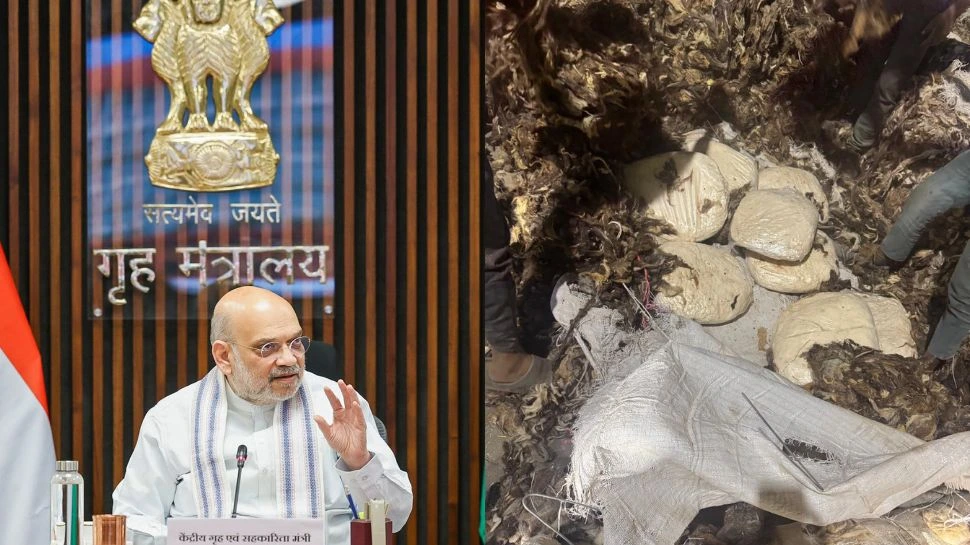
New Delhi: In a massive victory against international drug syndicates, Indian law enforcement has successfully intercepted Rs 182 crore worth of Captagon—a highly addictive narcotic infamously known as the “Jihadi Drug.”
Carried out by the Narcotics Control Bureau (NCB) under the codename ‘Operation Ragepill,’ This marks the first time this dangerous synthetic drug has ever been seized on Indian soil.
How the Bust Went Down
The NCB, working on strong intelligence, tracked down the massive drug consignment that originated from Syria. The smugglers had used clever tactics to hide the illegal cargo:
- Nearly 200 kg of Captagon tablets were found concealed inside a shipment of wool at Gujarat’s Mundra Port.
- Another portion of the drugs was discovered hidden inside tea leaf boxes in the Neb Sarai area of Delhi.
Investigations revealed that the massive drug haul was not meant for the Indian market. Instead, international smugglers were using India as a “transit route” to secretly ship the drugs to Saudi Arabia and other parts of the Middle East. A Syrian national has been arrested in connection with the case, and agencies are actively investigating possible terror funding links.
Government’s Zero-Tolerance Stance
Union Home Minister Amit Shah announced the major breakthrough, praising the vigilance and bravery of the NCB officers.
Taking to social media, Shah stated that the Modi government is fully resolved to build a “Drug-Free India.” He delivered a stern warning to international drug cartels, stating that the government will clamp down on every single gram of drugs trying to enter or leave the country. The successful bust, he noted, is a shining example of India’s zero-tolerance policy against narcotics.
What is Captagon and Why is it Called the ‘Jihadi Drug’?
Captagon (historically linked to the chemical Fenethylline) is a highly addictive synthetic stimulant.
Interestingly, it was originally developed in the 1960s by a German pharmaceutical company to treat medical conditions like narcolepsy (a sleep disorder) and attention deficit issues. However, because it was so highly addictive, most countries banned it globally in the 1970s.
Today, it is illegally manufactured in secret labs, mostly in Syria, and is often branded with a “two crescent moons” logo. It earned the terrifying nickname of the **”Jihadi Drug”** (or the “poor man’s cocaine”) because of its widespread abuse by armed militants and extremist groups in Middle Eastern conflict zones.
Terrorists and militant fighters use the drug because its extreme stimulant effects allow them to:
- Stay awake and alert for several days at a time.
- Completely suppress fear and exhaustion.
- Ignore feelings of hunger.
- Boost aggression and risk-taking behavior during combat.
What Happens Next?
With this historic Rs 182 crore seizure, the NCB and customs officials have struck a heavy blow against global drug trafficking networks. The seized drugs are now undergoing forensic tests to trace their exact origins. Meanwhile, investigating agencies are digging deeper into the arrested suspect’s phone records and finances to expose the wider smuggling and terror network behind this operation.