A spontaneous stop at a roadside Jhalmuri stall in West Bengal’s Jhargram during election campaigning on April 19 became a cultural moment, a political controversy, and a 22-year search record within 24 hours.
Main News: Jhalmuri Sees Massive Spike in Online Searches
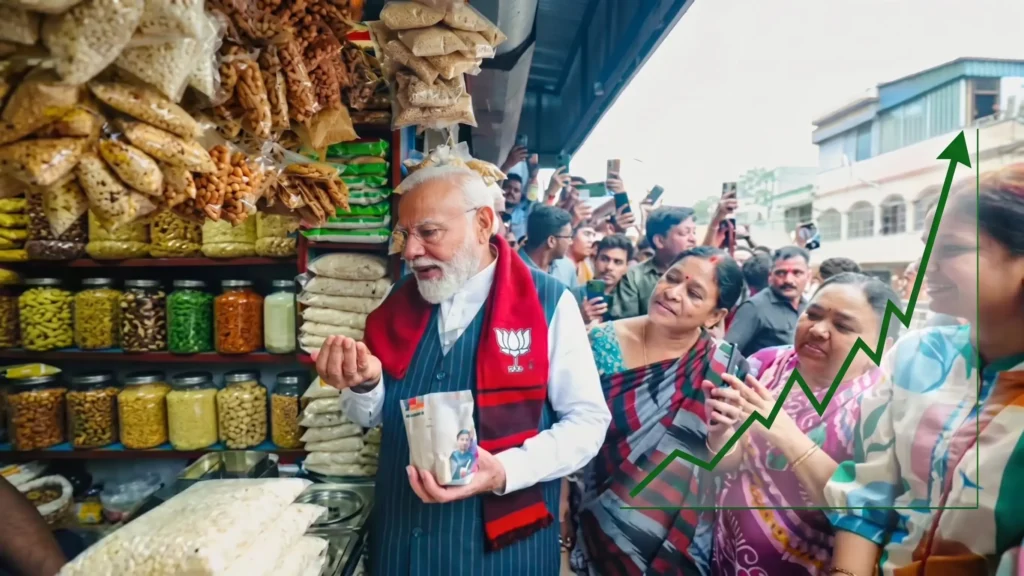
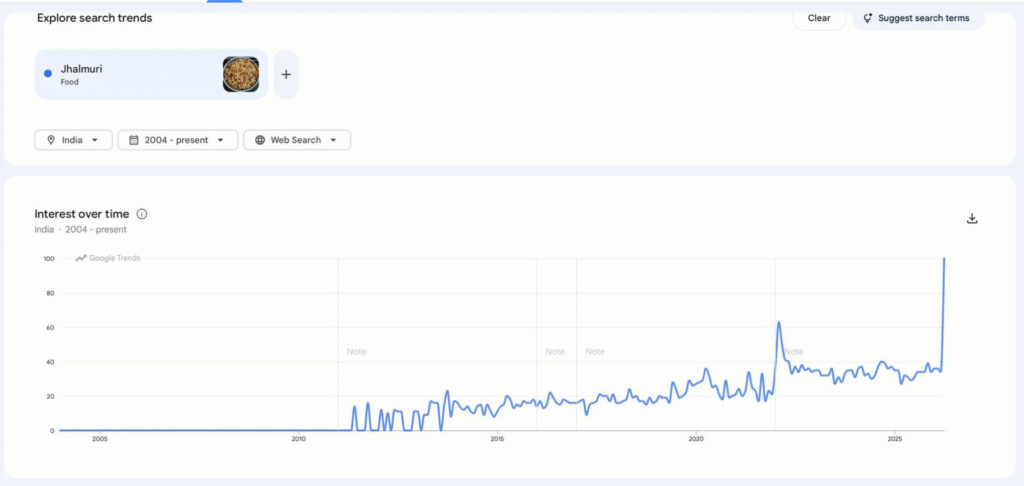
When Prime Minister Narendra Modi paused his campaign trail on April 19 to eat jhalmuri at a roadside stall in Jhargram, what followed was a textbook demonstration of political virality. The video, shared from his personal Instagram and Facebook accounts, crossed 100 million views on Instagram within 24 hours, and nearly 90 million views on Facebook. Google search interest for “jhalmuri” simultaneously spiked to its highest level in 22 years, since 2004. Modi’s Instagram account, with over 100 million followers making him the first world leader to cross that threshold, carries enough reach to transform a local street snack into a national conversation overnight.
What Happened: The Viral Jhalmuri Moment
Modi’s Stop in Jhargram
Modi was completing four back-to-back rallies in West Bengal: Purulia, Jhargram, Medinipur, and Bishnupur. During his Jhargram stop, he paused at a small roadside shop, ate jhalmuri from a paper cone, interacted warmly with the vendor, and insisting on paying, reportedly handed over Rs 10. He later shared images and a video on X, writing: “Amid four public meetings spanning across West Bengal on a hectic Sunday, I savoured some delicious spicy puffed rice, Jhalmuri in Jhargram.”
Social Media Explosion
The video spread across Instagram, Facebook, and X with unusual speed. Surgeon and social media user Sameer shared a Google Trends screenshot showing the 22-year search high, writing: “Modiji is not a trendsetter, he is THE TREND.” Industrialist Harsh Goenka used the moment to pitch jhalmuri as India’s next global export, joking that branding it as “air-infused indigenous rice crackle with artisanal mustard oil reduction” could make it a Rs 450 delicacy.
Why Jhalmuri Suddenly Became a National Trend
Power of Political Virality
This is the Modi digital effect in its clearest form. A sitting prime minister with 100 million-plus social media followers does not need media amplification to create a trend. The platform itself becomes the distributor. The Google search spike confirms that the reach extended beyond passive viewers to people actively curious about the snack.
Cultural Symbolism
Jhalmuri is not simply a snack. It is Bengal’s most recognisable street food, a staple of railway stations, college campuses, and evening walks. Modi eating it during a campaign tour in a state where the BJP is challenging the TMC’s dominance was a deliberate gesture of cultural connection, whether organic or orchestrated.
Political Reactions and Controversy
Opposition Criticism
West Bengal Chief Minister Mamata Banerjee was direct. “How come cameras were present when he made the unscheduled stop? The entire episode was scripted,” she said at a rally in Murarai, Birbhum. The “drama” framing is a standard counter-narrative in election season, and not without logic: spontaneous moments rarely arrive with Instagram-ready framing.
Narrative Battle
The BJP used the moment as part of its broader Bengal outreach, projecting Modi as a leader who connects with the ordinary and the local. TMC framed it as manufactured optics. Both readings are consistent with the political stakes: West Bengal votes in two phases on April 23 and 29.
Conclusion: A Snack, A Moment, A Digital Surge
The jhalmuri moment encapsulates how political virality functions in contemporary India. It requires a leader with massive digital reach, a relatable human action, and a platform that distributes it globally within minutes. Whether it was spontaneous or planned matters less politically than the fact that it generated 100 million views and a 22-year Google search record. From a local street food in Jhargram to a national trending topic in under 24 hours, that is the scale of influence now embedded in Indian electoral politics.