As hundreds of vessels remain stranded in the Gulf amid the US–Iran conflict, scammers posing as Iranian authorities have begun demanding cryptocurrency payments in exchange for “safe passage.” At least one ship fell for the deception, attempted transit, and was fired upon by Iranian forces—one of the vessels involved was Indian-flagged.
Main News: Indian Ships Targeted Near the Strait of Hormuz
On April 18, 2026, as Iran briefly reopened the Strait of Hormuz to limited commercial traffic, two Indian-flagged vessels attempted to cross. According to audio recordings captured and published by maritime tracker TankerTrackers.com, Iran’s IRGC Navy ordered them to abort passage and opened fire. One of those vessels was a Very Large Crude Carrier (VLCC) supertanker carrying two million barrels of Iraqi oil.
India’s Ministry of External Affairs responded immediately, summoning the Iranian ambassador and pressing Tehran to ensure “unimpeded passage” for Indian commercial shipping. Foreign Secretary Vikram Misri described India as “deeply disturbed” by the incident.
What added a new and alarming dimension to this story was the revelation, reported by Greek maritime risk management firm MARISKS and confirmed by Reuters, that a crypto-based scam operation had been targeting vessels stranded west of the strait, and that at least one ship may have fallen victim before attempting to transit and coming under fire.
What Happened: The Incident and the Scam
The Attack
The Strait of Hormuz has been effectively closed to normal commercial traffic since late February 2026, when the US-Israel war against Iran began. With approximately 20,000 seafarers and hundreds of ships stranded in the Gulf, Iran reimposed control over the strait while the US imposed a naval blockade of Iranian ports from April 13. The pressure on stranded vessels has been immense: demurrage costs mount by the hour, cargo contracts expire, and crews are effectively trapped.
The Crypto Scam
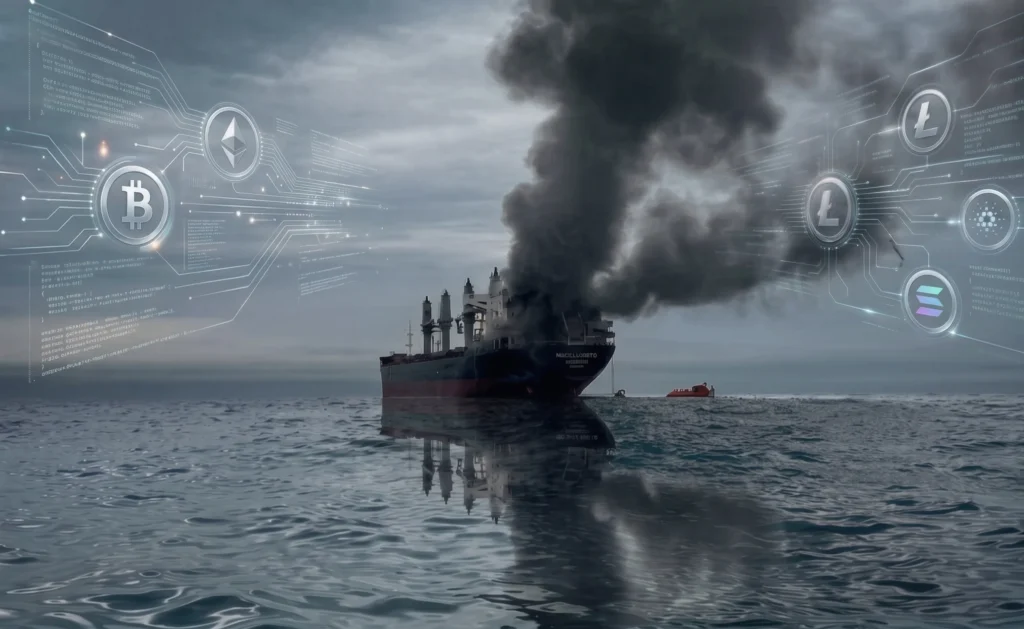
Into this vulnerability stepped fraudsters impersonating Iranian officials. MARISKS issued a formal warning stating that shipping companies had received messages reading: “After providing the documents and assessing your eligibility by the Iranian Security Services, we will be able to determine the fee to be paid in cryptocurrency (BTC or USDT). Only then will your vessel be able to transit the strait unimpeded at the pre-agreed time.”
The scam worked because it closely mirrored a real and legitimate policy. Since mid-March, Iran had itself proposed a formal toll system for vessels seeking passage, with fees reportedly starting at around $1 per barrel and payable in cryptocurrency, including Bitcoin. An Iranian oil exporters’ union spokesman had publicly confirmed this arrangement.
The fraudsters, exploiting the confusion between official and fake channels, demanded payments ranging from hundreds of thousands to millions of dollars. MARISKS confirmed: “These specific messages are a scam,” and clarified they were not sent by Iranian authorities. But at least one vessel had already transferred payment before attempting to cross, and it was subsequently fired upon.
The Crypto Scam Link: Following the Money
How Crypto Enabled the Operation
The choice of cryptocurrency was not incidental. Bitcoin and Tether transactions are irreversible once completed. A shipping company that pays a scammer in BTC has no recourse, no chargebacks, no fraud protection. The money is gone the moment it transfers. For scammers operating in a geopolitical grey zone where enforcement is non-existent, this is the ideal instrument.
The broader crypto crime environment provides context. According to data from DeFiLlama, losses from cryptocurrency-linked hacking and fraud incidents in April 2026 alone crossed $606 million. The Hormuz scam sits within this trend of exploiting real-world crises for digital financial crime.
Network Behind the Confusion
The scam’s effectiveness was amplified by Iran’s own decision to propose a legitimate crypto toll system. When official policy and criminal mimicry look identical on screen, even experienced shipping operations managers can be deceived. The distinction required companies to independently verify the source of any message, a near-impossible task when Iranian port authorities maintain limited direct communication with foreign companies.
India’s Strategic Dilemma: Dependence and Vulnerability
The Hormuz Exposure
India is acutely exposed to any disruption in the Strait of Hormuz. The waterway handles approximately 20 percent of global crude oil and liquefied natural gas, and India depends heavily on Gulf energy imports to meet domestic demand. Indian-flagged tankers, Indian-crewed vessels, and Indian-cargo ships are a regular presence in the waters now subject to overlapping blockades, missile threats, and now crypto fraud.
The VLCC supertanker that was fired upon on April 18 was carrying Iraqi crude, underscoring that India’s supply chain to this region runs directly through contested waters. India imports nearly 60 percent of its crude from the Gulf. Every week the strait remains effectively closed adds to domestic energy cost pressures.
Balancing Iran and the West
New Delhi faces a diplomatic tightrope it has walked carefully since February. India has historically maintained functional ties with Tehran, and trade and energy links remain significant. At the same time, India is aligned with US-led maritime security frameworks and has participated in joint naval operations in the Indian Ocean region. The direct firing on Indian-flagged vessels by the IRGC complicates both relationships simultaneously.
India’s summoning of the Iranian ambassador was a calibrated diplomatic protest, firm in language but measured in escalation. Foreign Secretary Misri’s public statements deliberately used the language of concern rather than accusation. That restraint reflects India’s genuine strategic position: it cannot afford to antagonise Iran into further restrictions, and it cannot afford to stay silent when its commercial vessels are being fired upon.
Broader Implications: A New Kind of Threat
Rise of Hybrid Warfare and Crypto as a Tool
The Hormuz crypto scam illustrates a fusion of traditional geopolitical crisis with digital financial crime. Scammers required no weapons, no naval capability, and no state infrastructure. They needed only a messaging platform, knowledge of Iran’s legitimate toll system, and access to the lists of ships stranded in the Gulf, information freely available through maritime tracking databases.
The attack on the Indian vessel was, in a sense, a two-layer incident: a physical attack by the IRGC, preceded by a financial crime by non-state actors who created the false clearance that sent the vessel into danger.
For India, this represents a warning that maritime security in the twenty-first century is no longer defined only by gunboats and sea lanes. Crypto-enabled fraud, digital impersonation of state actors, and the exploitation of sanction-driven payment chaos are now operational realities for Indian shipping companies.
Conclusion: A New Kind of Security Challenge
The Hormuz episode is not an isolated incident. It is a preview of the security environment Indian commercial shipping will face increasingly as geopolitical conflicts intersect with unregulated digital finance. India needs a coordinated response that integrates maritime surveillance, financial intelligence, and diplomatic engagement. The summoning of the Iranian ambassador was necessary. But the deeper lesson from the crypto scam is that the threat to Indian shipping now comes from directions that a conventional naval response cannot address alone.