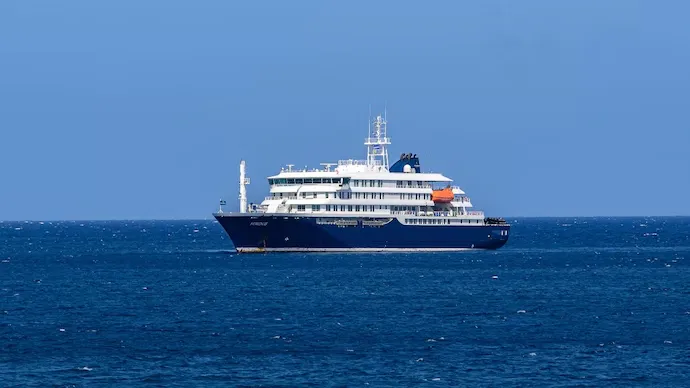
Two Indian nationals are aboard the MV Hondius luxury cruise ship, among 149 people, which is
hit by the deadly Hantavirus, specifically the Andes strain, as per the ship’s Dutch operator
Oceanwide Expeditions.
The two Indian nationals are a part of the crew on the luxury ship, however whether they
contacted the virus or their current health status remains unclear.
Currently, 8 people on board are confirmed to be infected, with 3 other passengers already dead.
The 149 passengers and crew belong to 23 different nationalities from US, Germany,
Netherlands, Philippines among other countries.
Timeline of the outbreak
The Hantavirus first infected a Dutch couple, reportedly from their bird watching trip in the
Argentinian city of Ushuaia, also the place from where the Dutch cruise expedition had started its
journey.
On April 11, the husband died on board, although unclear whether he died of the viral infection,
following which the wife succumbed to the virus on April 24 after she de-boarded the ship at St
Helena and flew to South Africa.
It was only on May 2 that the health authorities confirmed the presence of Hantavirus on the
cruise ship, after a German national became the third person to die.
Other passengers who disembarked on April 24 at St Helena are now being traced after a
passenger who had left St Helena, tested positive for hantavirus in Switzerland. Three other
critically ill passengers have been evacuated from the ship.
In addition, European health officials are locating 80 flight passengers who shared a flight with
the infected person.
What is the Hantavirus?
Named after the Hantan River of South Korea, Hantavirus is a family of rodent-borne viruses
which usually infect through contact with surfaces contaminated with the saliva, faeces or urine
of infected rodents.
US Centre for Disease Control and Prevention points out that infections can also be caused via
breathing in the air contaminated with these droppings of infected rodents.
Though Hantavirus does not transmit easily from humans-to-humans, the Andes strain however
is known for human transmission, mostly found in Argentina and Chile. This strain is fatal and
causes Hantavirus pulmonary syndrome, killing a third of those infected.
Response of WHO
The World Health Organisation (WHO) at this stage has deemed the outbreak low-risk, stating
that the “overall public health risk remains low,” amidst global concerns. Nonetheless, WHO
continues to monitor the situation.
Also, as symptoms generally appear 1 to 8 weeks after exposure to the virus, WHO DirectorGeneral Tedros Adhanom Ghebreyesus warned that new cases may be detected in the coming
weeks after the passengers have returned to their respective countries.
This highlights a long term concern regarding the spread of the Hantavirus.
MV Hondius is expected to arrive at Canary Islands, Spain around May 10, following which all
passengers and crew will be screened and the ship disinfected.