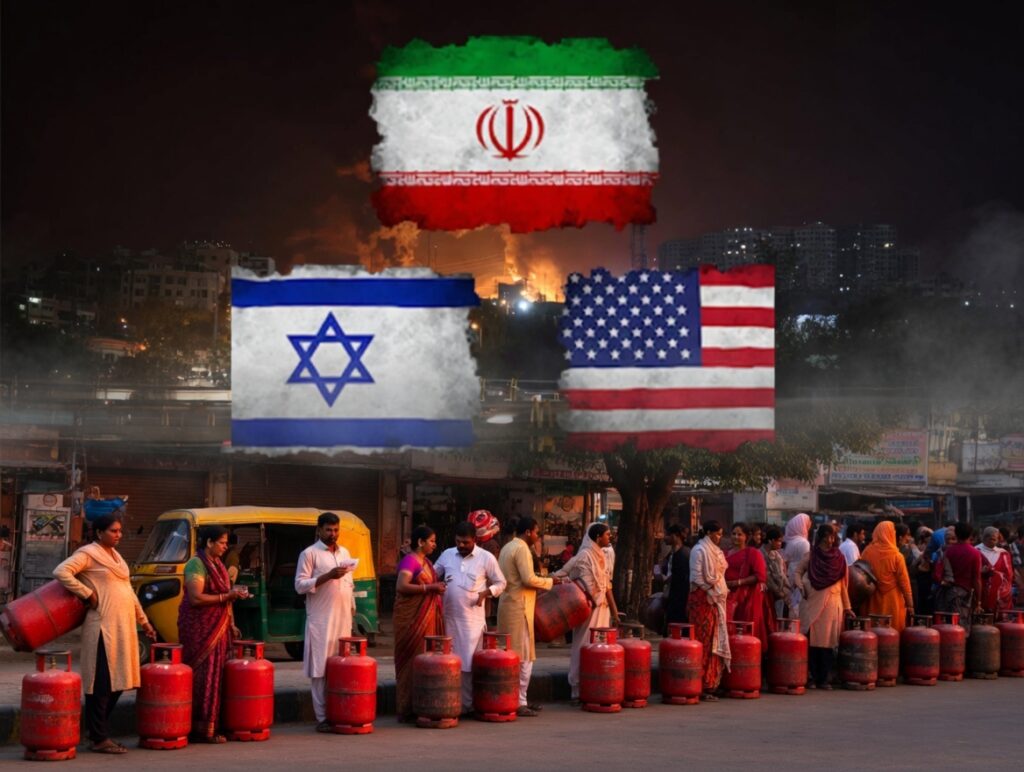
India Imports LPG From Iran for First Time Since 2019 After US Temporarily Eases Sanctions
On March 25, 2026, Reuters confirmed that India had purchased its first cargo of Iranian liquefied petroleum gas in years, after the United States temporarily removed sanctions on Tehran’s oil and refined fuel exports. The sanctioned tanker Aurora, initially bound for China, changed course and arrived at the west coast port of Mangalore carrying approximately 43,000 tonnes of propane and butane.
The cargo is being shared among India’s three state-run fuel retailers: Indian Oil Corporation (IOC), Bharat Petroleum (BPCL), and Hindustan Petroleum (HPCL). Payment is being made in rupees, bypassing dollar-based financial channels that sanctions typically restrict. India is also exploring the purchase of additional Iranian LPG cargoes.
Why India Stopped LPG Imports From Iran After 2019
India was previously a significant buyer of Iranian oil and gas, but halted all energy purchases from Iran in 2019 under pressure from the United States as the Trump administration reimposed sweeping sanctions on Tehran. The combination of secondary sanctions risk, payment system complications, and shipping insurance restrictions made Iranian energy effectively unbuyable for Indian state refiners, regardless of the economics.
Why India Has Resumed Imports Now
Two things changed simultaneously. First, the US temporarily eased sanctions on Iranian oil and fuel exports, opening a legal window for purchases. Second, India is facing a genuine supply crisis triggered by disruptions at the Strait of Hormuz, making every available alternative source critical. India is also moving stranded LPG tankers out of the Persian Gulf region: four vessels (Shivalik, Nanda Devi, Pine Gas, and Jag Vasant) have been relocated so far, with loading underway on empty vessels still in the Gulf.
This is active supply management under pressure, not panic buying. India is playing every available card simultaneously.
What This Signals About India’s Energy Strategy
The Iran procurement reflects a long-standing principle of Indian energy policy: strategic neutrality and multi-supplier sourcing. India does not allow diplomatic alignments to permanently close off economically or geographically proximate energy suppliers. When a window opens, India uses it. The rupee payment mechanism also demonstrates India’s growing use of bilateral currency arrangements to route around dollar-denominated financial restrictions.
Is India Really Facing an LPG Shortage?
Yes, and to an extent that the government initially underplayed.
India is the world’s second-largest LPG importer. It consumed 33.15 million metric tonnes of LPG last year, with imports accounting for about 60% of demand. Critically, around 90% of those imports normally transit through the Strait of Hormuz. The effective closure of that corridor following the US-Iran conflict has created what the Takshashila Institution describes as India’s worst gas crisis in decades.
India’s Current LPG Demand and Supply Situation
Domestic production in January 2026 stood at approximately 1.158 million tonnes per month. Imports in the same period were nearly double that, at 2.192 million tonnes, illustrating just how import-dependent India’s LPG supply chain is. India’s strategic LPG storage capacity, even after the HPCL Mangalore underground cavern was commissioned in late 2025, stands at roughly 140,000 tonnes, equivalent to only about five days of national demand. That buffer was always thin; under a sustained Hormuz disruption, it became critically inadequate.
| Source | Share | Role |
| Domestic production | ~40% | Base supply |
| Imports | ~60% | Demand balancing |
| Middle East (via Hormuz) | ~90% of imports | Core supply route |
| Diversified suppliers (US, Russia, Australia) | Growing | Risk hedge |
Why Shortage Fears Emerged
The triggers were structural and compounding. The Strait of Hormuz was effectively disrupted by the US-Iran conflict. Shipping insurance costs rose sharply. Several Indian LPG tankers were stranded in the Persian Gulf. Delivery delays of 15-25 days were reported in parts of the country. Long queues appeared outside gas agencies in March 2026. Black-market prices for commercial LPG cylinders reportedly touched Rs 6,000 in Bengaluru.
Key risk triggers that drove the crisis:
- Effective closure of the Strait of Hormuz, India’s primary LPG import route
- Stranded LPG tankers unable to complete deliveries
- Rising freight costs and shipping insurance premiums
- Limited strategic storage providing insufficient buffer
What the Indian Government Has Said About LPG Availability
The government’s response has been active, if somewhat cautious in its public communications.
Government Position: No Panic Warranted for Households
Petroleum Minister Hardeep Singh Puri, addressing Parliament, stated clearly that domestic household supply is fully protected. The standard booking-to-delivery cycle of 2.5 days remains unchanged for domestic consumers. The PMUY beneficiary price stands at Rs 613 per 14.2 kg cylinder in Delhi, and the government absorbed Rs 74 of the Rs 134 per cylinder adjustment that prevailing global market conditions would have required. Hospitals and educational institutions have been placed on uninterrupted priority supply. PM Modi himself urged citizens not to engage in panic buying.
Measures Taken to Prevent Supply Disruption
The government’s response has been multi-pronged and rapid:
- The LPG Control Order issued on 8 March 2026 directed all refineries to maximise LPG yields, channelling the entire output of C3 and C4 hydrocarbon streams exclusively to the three OMCs for domestic cooking gas. Refinery LPG production increased by 28% within five days.
- The Essential Commodities Act was invoked to regulate commercial LPG distribution and curb hoarding.
- A 25-day mandatory inter-booking period was introduced to prevent cylinder stockpiling.
- A three-member committee of executive directors from IOC, HPCL, and BPCL was constituted on 9 March 2026 to assess and allocate genuine commercial need by geography and sector.
- The MoEFCC permitted restaurants and commercial establishments to temporarily use biomass, RDF pellets, and kerosene as alternative fuels for one month.
- An additional 48,000 kilolitres of kerosene is being released to states over and above the quarterly allocation.
- OMC compensation of Rs 30,000 crore has been approved against expected under-recovery losses.
How the Iran-US Conflict Could Affect India’s LPG Supply
Strait of Hormuz: India’s Energy Lifeline
The Strait of Hormuz is a 33-kilometre-wide chokepoint between Iran and Oman through which roughly 20% of global oil trade and a substantial share of global LPG moves. For India specifically, approximately 54% of normal LPG availability is directly exposed to disruption if this corridor remains closed, because 60% of demand is import-dependent and 90% of imports transit through Hormuz. No other route offers equivalent scale or cost efficiency for Gulf suppliers.
Why India’s Import Dependence Matters
India has 332.1 million active domestic LPG connections, including 104.29 million Pradhan Mantri Ujjwala Yojana connections serving low-income households who depend on LPG as their primary cooking fuel. This is not an industrial commodity that can easily be substituted or deferred. Supply disruptions carry immediate welfare and political consequences that go well beyond economics.
Sectors Already Feeling Supply Pressure
The government’s decision to prioritise households has transferred the supply stress onto the commercial and industrial sectors. Commercial gas supply has been cut by 30-50%, forcing restaurant closures in several cities, including an estimated 25 establishments in Bengaluru alone in mid-March 2026. The pharmaceutical sector has raised urgent alarms: LPG curbs are affecting industrial boilers and disrupting manufacturing of essential medicines. Paracetamol raw material costs reportedly rose from Rs 250 to Rs 450 per kg within 15 days. Around 200 pharmaceutical manufacturers were warned they could halt operations if the disruption continued.
Households remain the government’s stated first priority. Everything else is being rationed around them.
How India Is Managing LPG Supply Risks
1. Diversifying LPG Import Sources
India has been actively sourcing LPG from suppliers outside the Middle East as a parallel strategy to the domestic production push. A 2.2 MTPA US LPG deal for 2026 was already in place before the crisis, equivalent to approximately 10% of annual imports.
| Strategy | Purpose |
| New suppliers (US, Russia, Australia, Norway, Canada) | Reduce Middle East dependence |
| Domestic refinery output increase (+28%) | Cushion supply shocks immediately |
| Iranian LPG procurement under sanctions waiver | Short-term supply gap filling |
| Stranded tanker recovery operations | Release existing contracted cargoes |
2. Role of Oil Marketing Companies
IOC, BPCL, and HPCL are the operational backbone of India’s LPG supply chain, managing procurement, storage, distribution, and the 25,566-strong distributor network. During this crisis, they have been directed to function as a coordinated unit rather than competing entities, with supply allocation decisions centralised through the three-member committee constituted in March 2026.
3. Should Indian Consumers Worry About LPG Availability?
For domestic households, the current situation does not justify panic buying, and panic buying actively worsens the situation by creating artificial demand spikes that strain the distribution system.
4. Why There Is No Immediate Need for Panic Buying
- Domestic household supply is guaranteed at 100% under the Natural Gas Supply Regulation Order 2026
- The government has invoked the Essential Commodities Act to prevent hoarding and black-market diversion
- Refinery LPG production has been boosted by 28% through the LPG Control Order
- Alternative sourcing from Iran, the US, and other non-Hormuz suppliers is actively underway
- The booking-to-delivery cycle for domestic cylinders remains at 2.5 days
5. What Could Change the Situation
Honesty requires acknowledging the risks that remain. A major escalation that permanently closes the Strait of Hormuz would put sustained pressure on supply even with diversification efforts underway. A significant spike in oil prices feeding into LPG pricing could eventually affect consumer costs despite current government price shields. If the conflict extends for several months, the structural thinness of India’s strategic storage capacity will remain a vulnerability that no short-term procurement decision can fully offset.
6. What This Situation Reveals About India’s Energy Security Strategy
The LPG crisis of 2026 has laid bare a structural vulnerability that energy policy analysts had been flagging for years: near-total import dependence on a single geographical corridor. Approximately 54% of India’s normal LPG supply runs through one 33-kilometre strait. No diversification of suppliers can fully compensate for that geographic concentration as long as those suppliers also ship through the same chokepoint.
The medium-term lesson is clear. India needs expanded strategic LPG storage (currently just five days of demand), accelerated domestic production capacity, and faster build-out of alternative cooking energy infrastructure including PNG, electric induction, and compressed biogas. Induction stove sales have already surged during the crisis, demonstrating how quickly households adapt when supply reliability is genuinely threatened.
India’s decision to resume LPG imports from Iran reflects a strategy of preparedness rather than panic. But the deeper question this crisis has raised is whether preparedness itself needs a structural upgrade, one that cannot be built during a shortage but must be built well before one begins.
Key Takeaways: India’s LPG Situation Explained
- India is facing a genuine LPG supply stress in 2026, driven by disruption at the Strait of Hormuz following the US-Iran conflict
- The Iranian LPG cargo is a supply diversification move enabled by a temporary US sanctions waiver, not a sign of crisis desperation
- The government has guaranteed 100% domestic household supply and has taken active steps including a 28% production boost and the Essential Commodities Act invocation
- Commercial and industrial sectors are bearing the brunt, with restaurants, the pharma sector, and manufacturing facing cuts of 30-50%
- LPG prices for households remain shielded, with the government absorbing significant under-recovery losses
- Panic buying by consumers actively worsens the situation and is not warranted
- The long-term lesson is structural: India needs deeper strategic storage, more domestic capacity, and genuine supply route diversification
FAQs
Is India currently facing an LPG shortage?
Yes, India is facing a real supply stress, particularly in the commercial sector. However, the government has guaranteed domestic household supply at 100% under the Natural Gas Supply Regulation Order 2026. Delivery delays have been reported in some areas but the booking-to-delivery cycle for domestic cylinders officially remains at 2.5 days.
Where does India import most LPG from?
The Middle East, particularly Qatar, Saudi Arabia, the UAE, and Kuwait, supplies the vast majority of India’s imported LPG, with almost all shipments transiting through the Strait of Hormuz. India is actively diversifying toward the US, Russia, Australia, Norway, and Canada, but the Middle East remains the dominant source.
Could LPG prices increase for consumers?
Consumer prices are currently shielded by government policy. The Saudi Contract Price rose 41% between July 2023 and March 2026, but the PMUY beneficiary price actually fell 32% over the same period to Rs 613 per cylinder. If the conflict is prolonged and global prices remain elevated, further price adjustments cannot be ruled out, though the government has demonstrated a clear preference for absorbing costs rather than passing them to households.