Lashkar-e-Taiba co-founder and US-designated global terrorist Amir Hamza has been shot by unidentified gunmen outside a news channel office in Lahore, Pakistan. He is in critical condition. It is the second targeted attack against him in under a year, and part of a growing pattern of senior terror figures being systematically eliminated on Pakistani soil.
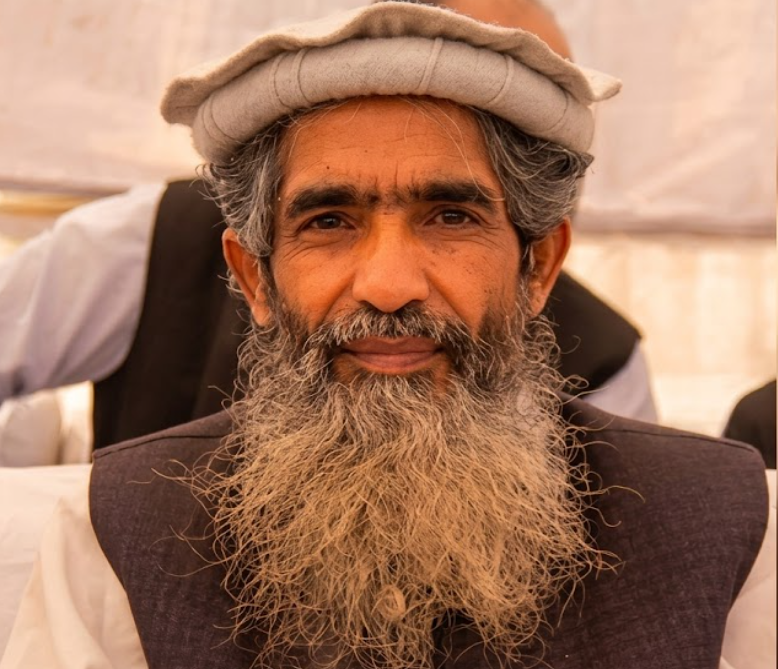
LeT Co-Founder Amir Hamza Shot by Unidentified Gunmen in Lahore
Attack Carried Out by Motorcycle-Borne Assailants
On April 16, 2026, unidentified gunmen opened fire on Amir Hamza in Lahore, Pakistan. The 66-year-old was struck at close range and was rushed to hospital in serious condition. Doctors described his condition as extremely critical. A Lahore police official confirmed that police had responded to an incident of firing targeting the vehicle of the “Chairman of Tehreek-e-Hurmat-e-Rasool Pakistan” at Hamdard Chowk. A high alert was issued in the area and search operations were launched, with no arrests made at the time of reporting.
Incident Took Place Outside a TV Channel Office
The attack occurred outside a private news channel office in Lahore, an audaciously public location. The assailants fled the scene on motorcycles, a method that has become a signature of targeted eliminations across Pakistan in recent years.
Second Assassination Attempt in Less Than a Year
Hamza Previously Injured in Mysterious 2025 Incident
This is not the first time Hamza has been targeted. In May 2025, he was critically injured under mysterious circumstances outside his Lahore residence. That incident also involved unknown assailants. Pakistani authorities reportedly tightened his security after the 2025 attack but issued no formal statement about the perpetrators. He survived, only to be targeted again.
Attack Follows Killing of Senior Lashkar Operative
The attack on Hamza comes days after Abu Saifullah alias Razaullah Nizamani Khalid, another senior LeT operative, was shot dead by unidentified gunmen in Sindh province. Khalid was a key architect of the 2005 IISc Bengaluru attack and the 2006 RSS headquarters assault in Nagpur. His killing closely followed that of Abu Qatal, a close aide of Hafiz Saeed, shot dead in Jhelum in March 2025. The pattern is unmistakable.
Who Is Amir Hamza: The Ideologue Behind Lashkar-e-Taiba
Co-Founder and Key Associate of Hafiz Saeed
Born on May 10, 1959, in Gujranwala, Punjab, Hamza is a veteran of the Afghan jihad and one of the 17 original founding members of Lashkar-e-Taiba, which he co-founded with Hafiz Saeed between 1985 and 1986. He served on LeT’s central advisory committee and played a critical role in the group’s fundraising, recruitment, and international outreach, under the direct oversight of Saeed.
Considered the Chief Propagandist of LeT
Hamza edited LeT’s official weekly publication and authored multiple books promoting extremist ideology, including his 2002 work “Qafila Da’wat aur Shahadat” (Caravan of Proselytising and Martyrdom). He was the primary voice of LeT’s ideological framework for decades, responsible for radicalising generations of recruits.
Terror Links: Role in Anti-India Operations and IISc Bengaluru Attack
Accused in the 2005 IISc Bengaluru Terror Attack
Hamza has been directly linked to the 2005 attack on the Indian Institute of Science in Bengaluru, one of the earliest major LeT strikes outside Jammu and Kashmir. That attack killed IIT professor Munish Chandra Puri and injured four others. It signalled LeT’s deliberate expansion of targeting beyond the Kashmir valley into India’s heartland.
Long History of Supporting Kashmir-Focused Militancy
Amir Hamza raising slogans against India – “Kashmir will become Pakistan, Jammu will become Pakistan, Punjab will become Khalistan”
Beyond the IISc attack, Hamza’s splinter group Jaish-e-Manqafa, which he founded in 2018 after a nominal distancing from LeT, is alleged to have continued militant operations targeting Jammu and Kashmir. Despite his formal departure from LeT, US and Indian intelligence assess that he maintained active ties with the core leadership.
Global Terror Designation and Activities Under Jamaat-ud-Dawah
Designated Global Terrorist by the United States
The US Department of the Treasury has designated Hamza as a global terrorist, listing him as a key member of LeT’s central committee. The designation cites his roles in fundraising, recruitment, and negotiating the release of captured militants. LeT itself is designated a terrorist organisation by the US, India, the UN, and numerous other nations.
Role in Fundraising and Recruitment Networks
Under the umbrella of Jamaat-ud-Dawah (JuD), the charitable front through which LeT long operated, Hamza was instrumental in building the fundraising and recruitment infrastructure that sustained the group’s operations across South Asia and beyond.
Internal Fault Lines or Targeted Eliminations? Questions Around the Attack
Pattern of Attacks on Senior Terror Figures in Pakistan
Between 2022 and 2025 alone, at least 32 terrorists with direct links to India-focused attacks were killed by unidentified gunmen inside Pakistan. The list includes LeT commanders, Jaish-e-Mohammad operatives, and figures linked to major attacks on Indian soil. These are not random criminal incidents. The targets are too specific, the operations too surgical.
Speculation Over Internal Rivalries and Intelligence Operations
Pakistani authorities have offered no credible explanation for this sustained pattern of eliminations. The “unknown gunmen” label has become a convenient placeholder. Whether these operations reflect internal ISI power struggles, turf wars between terror factions, or something more deliberate, the outcome is the same: Pakistan is running out of the very assets it has long sheltered at India’s expense.
Pakistan’s Handling of Terror Groups Under Global Scrutiny
Continued Safe Havens and Weak Crackdown
Pakistan has long maintained that it has cracked down on terror financing and militant organisations. The reality is different. Hamza survived two attacks, both while reportedly under heightened ISI security. That a founding member of a globally designated terrorist organisation was speaking publicly, heading a political-religious outfit, and operating freely in Lahore decades after the crimes he helped orchestrate tells its own story.
What the Attack Means for Regional Security
Implications for India-Pakistan Security Dynamics
For India, the systematic attrition of senior LeT leadership represents a meaningful degradation of Pakistan’s cross-border terror infrastructure, whatever the source of these eliminations. For Pakistan, the inability to explain or prevent these attacks inside its own territory raises serious questions about state control. For the region, each fallen commander removes a node from a network that has cost thousands of Indian lives. That is not an insignificant development, even if justice has arrived in an irregular form.