After days of widespread public outrage over a leaked internal style guide that banned bindis and tilaks while permitting hijabs, Lenskart released a fully revised and publicly accessible style guide on April 18, 2026. Every religious symbol is now explicitly allowed. The policy is corrected. The explanation, however, still falls short.
Lenskart Publishes New Style Guide Allowing Religious Symbols
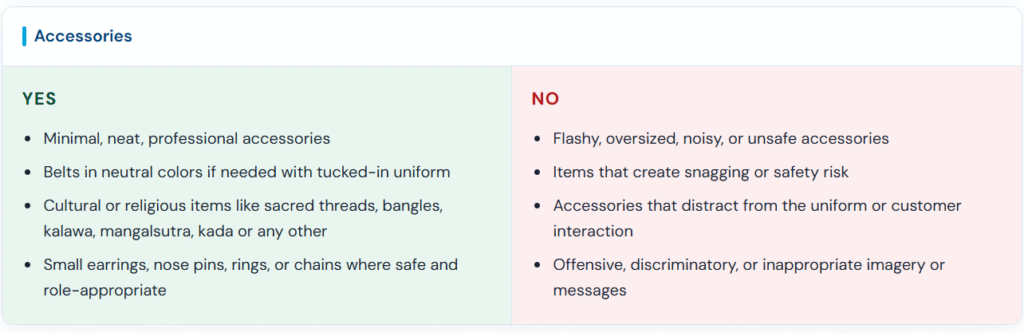
On April 18, Lenskart posted its revised In-Store Style Guide publicly, describing it as a standardised document to be applied uniformly across all 2,400-plus stores. The new guide explicitly names and permits bindi, tilak, sindoor, mangalsutra, kada, kalawa, hijab, and turban. The company stated these are “not exceptions but a natural reflection of employees’ identities.”
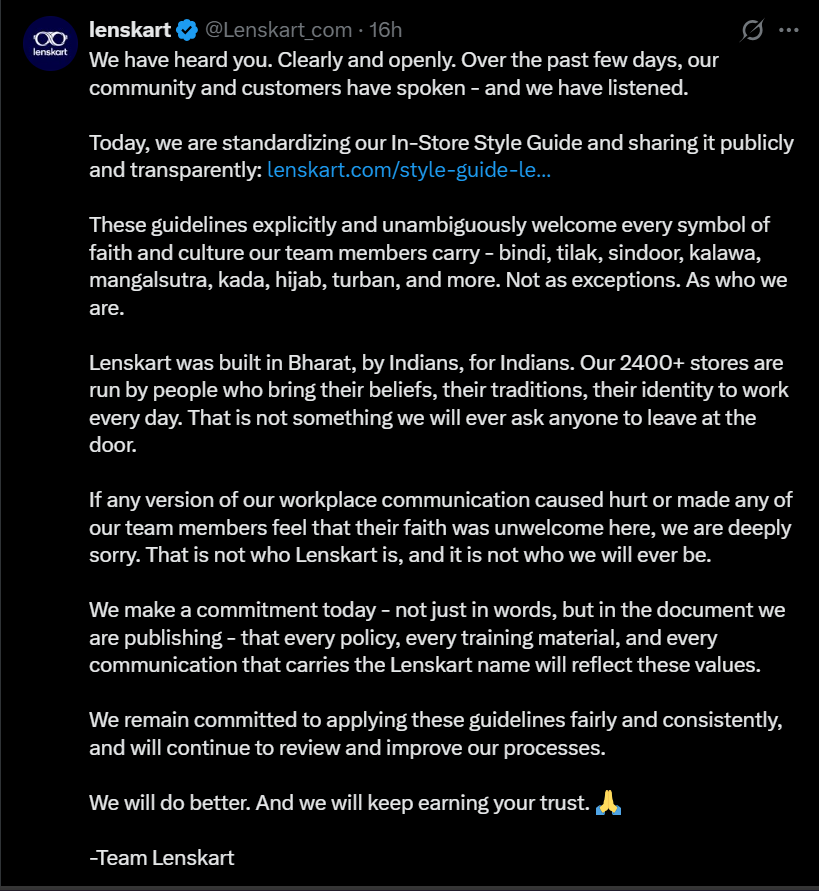
Lenskart said all store-level training materials and communications would now reflect these inclusive principles, and committed to an ongoing policy review process. It acknowledged that its earlier communication had “caused hurt.”
| Symbol / Item | Old Document (Feb 2026) | New Style Guide (Apr 2026) |
|---|---|---|
| Bindi | Not allowed | Explicitly allowed |
| Tilak / Tikka | Not allowed | Explicitly allowed |
| Kalawa (sacred thread) | Not allowed | Explicitly allowed |
| Sindoor | Permitted but restricted | Permitted without restriction |
| Mangalsutra | Not mentioned | Explicitly allowed |
| Hijab | Allowed (black only, specified coverage) | Allowed |
| Turban | Allowed (black only) | Allowed |
What Triggered the Controversy?
Viral Document Exposed Policy Gap
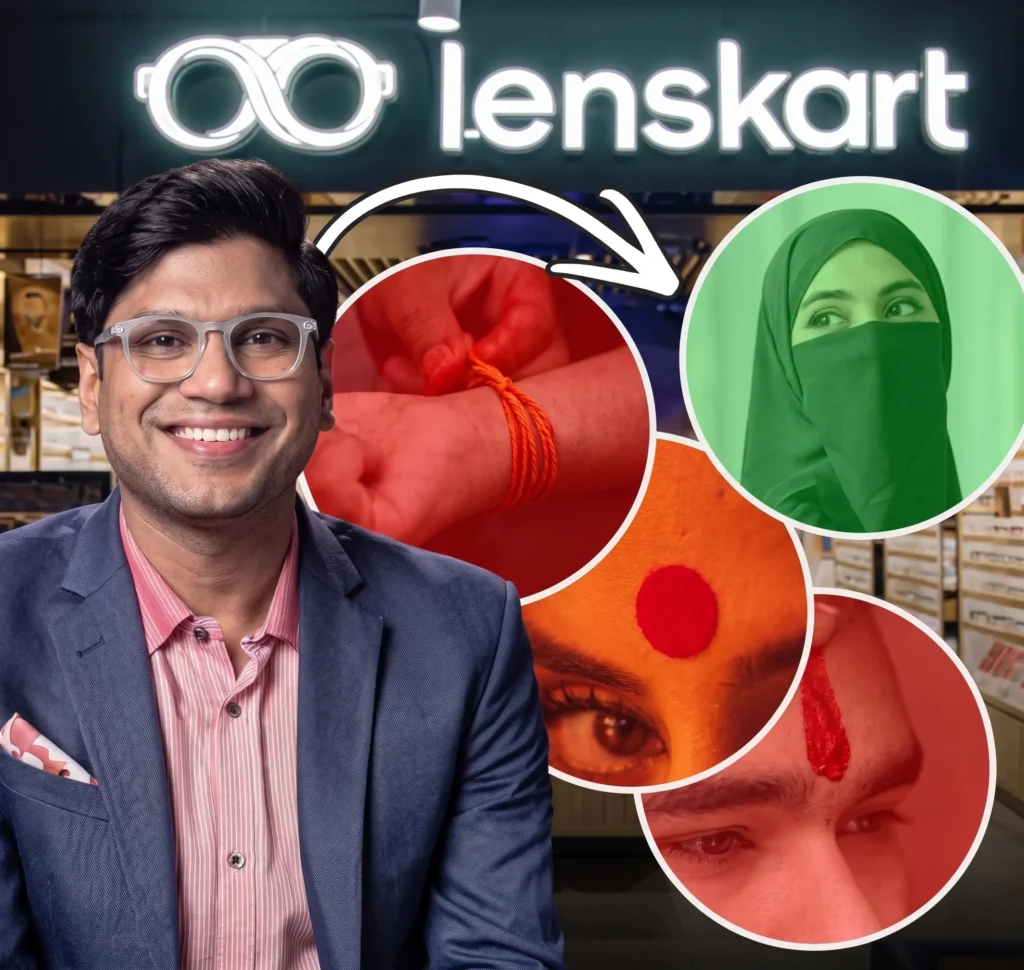
The original controversy erupted when social media user Shefali Vaidya shared Lenskart’s internal “Staff Uniform and Grooming Guide,” Version 11.1, dated February 2, 2026. The 23-page document explicitly stated “Religious tikka/tilak and Bindi/Sticker is not allowed” while simultaneously permitting hijabs with detailed colour and coverage instructions. Kalawas (sacred wrist threads) were also listed under prohibited items. The asymmetry was unmistakable.
Read the full story – here
Employee Allegations Added Fuel
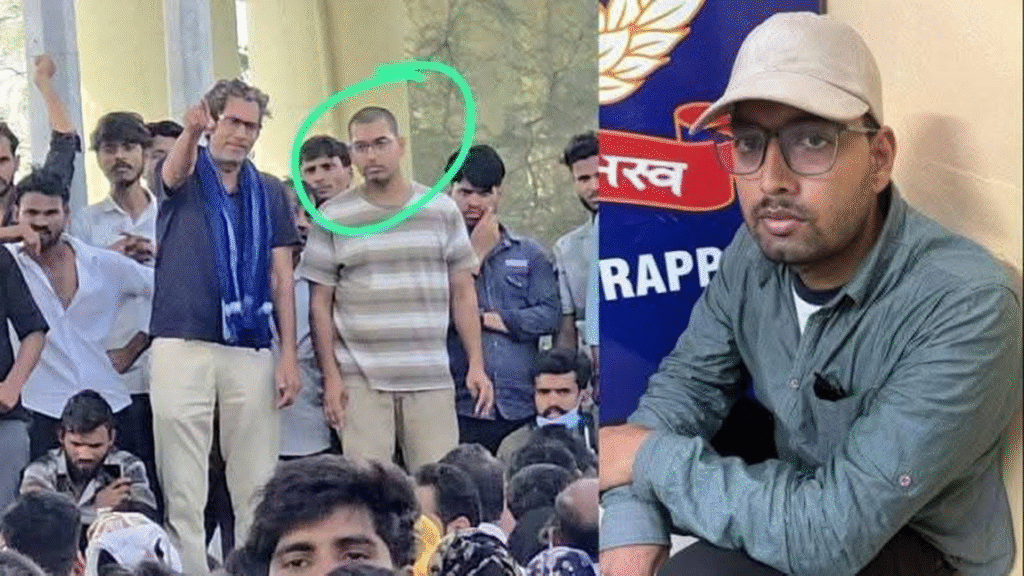
The controversy deepened significantly when employees spoke up with direct experiences. Harsh Hatekar, a former manager of a flagship Lenskart store in Pune, stated on X that his store lost points in a third-party audit in October 2024 specifically because staff were wearing kalawas. The auditor, he said, was named Ayush Verma.
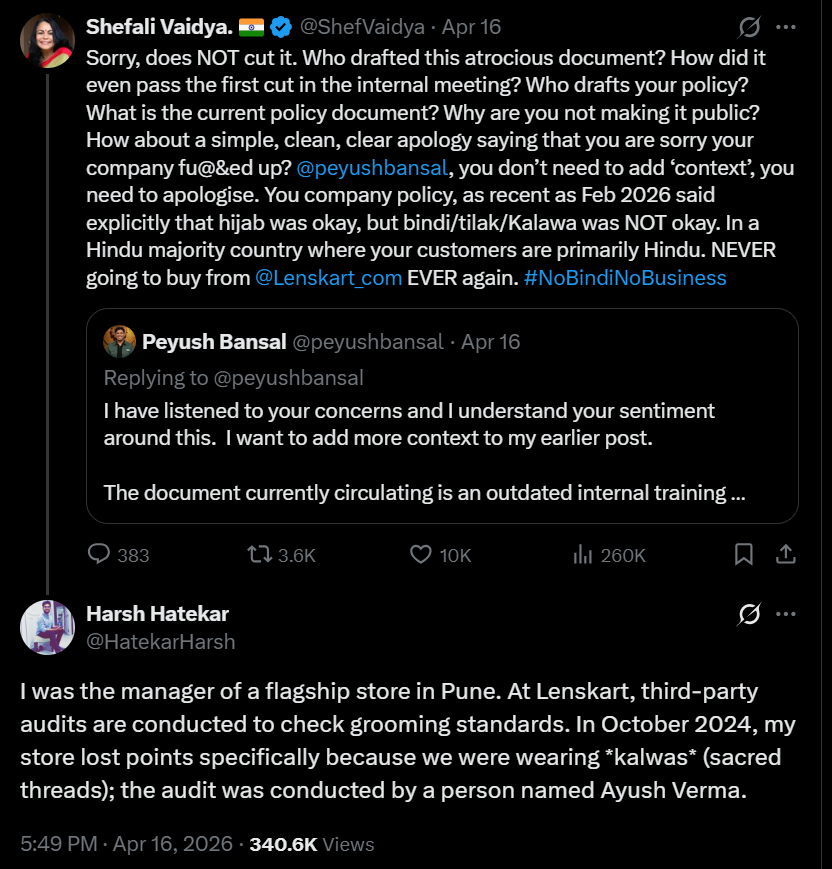
A second employee had been writing formally to Lenskart’s legal team since November 2025, raising concerns about the bindi and tika policy. After nearly three months of administrative silence, she issued a formal final notice threatening to escalate through labour and human rights authorities. These were not social media reactions. These were documented, internal complaints that the company did not resolve until forced to by public pressure.
The Policy U-Turn: What Has Changed Now?
Full Inclusion on Paper
The new guide removes all restrictions on religious markers. Its language frames diversity as intrinsic to workplace identity rather than a matter requiring accommodation. On paper, it is everything the old document failed to be.
Public Release for Damage Control
Critically, Lenskart chose to release this guide publicly, something it had never done before. That transparency is welcome. But it only happened after the controversy reached national scale. The same transparency was not applied before the issue went public, which is precisely the problem.
Peyush Bansal’s Position vs Ground Reality
“Outdated Document” Claim
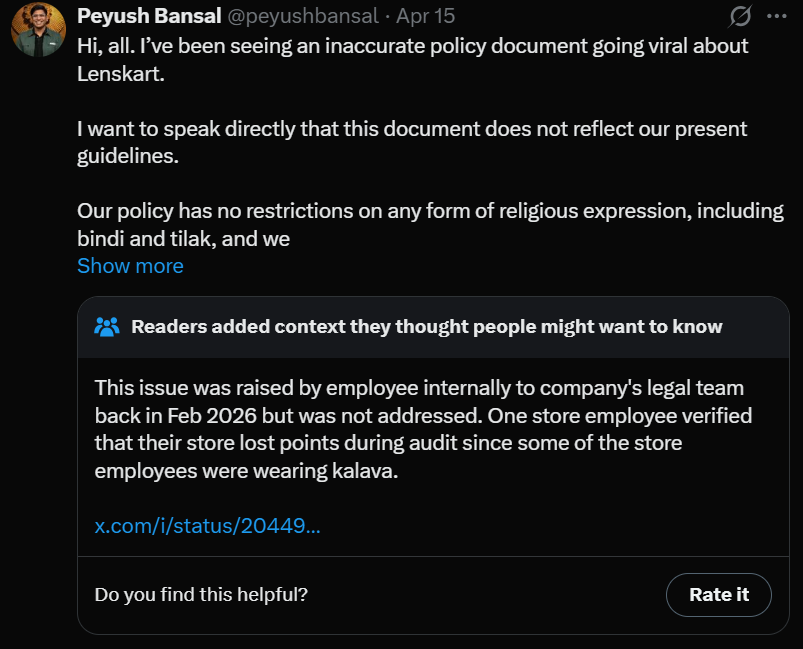
On April 15, Bansal posted on X calling the circulating document “inaccurate,” implying it was old and irrelevant. Within hours, an X Community Note corrected the record: the style guide bore a date of February 2, 2026 and carried full company branding. It was not old. It was two months old.
Key Contradiction
On April 16, Bansal shifted position, acknowledging the document was real but calling it an “outdated internal training document,” not an HR policy. He said it had been internally identified and removed on February 17. This created a direct contradiction: if it was removed on February 17, why was a February 2-dated version still being distributed to store staff in April? No answer has been given. The corrected document was never shared publicly before the controversy, making independent verification of the claimed correction impossible
Critical Analysis: Why the Response Raises More Questions
Reactive, Not Proactive
Two employees raised documented concerns through internal channels for months. One was ignored for nearly three months before threatening legal escalation. The other saw his store penalised by a third-party auditor for wearing a kalawa. Neither complaint produced a public correction or accountability. Lenskart moved only when the issue became a reputational crisis. That is the definition of reactive governance.
Training vs Policy Argument Falls Short
Bansal repeatedly framed the document as a “training material” rather than an “HR policy,” as if that distinction reduces its impact. It does not. Ground-level enforcement followed the training document exactly. Employees were asked to remove religious symbols. Audit scores were docked. The label on the document is irrelevant when its instructions were being actively applied.
Lack of Transparency
Who approved the original document? Who conducted the October 2024 audit that penalised staff for wearing kalawas? Why did the company’s legal team fail to respond to a formal written complaint for nearly three months? None of these questions have received a direct answer from Peyush Bansal or Lenskart’s communications team.
Larger Issue: Corporate Neutrality Under Scrutiny
The Lenskart controversy sits alongside the TCS Nashik case and is now prompting scrutiny of other companies, including Air India, whose cabin crew handbook has been flagged for similar restrictions on Hindu religious markers. The pattern raises a structural question: are Indian companies selectively designing grooming policies around one community’s expression while treating another’s as a professional compliance issue? If inclusivity is a value, it must be consistent from the start, not corrective under pressure.
Conclusion: Policy Correction or Reputation Management?
Lenskart has updated its style guide. That is factually true and, taken at face value, it is the right outcome. But the update came only after a public crisis, not because of internal accountability or employee grievance resolution. The employees who raised these concerns in November 2025 and October 2024 did not receive this correction. The public did. That distinction matters. A company that corrects course only when the alternative is brand damage has not demonstrated a commitment to values. It has demonstrated an understanding of risk management.