Donald Trump’s two-week pause on strikes against Iran has been framed as a breakthrough. But the financial bleeding, domestic political collapse, and Iran’s untouched strategic position tell a different story. This is not a victory. It is a breathing space both sides needed, for very different reasons.
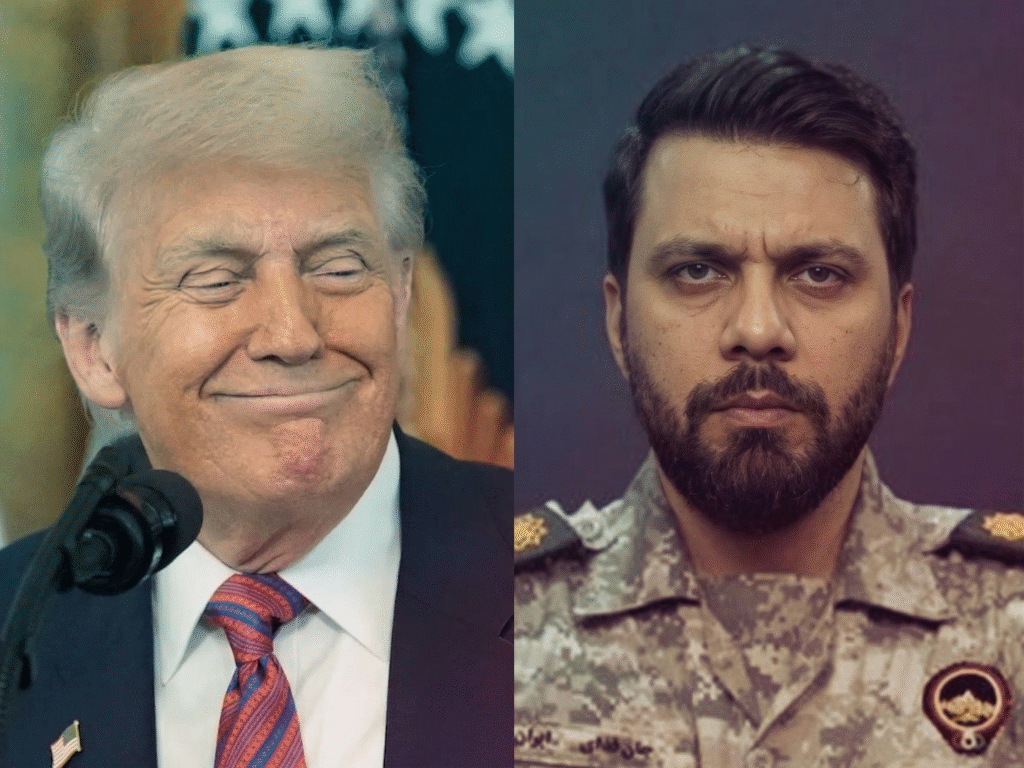
Trump Announces a Two-Week Ceasefire — Here Is What Actually Happened
On the evening of April 7, 2026, President Donald Trump announced a two-week ceasefire with Iran on Truth Social, citing conversations with Pakistani Prime Minister Shehbaz Sharif and Field Marshal Asim Munir. The ceasefire was conditional: Iran had to agree to the complete and immediate reopening of the Strait of Hormuz to international shipping. Iranian Foreign Minister Abbas Araghchi confirmed Tehran’s acceptance and said vessels could transit the strait with coordination from Iran’s armed forces.
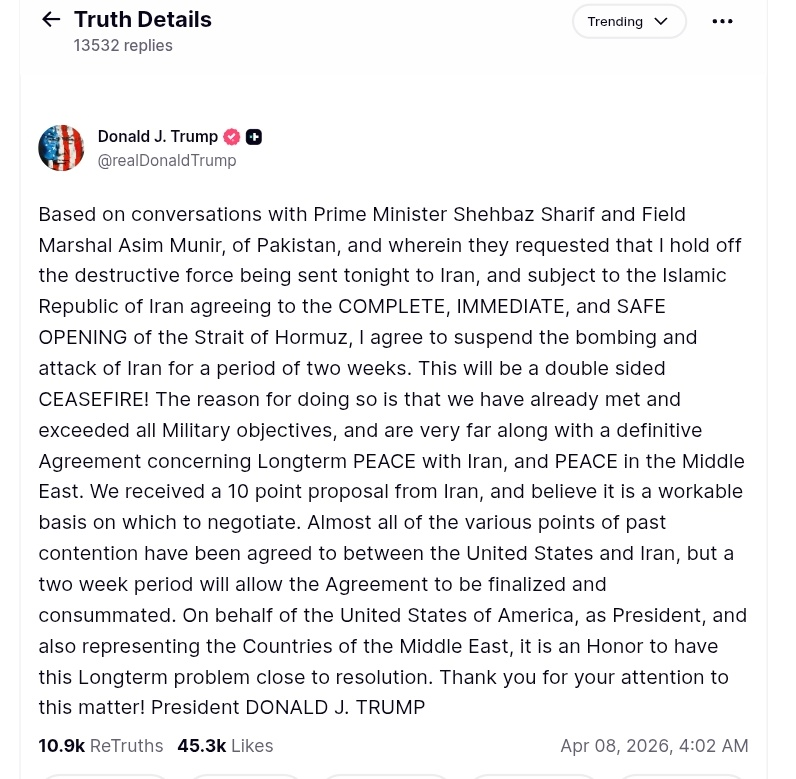
Image – Trump announcing ceasefire on Truth Social
The announcement came roughly 90 minutes before Trump’s own self-imposed 8 p.m. deadline, which he had attached to threats of destroying Iranian bridges, power plants, and civilian infrastructure. Hours earlier, he had posted that “a whole civilization will die tonight” if no deal was reached — language that triggered a wave of condemnation across both parties.
Operation Epic Fury, the joint US-Israel campaign that began on February 28, had been running for 39 days. In that time, Supreme Leader Khamenei was killed in the opening strikes, Iran’s nuclear facilities were degraded, and the Strait of Hormuz was effectively closed to global shipping. The ceasefire did not end the conflict. It paused it, and talks between the US and Iran are scheduled to begin in Islamabad on April 10.
The Strait of Hormuz Was the Real Deadline
The Strait of Hormuz is the single most important energy chokepoint on earth. Roughly 20 percent of the world’s daily oil supply passes through it. When Iran closed it after the war began, the immediate shock was historic. The International Energy Agency called it “the greatest global energy security challenge in history.” Brent crude surged above $100 per barrel. Oil futures spiked 10 to 13 percent in the opening days alone.
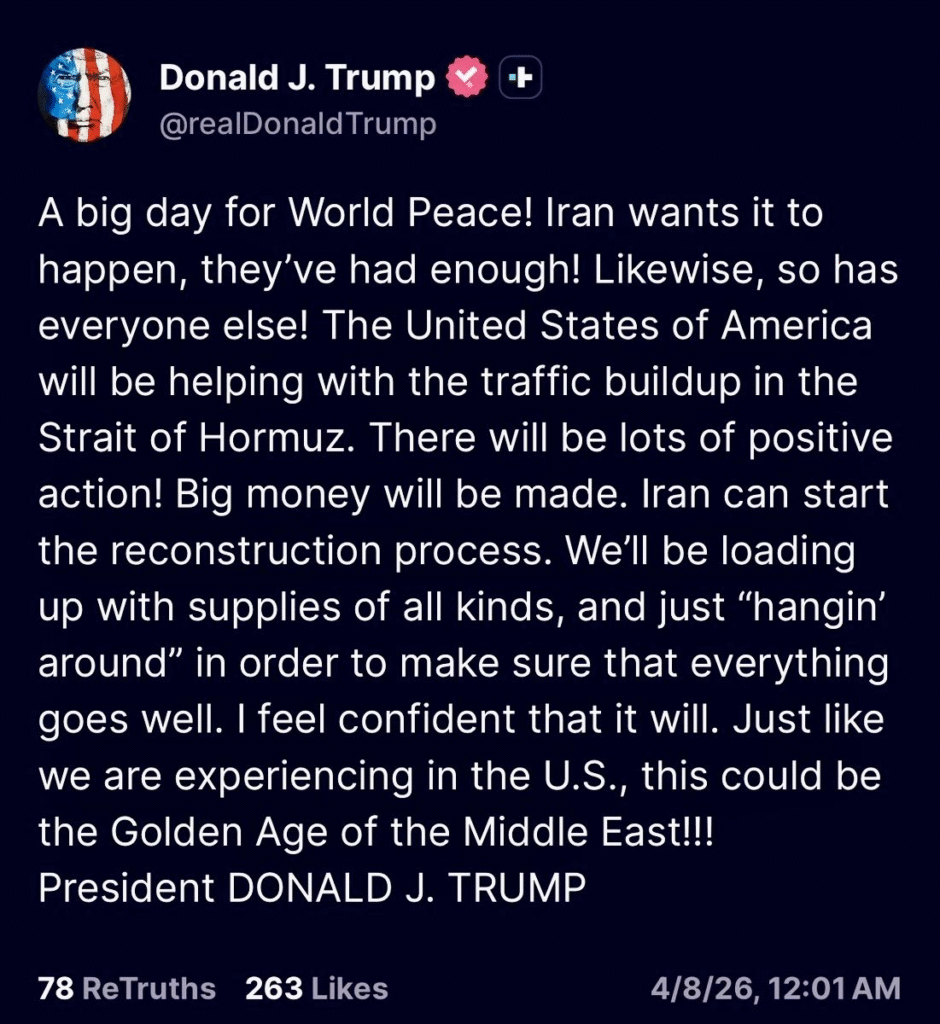
The closure was not just a geopolitical problem. It was a direct assault on the American economy. Every extra dollar per barrel of oil translates within weeks into higher gasoline, diesel, jet fuel, food transport, and fertilizer costs for ordinary Americans. The US could not sustain a prolonged Hormuz closure without triggering an economic crisis at home. That reality, more than any diplomatic achievement, explains the urgency behind the ceasefire.
The Financial Cost of 39 Days of War
The numbers are staggering. The first six days of Operation Epic Fury cost US taxpayers approximately $11.3 billion, according to a Pentagon briefing to Congress. The Center for Strategic and International Studies estimated the first 100 hours cost around $3.7 billion, roughly $891 million per day. By early April, independent analysts placed the total direct military expenditure at over $45 billion, with a daily burn rate of nearly $1 billion driven by precision munitions, carrier strike group operations, and missile defence.
Those figures do not include the economic fallout beyond the battlefield. Gas prices for American consumers jumped nearly 50 percent from the February 28 baseline. The average American household faced an estimated $235 in additional fuel costs over the coming year just from the Hormuz disruption. Fertilizer prices rose 35 percent, airline jet fuel costs surged 70 percent, and grocery bills began climbing as supply chains absorbed the shock.
Senator Elizabeth Warren captured the arithmetic bluntly: while 15 million Americans had lost healthcare access, the country was spending a billion dollars a day bombing Iran. That kind of political arithmetic has consequences.
Washington’s Domestic Pressure Was Becoming Unsustainable
Trump’s political standing at home deteriorated sharply as the war continued. An Economist/YouGov poll from early March found just 38 percent of Americans approving of his job performance, with 58 percent disapproving. A Quinnipiac survey found 53 percent of voters opposed the war outright. Prediction markets showed the probability of Trump facing a third impeachment at nearly 47 percent, with Kalshi’s contract touching 67 percent at its peak.
Congressional Democrats grew increasingly aggressive. By Tuesday evening, more than 85 House Democrats had called for Trump’s removal via impeachment or the 25th Amendment, including Alexandria Ocasio-Cortez and former Speaker Nancy Pelosi. Articles of impeachment were formally introduced by Representative John Larson. Even some Republicans expressed discomfort, with Senator Ron Johnson saying publicly he hoped Trump’s civilisation-destruction threats were “bluster.”
The 2026 midterm elections loom. Democrats are already building their campaign around the war’s economic damage. A president heading into midterms with sub-40 approval ratings, active impeachment articles, and $3.79 gas prices had every incentive to find an off-ramp. The ceasefire provided one.
A Pause, Not a Settlement — What the Ceasefire Does Not Resolve
Trump claimed in his ceasefire post that the US had “already met and exceeded all Military objectives.” That claim deserves scrutiny. Here is what remains unchanged after 39 days of war:
No permanent agreement has been signed. No structural deal governing Iran’s nuclear programme exists. Iran’s missile and drone capabilities remain largely intact. Its regional proxy networks in Lebanon, Yemen, and Iraq are still operational. The regime itself, though decapitated at the top, has not been replaced. Iran’s new leadership did not capitulate. It negotiated.
The ceasefire is exactly what its name says: a temporary cessation of fire. It resolves nothing structurally. Two weeks from now, every unresolved issue will still be on the table.
The Gaza Precedent: Why Ceasefires Are Not Conclusions
The Gaza conflict offers an instructive parallel. Between October 2023 and early 2025, multiple ceasefires were announced, collapsed, and renegotiated. Each pause was used by both sides to regroup, resupply, and recalibrate. Israel ultimately pursued its military objectives across each ceasefire gap. The pauses did not signal the end of the conflict — they were operational tools used within a longer strategic campaign.
The same logic applies here. A two-week negotiating window in Islamabad may produce partial agreements, but it will not resolve the fundamental US objective that triggered the war: preventing Iran from acquiring nuclear weapons and dismantling its capacity to threaten the regional order. That objective has not been achieved. Iran’s nuclear programme was damaged, not destroyed. A ceasefire under those conditions is a pause between rounds, not a final bell.
The Regime Change Question That Nobody Is Answering
The US went to war with Iran in a context of maximum strategic pressure — strikes on nuclear facilities, assassination of senior leadership, and prolonged aerial bombardment. The implicit logic of that campaign pointed toward one goal: fundamental change in Iran’s political and security structure.
That goal has not been achieved. The Iranian state is battered but functional. It accepted a ceasefire on terms it could live with — Hormuz reopened in exchange for a bombing pause. It did not disarm, did not surrender its proxy networks, and did not agree to any binding nuclear framework. Calling this a strategic success, as Trump’s Truth Social post did, requires ignoring what the war was supposed to accomplish in the first place.
A government that can negotiate its own ceasefire terms is not a government that has been strategically defeated.
Conclusion: A Pause in Conflict, Not the End of the Contest
The two-week ceasefire is real, and the de-escalation of immediate violence matters. But the framing of this moment as a diplomatic triumph obscures more than it reveals.
The US spent over $45 billion, watched gas prices surge, absorbed serious domestic political damage, and failed to achieve the structural outcomes that justified the war’s scale. Iran survived intact enough to negotiate. The Strait of Hormuz reopened not because America won, but because both sides needed the bleeding to stop.
What comes next in Islamabad will determine whether this pause becomes a foundation for something durable or simply the opening act of the next escalation. Based on the unresolved fundamentals, betting on durability requires a lot of faith in two weeks of diplomacy to accomplish what 39 days of bombardment could not.
Frequently Asked Questions
Q: Does the two-week ceasefire mean the US-Iran war is over?
No. The ceasefire is a temporary pause, not a permanent settlement. No binding agreement has been signed, Iran’s nuclear programme remains unresolved, and its regional proxy networks are still active. The Islamabad talks beginning April 10 are meant to negotiate a longer-term deal, but the structural issues that started the conflict remain entirely unaddressed.
Q: How much has the Iran war cost the United States?
Direct military costs exceeded $45 billion by early April 2026, with a burn rate of nearly $1 billion per day. Beyond military spending, American consumers faced a nearly 50 percent rise in gas prices, higher grocery and fertilizer costs, and the broader economic drag of the Strait of Hormuz closure, which disrupted roughly 20 percent of the world’s daily oil supply.