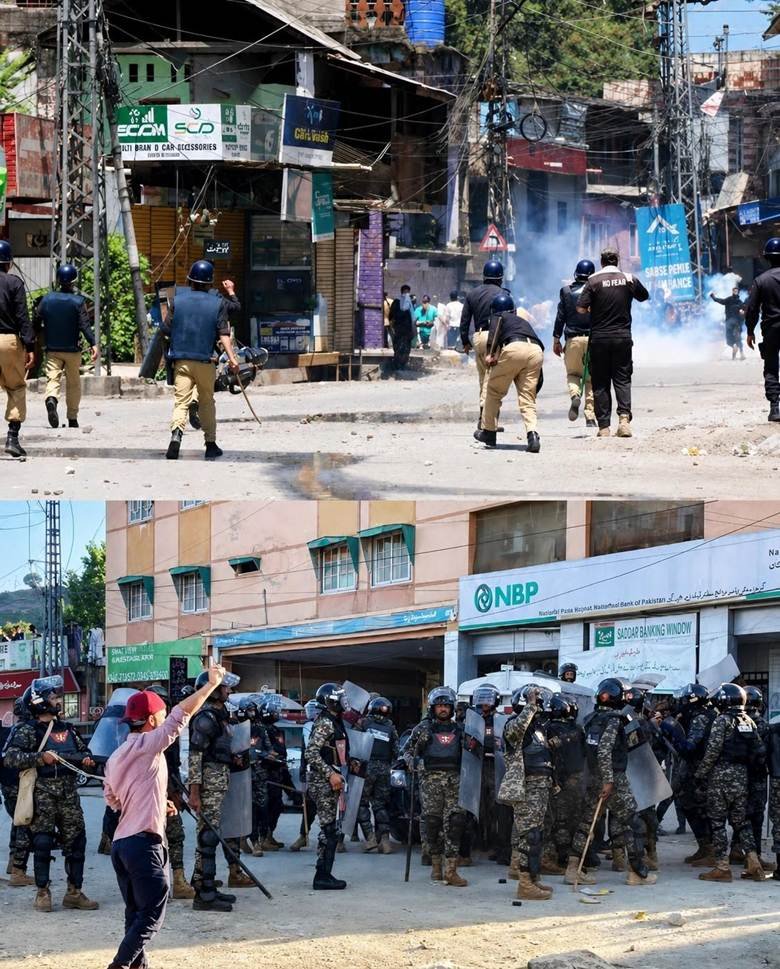
A fresh wave of unrest has engulfed
Pakistan-Occupied Kashmir (PoK), sparking international alarm. Violent clashes between security forces and civilian protesters have claimed multiple lives and left dozens injured. As the situation rapidly deteriorates ahead of a massive region-wide strike on June 9, major global powers, including the United States, Canada, the United Kingdom, and Australia, have issued urgent travel warnings. In response, Pakistan has imposed strict media and internet blackouts, leaving the international community deeply concerned about the ground reality.
The Trigger Behind the Chaos
At the heart of the current crisis is the Joint Awami Action Committee (JAAC), a prominent civil society alliance leading the protests. The JAAC called for a massive “shutter-down” strike to demand an end to severe economic hardship and political marginalization.
The core reasons driving the public anger include:
- Crushing Inflation: Pakistan’s national inflation has peaked at around 11%, but the economic impact in PoK is devastating. Locals are struggling with soaring prices for basic necessities, including wheat and milk.
- Unaffordable Electricity: Despite the region housing vast local hydroelectric resources, the power generated is sent to other provinces, while locals are forced to pay exorbitantly high electricity bills.
- Systemic Neglect: For decades, the region has suffered from a severe lack of development. Funds intended for PoK are often diverted to provinces like Punjab and Sindh, leaving the area without quality universities, hospitals, or modern infrastructure.
- Political Disenfranchisement: A recent government decision to reserve 12 seats in the regional assembly for refugees living outside Kashmir has sparked widespread outrage. Locals view this as a direct attack on their political representation and local rights.
Violent Crackdown and Media Blackout
Instead of addressing the public’s grievances through dialogue, the Pakistani government has chosen to use force. Authorities recently banned the JAAC under anti-terrorism laws, a move that severely backfired and sparked intense clashes in areas like Rawalakot. According to recent reports from independent media outlets, at least 11 people have been killed—including police officers and protesters—and over 70 people have been injured.
To suppress news of this brutal crackdown, the government completely shut down internet services and imposed a media blackout. The exact number of civilian casualties remains unknown, raising severe human rights concerns. The Human Rights Commission of Pakistan (HRCP) has expressed deep alarm over the state violence and announced a fact-finding mission to investigate the abuses.
Global Powers Issue Urgent Warnings
The deteriorating security situation has forced Western nations to sound the alarm, leaving Pakistan’s diplomatic circles in a state of panic:
- United States: The US Embassy issued a strict travel alert, restricting all forms of tourism in the region from June 5 to June 20. The US has asked its citizens to exercise extreme caution and avoid the planned protest zones.
- Canada: The Canadian government issued a firm advisory, warning that it will not be able to provide consular assistance in these conflict zones. Notably, Canada referred to the region as “Pakistan-Administered Kashmir,” a stance closer to the ground reality than Pakistan’s official terminology.
- United Kingdom: Several British Members of Parliament have written formal letters to their government, urging an immediate investigation into the police brutality and civilian killings taking place in the region.
- Australia: Joining the North American and European nations, Australia has also updated its travel advisories, warning citizens of heavy security deployments and communication blackouts.
Reactions from Pakistan and India
The international spotlight has put Islamabad in a difficult position. Pakistan’s government has rejected the foreign warnings, labeling them “unwarranted remarks” and insisting that the unrest is purely an internal matter. However, experts note that Pakistan is deeply concerned about images of the crackdown leaking to the outside world, which would further expose its administrative failures. Furthermore, the upcoming regional elections scheduled for July are largely viewed by locals as a mere eyewash orchestrated by the military-backed regime.
Meanwhile, India has maintained a strong and clear stance. The Indian government recently reiterated that Pakistan is illegally occupying the territory and must vacate Pakistan-Occupied Kashmir immediately.
In Essence
The anger in PoK has reached a boiling point. The citizens are exhausted by decades of financial exploitation, high taxes, and a lack of basic human rights. If the Pakistani establishment continues to use military force against civilians rather than addressing their genuine economic and political demands, the region could face a severe humanitarian crisis. The coming days will be critical in determining whether the government steps back or pushes the region further into chaos.