A coordinated racket of sexual harassment, blackmail, and alleged religious conversion pressure has been uncovered at a TCS BPO unit in Nashik. Nine FIRs have been registered, seven accused arrested, and a Special Investigation Team formed. Here is the full picture.
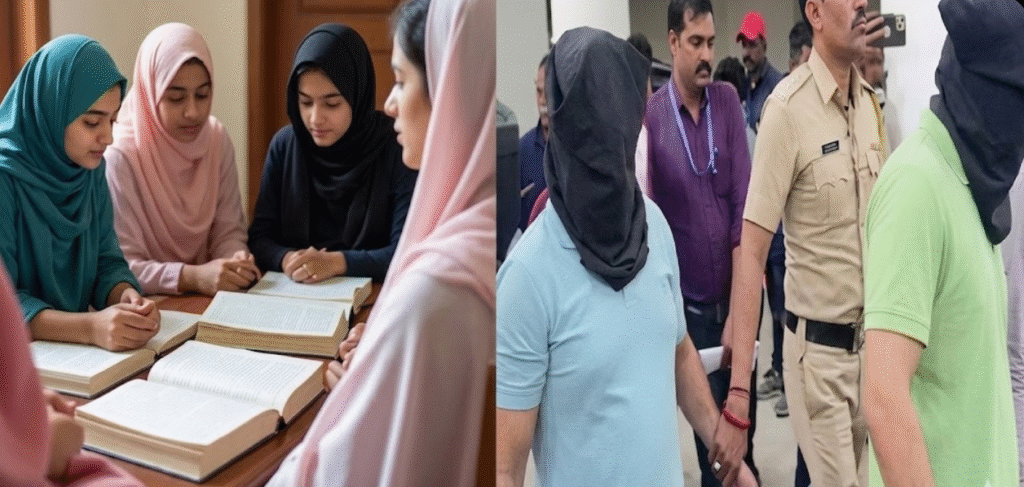
The Main Allegations: Shocking New Revelations from TCS BPO Allegations
The TCS BPO facility in Nashik, Maharashtra, had approximately 300 employees. Of these, around 40 were Muslim men, several holding supervisory positions as team leaders. According to accounts now circulating widely and backed by multiple FIRs, this group allegedly maintained a separate WhatsApp group in which they coordinated the targeting of Hindu women employees, deciding collectively which woman to pursue next.
The allegations include: repeated sexual harassment and inappropriate physical contact at the workplace, obscene remarks about victims’ bodies and personal lives, deliberate insults to Hindu religious sentiments, exploitation through false promises of marriage, blackmail using compromising photographs allegedly taken during outings, and sustained pressure on victims to convert to Islam.
One specific incident at Imagica, a popular amusement park, has been referenced in social media accounts: three accused men allegedly took a female employee on a trip, photographed her in compromising positions in wet clothes, used those photographs to coerce ongoing sexual exploitation, and then leveraged that coercion for conversion pressure.
Complaints made to the HR department over years were reportedly dismissed. Police investigation has found that the HR head, identified as Nida Khan, was allegedly complicit in suppressing these complaints.
How It All Came Out
The first formal complaint was filed on March 26, 2026, at the Mumbai Naka Police Station, by a Dalit woman who had endured the alleged targeting from 2022. In fresh revelations, she also told investigators that the accused were planning to send her to Malaysia. Within days, eight more women came forward. By April 2, nine FIRs had been registered against the accused: Danish Sheikh, Tausif Attar, Raza Memon, Shahrukh Qureshi, Asif Ansari, Shafi Sheikh, and female accused Ashwini Chainani. Nida Khan remains absconding.
The accused have been booked under BNS Sections covering sexual harassment, molestation, outraging religious sentiments, and organised crime under the Maharashtra Control of Organised Crime Act (MCOCA).
The Undercover Operation and State Government Response
The breakthrough came through a bold undercover operation. Seven women police officers entered the TCS facility in plain clothes and reportedly witnessed one of the accused directly misbehaving with female staff. The operation, which lasted nearly a week, was authorised at the highest level, with CM Devendra Fadnavis ordering a detailed SIT probe. Fadnavis described the case as “very serious” and praised police for swift action. More than 40 CCTV clips are now under examination as evidence.
Statements of over 15 victims have been recorded. Digital evidence including mobile phones and laptops has been seized. Police have set up a dedicated WhatsApp number (9923323311) for additional victims to come forward.
Tata Group Chairman N. Chandrasekaran called the allegations “anguishing” and has ordered an internal probe led by Aarthi Subramanian. TCS issued a formal statement confirming that all employees under investigation have been suspended and that the company is cooperating fully with law enforcement.
The Alleged Racket: A Step-by-Step Pattern
Based on the FIRs and victim testimonies, a distinct pattern emerges across the complaints.
The accused, positioned as team leaders, identified junior and financially vulnerable Hindu women employees as targets. They built trust through friendly interactions and social outings. They then progressed to emotional manipulation, false promises of marriage, and physical exploitation. Once compromising situations were created, blackmail followed. Continued exploitation was then linked to pressure for religious conversion. Complaints to HR were systematically suppressed.
This is not a picture of isolated misconduct. It is, as investigators are now treating it, a pattern of organised behaviour.
Corporate Accountability: POSH Act Under Scrutiny
Nashik District Collector Ayush Prasad has ordered a separate inquiry specifically into TCS Nashik’s compliance with the Prevention of Sexual Harassment (POSH) Act. The core question is whether a functioning Internal Complaints Committee existed and whether it discharged its legal obligations when complaints were made.
The arrest of an HR manager for allegedly sitting on abuse complaints is an almost unprecedented development in Indian corporate legal history. It signals clearly that POSH compliance cannot remain a documentation exercise. Companies that suppress complaints now face the possibility of their HR personnel facing personal criminal liability.
Union Minister Bandi Sanjay Kumar has already urged the Telangana DGP to hold urgent meetings with major IT companies across Hyderabad over the implications of this case for the broader sector.
Is This an Organised Network or an Isolated Case?
Hindu Janajagruti Samiti and other organisations have raised concerns that this may not be a Nashik-specific case but part of a wider network extending to Mumbai and other cities. Social media has been flooded with testimonies from employees in other IT companies, though those remain unverified. The SIT is currently focused on establishing the full scope of what occurred at Nashik before drawing broader conclusions.
What is clear from the Nashik evidence alone is that the pattern was not spontaneous. The WhatsApp coordination, the shared targeting of specific women, the suppression of complaints through HR channels, and the years-long duration of the conduct all point toward something more structured than individual criminal impulse.
A Note on Vigilance
The victims in this case faced manipulation by people placed above them in the workplace hierarchy, and many who tried to resist were threatened or blackmailed. Blame rests entirely with those who perpetrated these alleged crimes and those who enabled them. That said, the broader lesson for women working in any corporate environment is worth stating plainly: awareness about the people around them, caution about social outings with colleagues in positions of authority, and knowledge of their rights under the POSH Act are important tools of self-protection. Being informed is not weakness. It is the first line of defence in a system that, as this case shows, does not always protect those who need it.
Conclusion: Strict Action, Systemic Audits, and Awareness at Every Level
The Nashik TCS case demands three things simultaneously. First, the SIT investigation must run to its full conclusion without political interference or dilution. Second, a formal corporate audit of POSH compliance, internal complaint mechanisms, and workplace safety standards must be conducted not just at TCS Nashik but across the IT and BPO sector. Third, awareness of this pattern must reach every young woman entering the workforce.
The women who came forward despite years of suppression showed enormous courage. The institutions around them failed. That failure must not be repeated.