IPL 2026 | Match 25 | Narendra Modi Stadium, Ahmedabad | 17 April 2026
Introduction
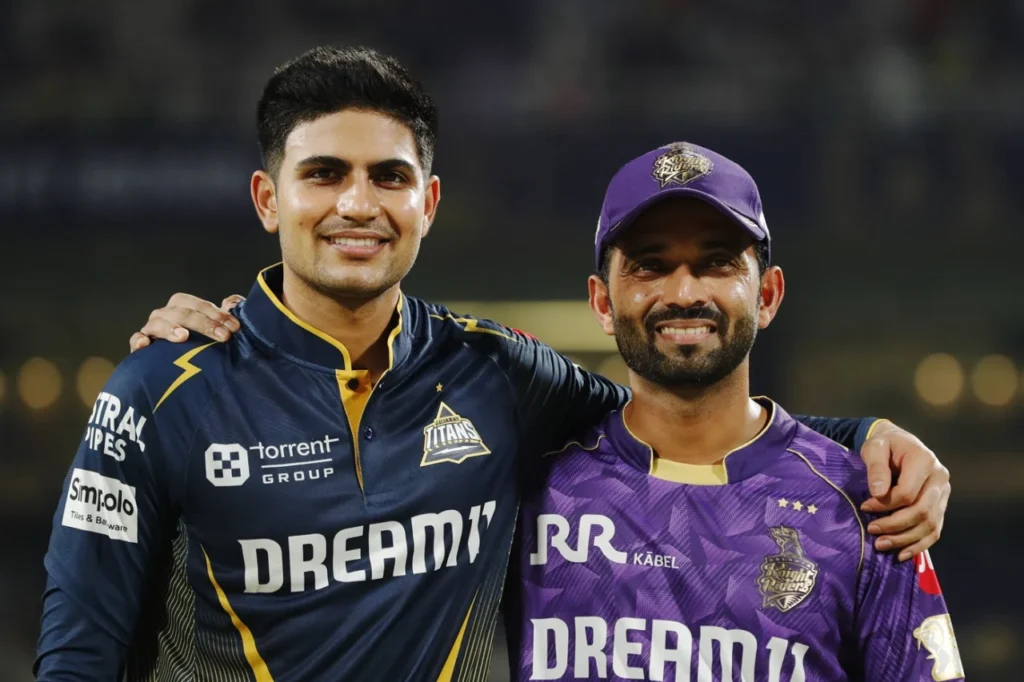
The 25th match of the Indian Premier League 2026 between GT vs KKR proved to be a lopsided affair, with the home side asserting complete dominance at the Narendra Modi Stadium in Ahmedabad. While the match had the ingredients of a competitive T20 contest, GT’s clinical bowling in the first half and Shubman Gill’s masterful innings in the second half made it a convincing win for the Titans.
The game arrived at a critical juncture for both franchises, albeit for very different reasons. Gujarat Titans came in with momentum and a settled squad, hungry to consolidate their position in the top half of the IPL 2026 standings. Kolkata Knight Riders, on the other hand, were in the midst of one of the worst starts any three-time champion has ever endured in the history of the tournament, having failed to register a single win in their first five outings.
What unfolded over 40 overs told the story of two teams moving in opposite directions. GT were ruthless with the new ball, devastating with their experienced pace attack, and controlled in their chase. KKR showed fleeting moments of individual brilliance, particularly through Cameron Green’s rescue act, but lacked the collective cohesion to mount any serious challenge.
Match Summary
| MATCH | Gujarat Titans vs Kolkata Knight Riders (Match 25, IPL 2026) |
| Date | 17 April 2026, Friday |
| Venue | Narendra Modi Stadium, Ahmedabad |
| Toss | KKR won the toss and opted to bat |
| KKR Score | 180 all out (20 overs) |
| GT Score | 181/5 (19.4 overs) |
| Result | Gujarat Titans won by 5 wickets |
| Player of the Match | Shubman Gill (GT) – 86 off 50 balls |
First Innings: Kolkata Knight Riders (180 all out in 20 overs)
Powerplay Disaster (Overs 1-6): 32/3
Kolkata Knight Riders won the toss and chose to bat first at the Narendra Modi Stadium, a decision that immediately proved costly. Gujarat Titans, who had clearly prepared a game plan to attack the top order, deployed their pace duo of Kagiso Rabada and Mohammed Siraj from the outset with tremendous effectiveness.
Captain Ajinkya Rahane was the first wicket to fall, dismissed off the very first ball of his innings by Mohammed Siraj. The sight of their captain trudging back to the pavilion without scoring set an ominous tone for what was to come. Tim Seifert and Sunil Narine followed in quick succession, reducing KKR to 32/3 at the end of the powerplay. The GT seamers had exploited the conditions with precision, hitting the right lengths and extracting enough movement to trouble all three departing batters.
Middle Overs Recovery: The Cameron Green Show
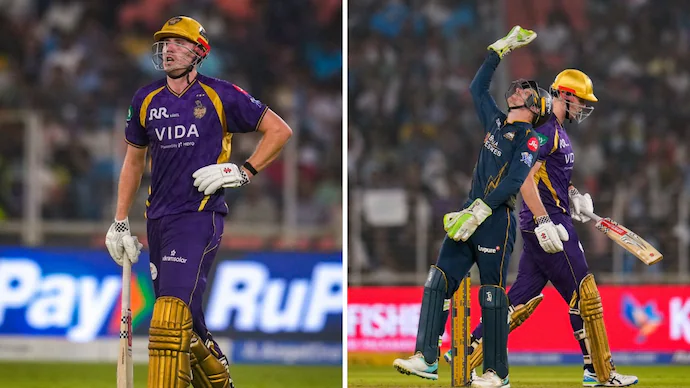
With three wickets down and the scoreboard in disarray, Cameron Green emerged as KKR’s unlikely saviour. The Australian all-rounder had had a quiet season prior to this contest, averaging just 56 runs in five innings largely because of poor positional usage. Here, batting at No. 4, he found his rhythm quickly and played the kind of innings that had made him such a coveted T20 asset.
Green formed a crucial partnership with Rovman Powell in the middle overs, helping KKR recover from 32/3 to 80/3 at the halfway stage. Powell chipped in with 27 runs off 20 balls before departing, but Green continued to accelerate. He smashed Rashid Khan for 16 runs in a single over, demonstrating the attacking intent that had been missing from KKR’s top order. Green raced to 75 not out from 44 balls as he carried the fight virtually on his own.
Death Overs Collapse (Overs 16-20): 30 runs in final 5 overs
Just as Green seemed set to single-handedly lift KKR to a competitive total, the GT bowlers reasserted their authority in the death. KKR managed only 30 runs in the final five overs, a period that exposed the lack of batting depth and support Green was receiving. The tail offered little resistance, and the innings folded for 180, a total that, while competitive on paper, looked below par on this particular surface.
Cameron Green’s final tally of 79 off 55 balls, including 7 fours and 4 sixes at a strike rate of 143.63, was one of the better individual batting performances of the match, and arguably the only reason KKR reached 180. Without that innings, a score close to 150 would have been a more realistic reflection of KKR’s batting depth on the day.
KKR Batting Scorecard
| Batsman | Runs | Balls | 4s | 6s | SR | Notes |
| Ajinkya Rahane (c) | 0 | 1 | 0 | 0 | 0.00 | Out 1st ball |
| Tim Seifert | 19 | 14 | 2 | 1 | 135.71 | Fell in powerplay |
| Sunil Narine | Low | – | – | – | – | Early dismissal |
| Cameron Green | 79 | 55 | 7 | 4 | 143.63 | Top scorer, rescue act |
| Rovman Powell | 27 | 20 | 2 | 2 | 135.00 | Good cameo |
| Rinku Singh | – | – | – | – | – | Did not contribute |
| TOTAL | 180 all out | (20 ov) |
GT Bowling Figures
| Bowler | Overs | Runs | Wickets | Economy | Notes |
| Kagiso Rabada | 4 | 29 | 3 | 7.25 | Destroyed top order |
| Mohammed Siraj | 4 | 23 | 2 | 5.75 | Excellent opening spell |
| Rashid Khan | 4 | – | 1 | – | Kept runs in check |
| Prasidh Krishna | 4 | – | – | – | Support seamer |
Second Innings: Gujarat Titans (181/5 in 19.4 overs)
Powerplay Blitz (Overs 1-6): 71/1
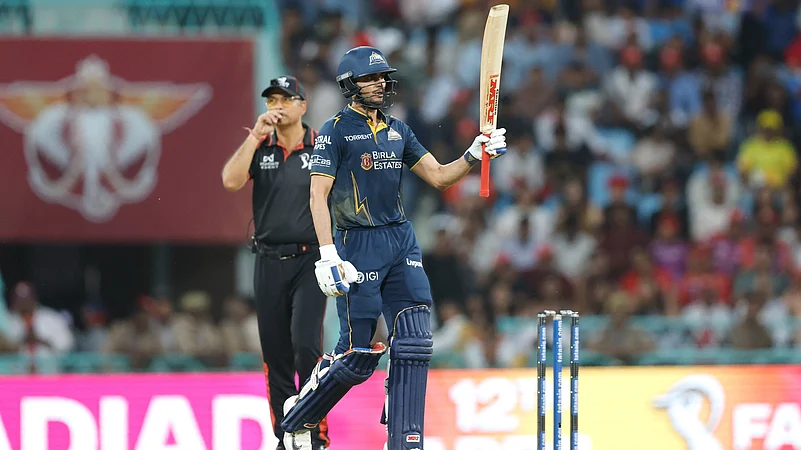
If KKR’s powerplay was a disaster, Gujarat Titans’ was the exact opposite. Shubman Gill set the tone from the very first over, taking on the KKR bowlers with purposeful aggression. The GT skipper reached his half-century by the midpoint of the innings and the opening partnership between Gill and Jos Buttler gave their side a platform that KKR could not have hoped to defend.
GT scored 71/1 in the powerplay, meaning they needed just 110 runs from the remaining 14 overs with nine wickets in hand. The match was effectively won in those first six overs. KKR’s pace options had been depleted by injury earlier in the season, and their bowling attack on the night looked toothless. Narine, Vaibhav Arora, and Kartik Tyagi all conceded runs without posing any sustained threat to the well-set Gill.
Gill’s Masterclass: 86 off 50 balls
Shubman Gill’s innings was the centrepiece of the entire match. The GT captain batted with exceptional clarity of mind, rotating the strike efficiently, punishing the loose balls, and accelerating precisely when required. His knock of 86 runs off 50 deliveries included 8 boundaries and 4 sixes, struck at a blistering strike rate of 172.00.
Gill reached 81 not out from 46 balls before being dismissed by a sensational catch from Cameron Green in the deep – one of the few highlights for the KKR fielding unit on a difficult evening. By the time Gill departed, GT needed just 32 runs from 24 balls, and the game was well beyond KKR’s reach. Sai Sudharsan added 22 off 16 and Glenn Phillips contributed 19 to ensure there was no unnecessary drama at the end.
GT eventually reached the target of 181 in 19.4 overs, winning by five wickets with two balls to spare. The win was comprehensive, the scorecard perhaps not reflecting just how dominant GT had been throughout the contest.
GT Batting Scorecard
| Batsman | Runs | Balls | 4s | 6s | SR | Notes |
| Shubman Gill (c) | 86 | 50 | 8 | 4 | 172.00 | Player of the Match |
| Jos Buttler (wk) | 25 | – | – | – | – | Solid start |
| Sai Sudharsan | 22 | 16 | 1 | 2 | 137.50 | Useful contribution |
| Glenn Phillips | 19 | – | – | – | – | Chipped in late |
| TOTAL | 181/5 | (19.4 ov) | Won by 5 wkts |
KKR Bowling Figures
| Bowler | Overs | Runs | Wickets | Economy | Notes |
| Varun Chakravarthy | 4 | 34 | 2 | 8.50 | Best KKR bowler |
| Sunil Narine | – | 28 | 1 | – | – |
| Vaibhav Arora | – | 35 | 1 | – | – |
| Ramandeep Singh | – | 5 | 1 | – | Late wicket |
| Kartik Tyagi | – | – | 0 | – | Expensive |
Key Highlights of the Match
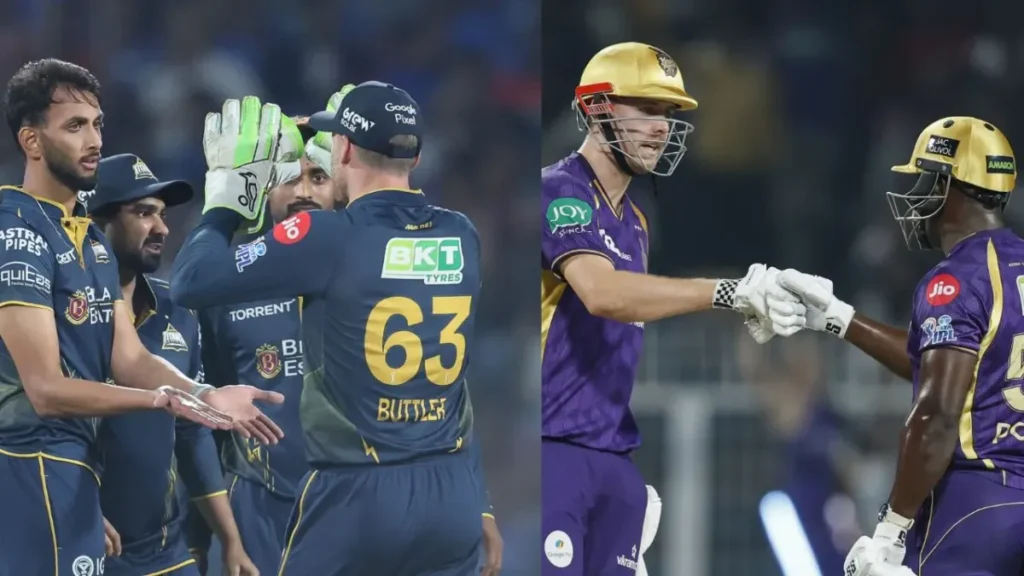
GT’s Pace Attack Dismantles KKR’s Top Order
The single biggest factor in the match was the devastating opening spell from Kagiso Rabada and Mohammed Siraj. Rabada finished with 3/29 from 4 overs, while Siraj contributed 2/23 from his full allocation. Together they reduced KKR to 32/3 in the powerplay, a start from which KKR never truly recovered. The combination of Rabada’s pace and Siraj’s accuracy proved unplayable for KKR’s top three, who offered little resistance.
Cameron Green’s Lone Ranger Act
In a match dominated by the home side, Cameron Green’s 79-run innings deserves recognition as one of the most valiant individual efforts in a losing cause during IPL 2026. After arriving at the crease with the innings in tatters, Green batted with composure and aggression to drag KKR from a precarious position to at least a competitive total. His 79 was an innings that showed his immense T20 potential, though his usage lower down the order in previous games this season had robbed KKR of his best returns.
Shubman Gill Claims Orange Cap
Gill’s knock of 86 was not just instrumental in the chase but also significant from an individual milestone perspective. With his half-century in this match, Gill snapped the Orange Cap from Royal Challengers Bengaluru’s Virat Kohli, moving to the top of the IPL 2026 run charts. Across the season so far, Gill has accumulated 426 runs in 9 matches at an average of 53.25 and a strike rate of 152.14.
GT’s Dominant Powerplay with the Bat
GT’s powerplay total of 71/1 was one of the most destructive in any chase during IPL 2026. The way Gill and Buttler attacked from ball one ensured KKR’s bowlers never had the chance to settle into any rhythm. By the time the fielding restrictions were lifted, the match was already beyond KKR’s realistic reach.
Turning Points
1. Rahane’s First-Ball Duck
The manner in which KKR’s campaign has mirrored their captain’s personal struggles was encapsulated in that first ball. Rahane was dismissed without scoring, and the ripple effect on KKR’s fragile batting confidence was palpable as two more wickets fell in quick succession.
2. Green and Powell’s Partnership
The 40-plus run stand between Cameron Green and Rovman Powell represented KKR’s best chance of posting a genuinely challenging total. While they managed to push KKR beyond 150 and eventually to 180, the absence of another reliable partner for Green meant the innings had a ceiling that was ultimately not high enough.
3. GT’s Powerplay Chase of 71/1
The first six overs of Gujarat Titans’ innings effectively ended the contest as a competitive affair. With 71 runs on the board and only one wicket down, GT had given themselves a mountain of a cushion. There was no scenario from that point forward where KKR could have realistically won the game, barring an extraordinary collapse.
4. Green’s Catch to Dismiss Gill
The only moment where GT’s march towards victory required some composure was when Green took a sensational catch in the deep to dismiss the in-form Gill for 86. With GT still needing 32 from 24 balls, there was momentary tension, but the remaining batters wrapped it up without drama.
Top Performers
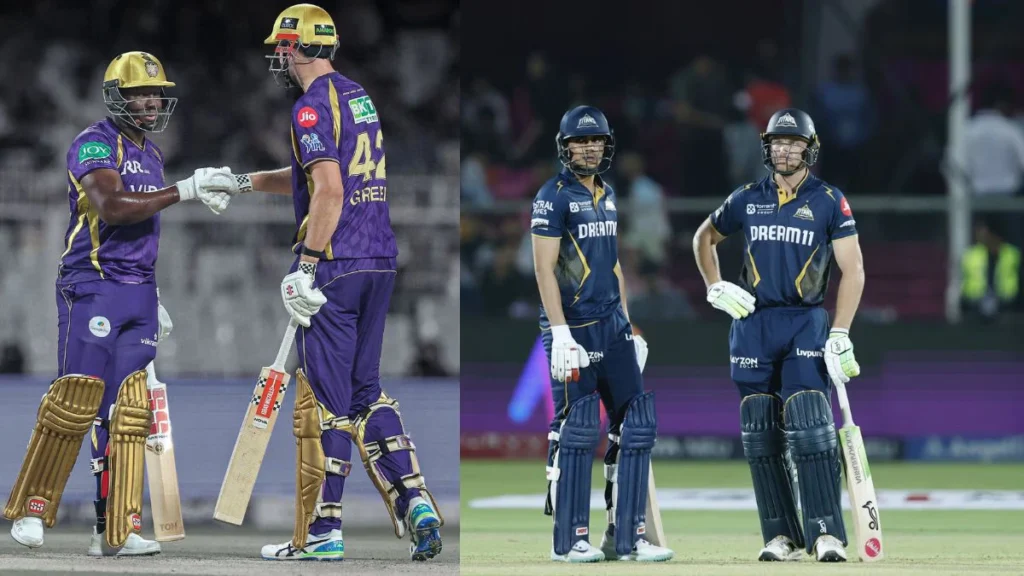
Player of the Match: Shubman Gill (GT)
- 86 runs off 50 balls at a strike rate of 172.00
- 8 fours and 4 sixes
- Led GT’s powerplay chase to 71/1 with a majestic opening partnership
- Claimed the Orange Cap from Virat Kohli with this innings
- Demonstrated exceptional reading of the match situation throughout
Best Bowler: Kagiso Rabada (GT)
- 3 wickets for 29 runs from 4 overs at an economy of 7.25
- Took the key wickets of Narine, Seifert, and Raghuvanshi in the powerplay
- Set the tone for a dominant bowling display with the new ball
Standout Performer for KKR: Cameron Green
- 79 runs off 55 balls at a strike rate of 143.63 (7 fours, 4 sixes)
- Rescued KKR single-handedly from 32/3
- Also took a sensational catch in the deep to dismiss Gill for 86
Post-Match Reactions
Shubman Gill (GT Captain)
Gill was characteristically self-critical despite a Player of the Match winning knock. He expressed personal frustration at not finishing the chase and vowed to do better in future high-pressure situations. He said he had used the months before IPL 2026 to work on his fitness and mental approach, noting that not just technical improvement but tactical sharpness had been his priority during the break. On claiming the Orange Cap, Gill remained focused on team goals rather than individual milestones.
Ajinkya Rahane (KKR Captain)
Rahane acknowledged that KKR need to dramatically improve their consistency across all three departments. His own first-ball dismissal added to the growing body of evidence that his batting form has been a liability this season. The KKR camp was tight-lipped about any imminent changes to personnel or captaincy, but the pressure on the management to act was clearly mounting after a sixth match without a win.
Impact on the IPL 2026 Points Table
The win elevated Gujarat Titans to fourth place on the IPL 2026 standings, earning them two crucial points and strengthening their case as genuine playoff contenders. For Kolkata Knight Riders, the defeat extended their winless run to six matches across the 2026 season, leaving them at the foot of the table with just one point – earned from a washed-out game against Punjab Kings.
KKR’s plight is historically significant. This marks the first time in the franchise’s history that they have failed to win any of their opening six matches in an IPL season. The team that won back-to-back IPL titles in 2024 and reached the final in 2023 now requires a near-miraculous turnaround – winning virtually all of their remaining eight matches – to have any realistic chance of qualifying for the playoffs.
Royal Challengers Bengaluru, the defending IPL champions, continue to lead the standings, with Mumbai Indians, Chennai Super Kings, and Lucknow Super Giants all in contention for the top positions. Gujarat Titans’ win keeps them very much in the frame for a top-four finish.
KKR’s Season in Crisis: The Bigger Picture
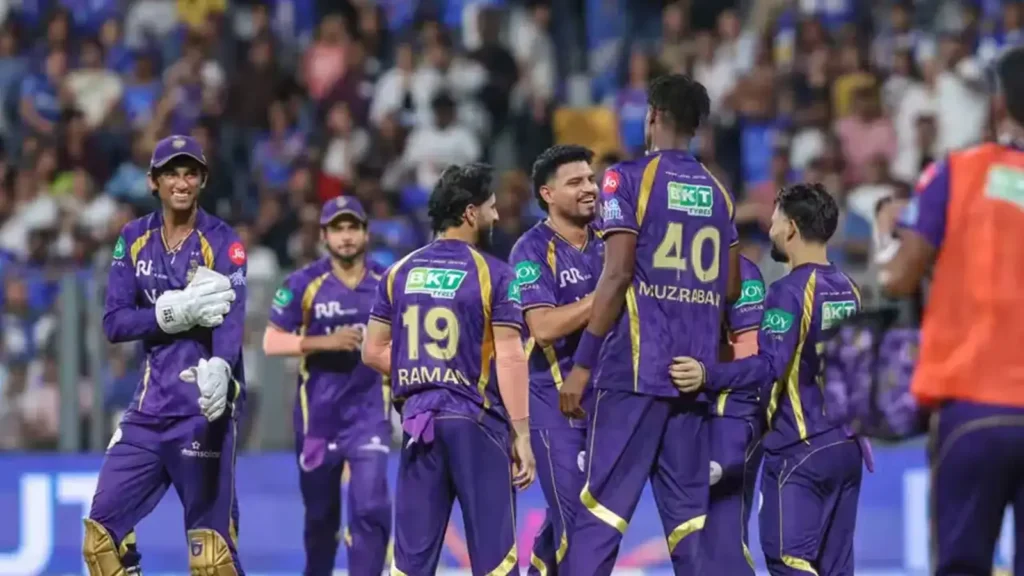
The Captaincy Question
The most pressing issue confronting the KKR management is the captaincy of Ajinkya Rahane. Former India World Cup winner Kris Srikkanth publicly called for KKR to reconsider the captaincy appointment, suggesting that Sunil Narine should be handed the leadership role in the second half of the tournament if results do not improve. Srikkanth described the original decision to appoint Rahane as skipper a ‘wrong move’, calling on the franchise to show the courage to reverse it.
Rahane’s slow strike rate has repeatedly been highlighted as a misfit in the modern T20 landscape. His batting has been described by analysts as a structural problem within KKR’s middle order, creating a bottleneck that opposing spinners and death bowlers have been quick to exploit. In the match against Chennai Super Kings, Rahane’s slow approach in the middle overs was identified as a key reason KKR failed to chase a target of 193.
Batting Inconsistency and Positional Problems
The ESPNcricinfo analysis following the CSK defeat highlighted a fundamental structural issue with KKR’s batting lineup. Cameron Green, their most explosive overseas batsman, had batted in a different position in almost every game of the season. In games where he had been given the opportunity to bat in the top three, Green had produced back-to-back fifties and a century. In the lower middle order, his highest score had been just 17 not out.
Against GT, Green finally batted at No. 4 and delivered. But the absence of support around him suggests that the squad’s balance is still not right, with multiple ‘bits-and-pieces’ players occupying spots that require specialist batsmen or bowlers.
The Legacy of Shreyas Iyer’s Departure
The root cause of KKR’s prolonged decline can arguably be traced to the release of Shreyas Iyer following the 2024 IPL triumph. Under Iyer, KKR had won two IPL titles and were a cohesive, high-performing unit. Rahane’s appointment was met with scepticism from the outset, and the subsequent results have only added fuel to those concerns. In IPL 2025, KKR finished eighth and missed the playoffs entirely. The same pattern of inconsistency and underperformance has been replicated in 2026 with even greater severity.
Gujarat Titans: Building Playoff Momentum
For Gujarat Titans and captain Shubman Gill, the win over KKR represented another positive step in what has increasingly looked like a well-organised IPL 2026 campaign. The Titans had earlier in the season dealt with Gill’s absence due to a muscle spasm – he had missed the game against Rajasthan Royals – but his return to fitness and form has been decisive.
GT’s squad balance is frequently cited by commentators as one of the most complete in the tournament. With Rabada and Siraj as the pace spearheads, Rashid Khan as a premier spinner, and Gill providing aggressive leadership at the top, the side has clear match-winners in every department. Head coach Ashish Nehra has been credited with building a disciplined, tactically astute unit that rarely makes the same mistake twice.
The one note of caution for GT emerged from Gill himself in his post-match comments – the recognition that the chase took longer than it should have, and that his personal dismissal for 86 when he was well set was a moment of opportunity missed. That standard of self-critical assessment is, however, exactly the mindset one associates with top-four playoff sides.
What Next?
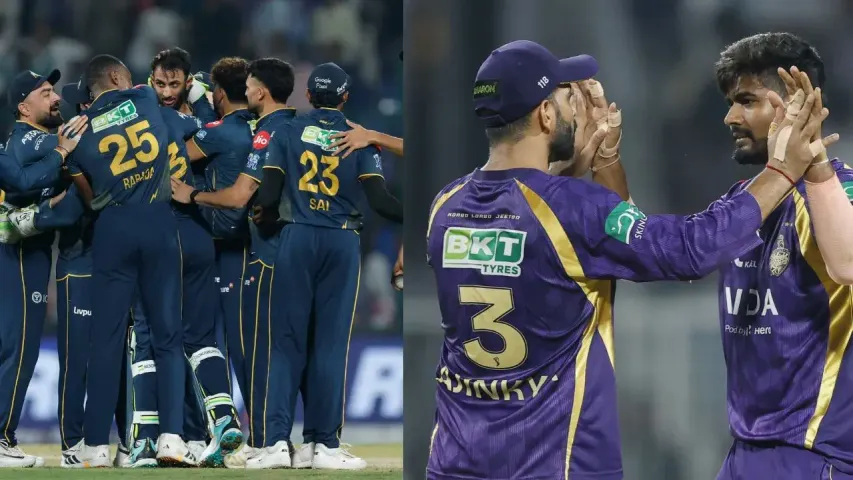
Gujarat Titans
Gujarat Titans continue their IPL 2026 campaign with upcoming fixtures that will test their credentials against stronger opposition. Their combination of in-form batsmen and high-quality bowlers, combined with the home advantage of the Narendra Modi Stadium, positions them as a genuine threat heading into the second half of the league stage. A top-two finish is not beyond them.
Kolkata Knight Riders
For KKR, the road ahead is extraordinarily difficult. With six games played and zero wins, they need to win virtually every remaining fixture just to stay in mathematical contention for the playoffs. The management faces increasingly difficult decisions around captaincy, team selection, and positional usage that must be resolved quickly. Whether they follow the precedent set by franchises like MI in earlier seasons – who turned a poor start into an eventual title – remains to be seen. The talent is present in the squad; whether the leadership and structure can harness it in time is the defining question of KKR’s 2026 campaign.
Frequently Asked Questions (FAQs)
Q1. Who won the GT vs KKR match on 17 April 2026?
Gujarat Titans won by 5 wickets, successfully chasing KKR’s total of 180 in 19.4 overs at the Narendra Modi Stadium, Ahmedabad.
Q2. What was the final score of the GT vs KKR IPL 2026 match?
KKR scored 180 all out in 20 overs. Gujarat Titans chased the target down, finishing on 181/5 in 19.4 overs.
Q3. Who was the Player of the Match?
Shubman Gill was awarded the Player of the Match for his outstanding knock of 86 off 50 balls, which included 8 fours and 4 sixes at a strike rate of 172.00. His innings anchored the chase and gave GT an unassailable platform from the outset.
Q4. Who is the best bowler in the GT vs KKR match?
Kagiso Rabada was the standout bowler of the match, finishing with figures of 3/29 from 4 overs. He dismantled KKR’s top order in the powerplay, setting the tone for a dominant bowling effort by the entire GT unit.
Q5. Why did KKR score so few runs in the powerplay?
KKR were undone by disciplined and aggressive bowling from Rabada and Siraj, who exploited the conditions with the new ball. Captain Ajinkya Rahane was dismissed for a duck off the first ball, with Seifert and Narine also falling cheaply. The top order collectively failed to cope with the movement and pace on offer, leaving KKR at 32/3 after the powerplay.
Conclusion
The GT vs KKR match on 17 April 2026 was a comprehensive statement from Gujarat Titans about their credentials as one of the leading contenders in IPL 2026. From the opening over, when Kagiso Rabada sent Ajinkya Rahane back to the pavilion first ball, to the moment Shubman Gill launched another boundary to bring up his 50, every phase of the match belonged to the men in blue and gold.
Shubman Gill was at his authoritative best, combining elegance with aggression in a way that only the very top T20 batsmen in the world can manage. His knock of 86 was not simply about the runs accumulated, but about the control he exerted over the KKR bowlers and the clarity with which he read the game situation. The Orange Cap is a fitting reward for a player who has so consistently delivered for his franchise this season.
For Kolkata Knight Riders, the urgency of their situation cannot be overstated. A franchise with three IPL titles to their name and some of the most talented players in T20 cricket globally – including Narine, Powell, Green, and Chakravarthy – has produced a campaign that falls far short of their potential. The structural issues around captaincy, batting order, and squad balance must be addressed swiftly if they are to have any hope of replicating the miraculous turnarounds that other franchises have managed in the past.