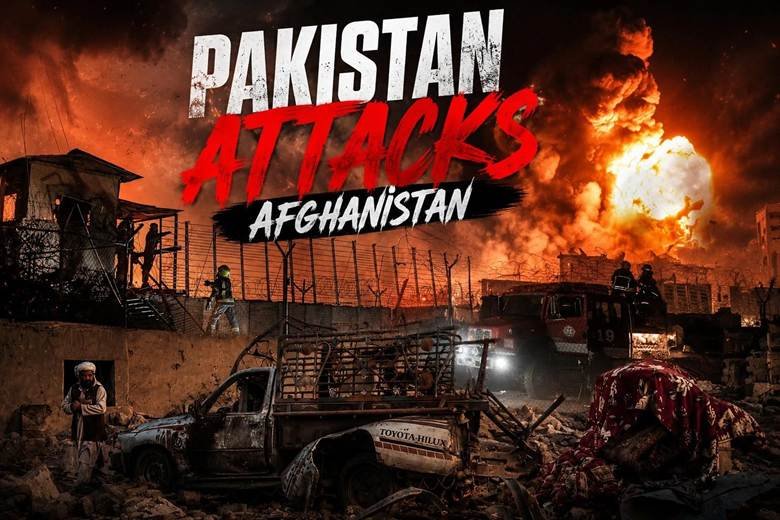
Tensions between Pakistan and Afghanistan have reached a boiling point once again. Afghan officials report that recent Pakistani airstrikes in eastern Afghanistan have killed at least 13 people, the majority of them children.
The renewed violence marks a dangerous escalation in a border conflict that has claimed hundreds of lives since late February.
The Airstrikes and Casualties
According to Zabihullah Mujahid, the chief spokesperson for the Taliban-led Afghan government, the Pakistani military violated Afghanistan’s airspace overnight, bombing civilian homes across three provinces: *Khost, Kunar, and Paktika*.
The strikes resulted in a devastating human toll. Mujahid confirmed that 13 people were killed, including 11 children, one woman, and one elderly man. At least 14 other civilians, primarily women and children, were wounded in the bombings.
“We strongly condemn this humanitarian crime and this aggression,” Mujahid said in a public statement, accusing Pakistan of targeting innocent civilians.
What Triggered the Attacks?
While the Pakistani government and military have not issued an immediate official confirmation of the strikes, security sources indicate the operation was aimed at militant strongholds. Security officials told international news outlets that the airstrikes targeted “hideouts and other facilities” used by Pakistani militants to launch attacks across the border.
The airstrikes occurred just a day after a deadly confrontation at a border outpost in Pakistan’s Khyber Pakhtunkhwa province. Suspected militants attacked a security checkpoint in the Hasan Khel area, triggering a fierce gun battle. Six Pakistani security personnel were killed and several others wounded. In response, Pakistani forces reported killing eight attackers and thwarting the assault.
Following the outpost attack, Pakistan’s Interior Minister Mohsin Naqvi vowed that operations against groups threatening national security would be intensified, setting the stage for the recent cross-border airstrikes.
The Broader Conflict: The TTP Issue
The core of the bitter conflict between the two neighboring nations revolves around the *Tehrik-e-Taliban Pakistan (TTP)*, commonly known as the Pakistani Taliban.
- Pakistan’s Stance: Islamabad repeatedly accuses the Afghan government of providing a safe haven for TTP militants. Pakistan claims these fighters use Afghan territory as a base to plan and execute deadly attacks on Pakistani soil.
- Afghanistan’s Stance: The Taliban government in Kabul consistently denies these allegations. They argue that they do not harbor foreign militants and insist that Pakistan’s security challenges are an internal problem.
Though the TTP is a separate organization from the Afghan Taliban, the two groups are closely allied. The Afghan Taliban’s return to power in 2021 following the withdrawal of U.S.-led forces have emboldened the TTP, leading to a surge in cross-border violence.
A Region on Edge
The relationship between these former allies has rapidly deteriorated into open hostilities. Since February—when Afghanistan launched its own cross-border attacks in retaliation for previous Pakistani bombings—the two countries have engaged in heavy artillery exchanges and retaliatory strikes.
Despite brief, temporary ceasefires, the fighting has not stopped. As diplomatic ties fray and military actions intensify, the human cost continues to rise. For the civilians living along the mountainous border of Khost, Kunar, and Paktika, the escalating war of words has tragically transformed into a war of airstrikes, leaving families shattered and regional stability hanging by a thread.