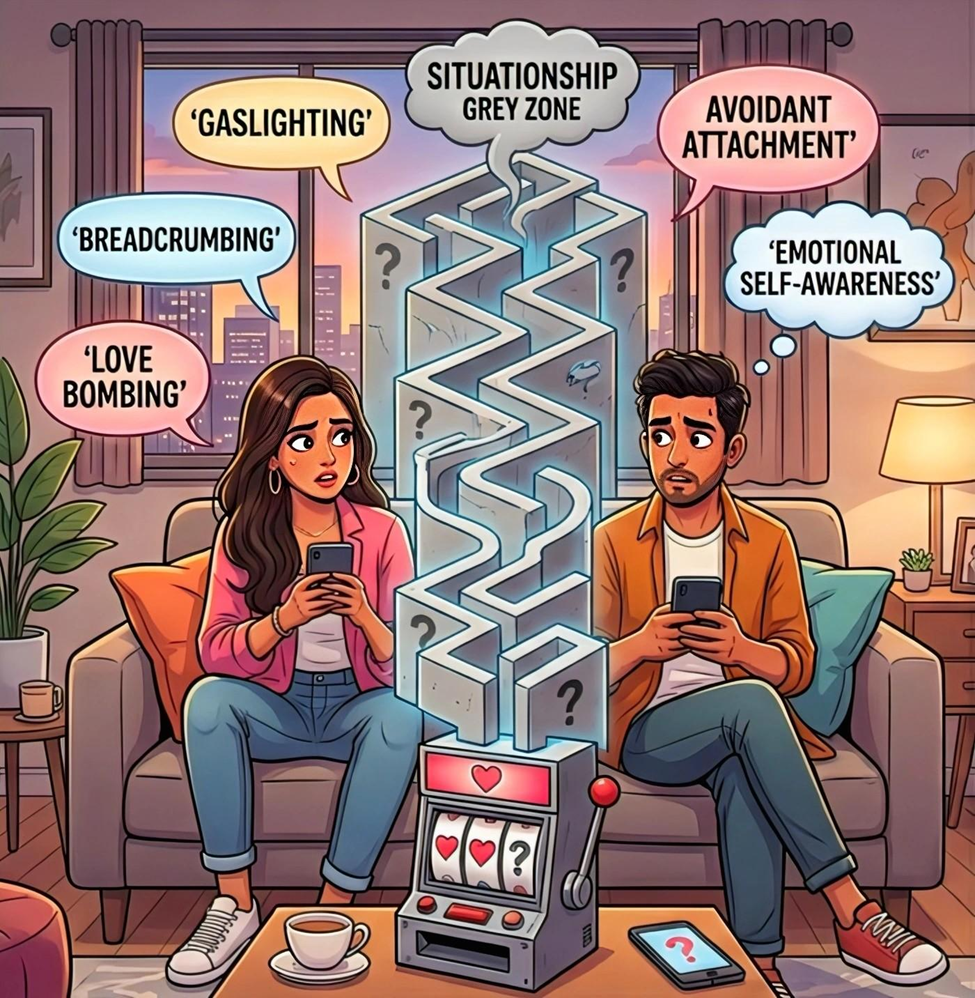
Modern dating has never been more articulate. Today, young adults fluently use clinical terms like “love bombing,” “avoidant attachment,” and “breadcrumbing.” They listen to relationship podcasts, read self-help books, and can spot a “red flag” from a mile away.
Yet, despite this high level of emotional awareness, an undefined relationship dynamic—the “situationship”—is quietly becoming the norm across India.
A situationship offers the emotional and physical intimacy of a real relationship, but strictly avoids any labels, commitment, or future planning.
The “Therapy Language” Illusion
Having the right vocabulary does not always lead to making the right choices. While modern daters are incredibly capable of diagnosing bad behavior, this intellectual awareness does not stop them from participating in it.
People often believe that because they understand *why* a situationship is unhealthy, they can control it. They tell themselves they are just “going with the flow” or “keeping things casual.” However, the lack of boundaries quickly turns this casual setup into a source of deep anxiety. Knowing the word for “breadcrumbing” (giving someone just enough attention to keep them hooked) does not make the experience hurt any less.
The Slot Machine Effect: Why We Stay
Psychologists point out that situationships are incredibly difficult to leave because they rely on a powerful mental hook called “intermittent reinforcement.”
When a partner is inconsistent—sending warm, loving signals one week and acting distant the next—it triggers the same response in the brain as a slot machine. Because the reward (attention or affection) is unpredictable, the brain releases spikes of dopamine when you finally get it. This push-and-pull dynamic keeps people constantly guessing, waiting for the next text, and over-analyzing every interaction. The uncertainty does not weaken the attachment; it actually makes it stronger and more addictive.
The Indian Context and the Gender Divide
In India, the rise of the situationship is also fueled by cultural and professional pressures. Many young professionals use situationships as a shield. They want companionship, but they want to avoid the heavy traditional expectations of meeting the family, discussing marriage, or compromising their fast-paced careers.
Interestingly, the way men and women approach these dynamics is shifting. The stereotype is that men avoid commitment while women seek it, but reality is more complex. Relationship experts and platforms like Mumbai’s *The Intimacy Curator* report a distinct divide:
- Heterosexual men often seek advice on how to find partners who are open to situationships.
- Women and gay men, on the other hand, frequently seek help on how to protect themselves from falling into these traps, or how to upgrade a situationship into a committed relationship.
The issue has become so widespread that “situationship coaching” is now a growing service in metropolitan cities, helping people navigate the specific heartbreak of losing a relationship that was never “official.”

The Silent Emotional Toll
While a situationship might sound like a practical, low-stress arrangement on paper, the emotional reality is often exhausting. Recently, IITian-turned-ISKCON monk Gauranga Das highlighted why this trend is so harmful to mental health. He noted three major emotional costs:
- The Pain of Waiting: You are constantly waiting for a text, a plan, or a sign that the other person is ready to commit.
- Emotional Suppression: People in situationships often hide their true feelings. They avoid starting arguments or asking for support because they do not want to appear “clingy” or demanding.
- Endless Overthinking: Without a secure foundation, you are left questioning your self-worth and wondering where you stand every single day.
The Bottom Line
A situationship provides the illusion of a relationship without the safety net of true partnership. At its core, the rise of the situationship proves one simple truth: all the therapy buzzwords in the world cannot override the fundamental human desire for connection.
People enter these grey zones because they crave intimacy, but they stay in them out of fear—fear of rejection, fear of traditional expectations, or fear of being alone. Ultimately, moving past the situationship era requires more than just knowing the right psychological terms. It requires the courage to communicate openly, set firm boundaries, and walk away from connections that offer confusion instead of clarity.