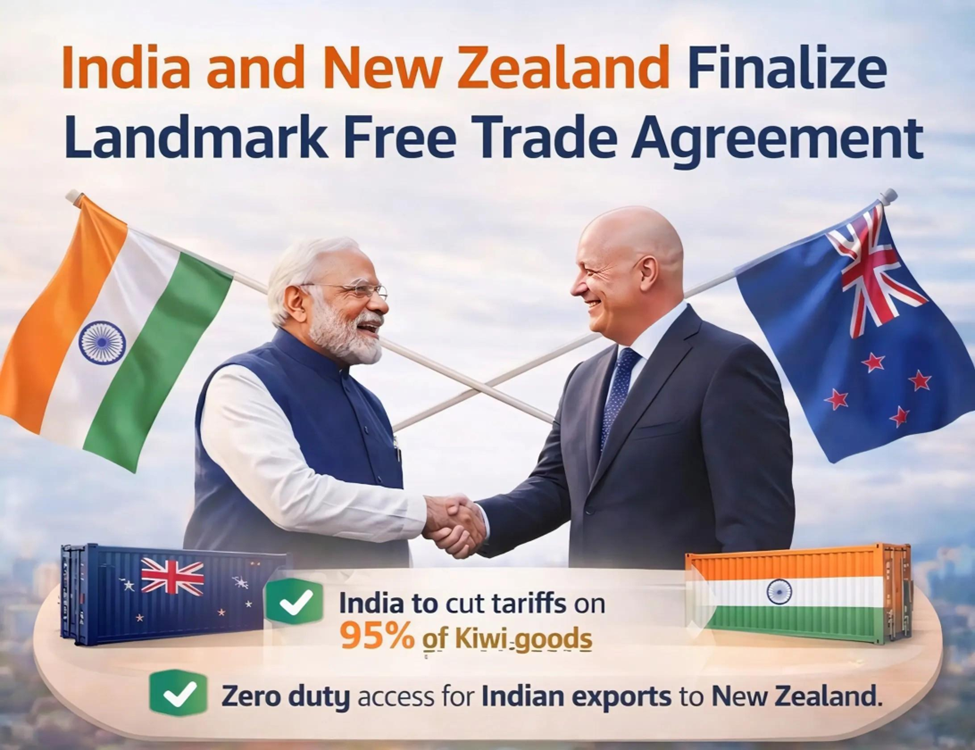
NEW DELHI — Tomorrow, April 27, is set to be a landmark day for international commerce as India and New Zealand officially sign a highly anticipated Free Trade Agreement (FTA).
Described by the New Zealand Prime Minister as a “once-in-a-generation agreement,” the comprehensive pact has a clear and ambitious goal: to completely double the current bilateral trade volume between the two nations.
After months of high-level negotiations, New Delhi and Wellington are ready to lock in the deal. But beyond the diplomatic handshakes, what does this agreement actually mean for the economy, and how will it impact India on the ground?
A Major Win for Indian Industry and Jobs
For India, this FTA is far more than a symbolic partnership—it is a direct catalyst for industrial growth and employment. By significantly reducing, and in many cases eliminating, tariffs on a wide range of goods, Indian exporters are about to gain unprecedented access to the New Zealand market.
Commerce and Industry Minister Piyush Goyal has specifically pointed out the regional benefits of the deal, noting that the agreement will serve as a massive boost for industrial hubs like Agra. With easier export conditions, manufacturing and traditional industries in such regions are positioned for rapid expansion, which is expected to translate directly into large-scale job creation.
What’s Inside the Deal? Key Features to Expect
While the absolute fine print of the treaty will be made public after the signing tomorrow, the overarching features of the FTA are set to redefine how the two countries do business:
- Aggressive Tariff Reductions: Indian exports—particularly in sectors like textiles, footwear, pharmaceuticals, and machinery—will become highly competitive in New Zealand due to slashed import duties.
- Boosted Investment Flows: The agreement promises streamlined regulations, making it easier and more attractive for New Zealand investors to bring capital into India’s booming tech, infrastructure, and manufacturing sectors.
- Service Sector Opportunities: A major focus of the pact is expected to be the service sector. Indian IT professionals, consultants, and service providers will likely see eased regulations and better mobility, making it easier to work with New Zealand firms.
Strategic Gains for New Delhi
For the Indian government, locking in this FTA is a vital strategic victory. It aligns perfectly with New Delhi’s broader goal of expanding its economic footprint across the Indo-Pacific region. By securing a reliable, high-income market like New Zealand, India is continuing to integrate its rapidly growing economy into the global supply chain.
As the leaders prepare to put pen to paper tomorrow, business communities on both sides of the equator are watching closely. If the ambitious targets set by both administrations are met, this deal will not just double trade numbers—it will set a new, dynamic standard for economic partnerships in the region.