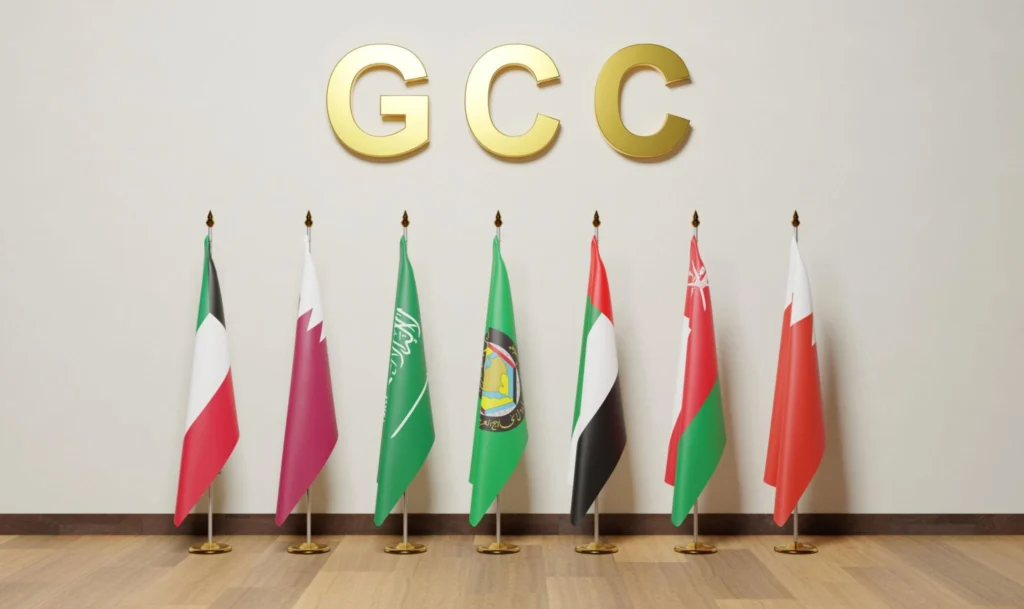
The Gulf Cooperation Council (GCC) is one of the most influential regional alliances in the Middle East and among the most economically powerful blocs in the entire world. Known for vast oil wealth, formidable sovereign wealth funds, and rapidly developing economies, GCC countries play a crucial role in global energy supply, international investment markets, and geopolitical stability across the Middle East and beyond.
Over the past four decades, the GCC has evolved from a security-focused alliance forged in the anxious climate of the early 1980s into a comprehensive economic, political, and social organization. It promotes trade integration, infrastructure development, cultural cooperation, and regional stability across six Arab nations. Cities like Dubai, Riyadh, Doha, Abu Dhabi, and Muscat have transformed from modest Gulf towns into globally recognized metropolitan centers attracting millions of tourists, expatriates, and investors every year.
This report covers the full story of the GCC its history and formation, member nations, organizational structure, economic importance, labor dynamics, security cooperation, diversification visions, key challenges, and its future trajectory.
What is the Gulf Cooperation Council (GCC)?
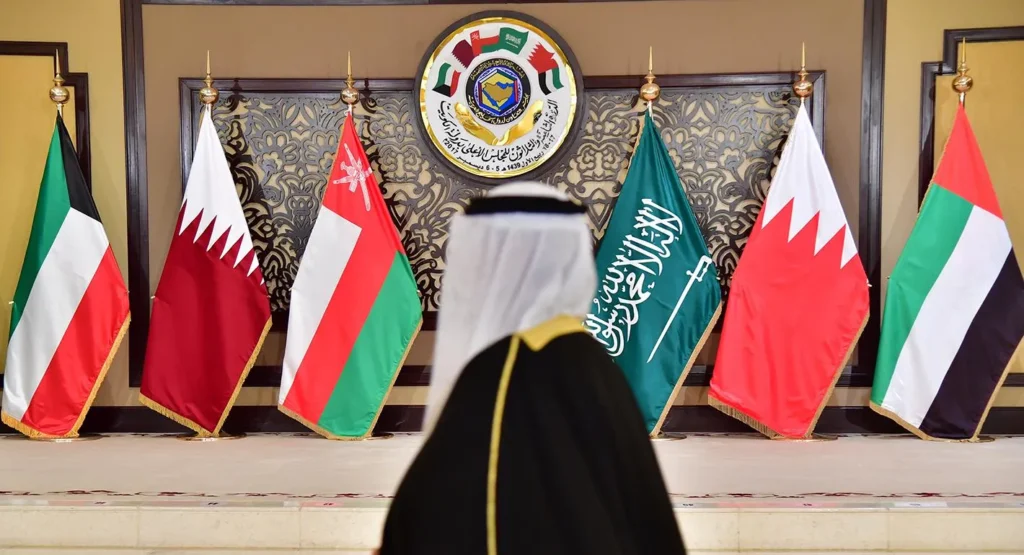
The Gulf Cooperation Council is a political, economic, and security alliance of six Arab nations situated along the western shores of the Arabian Gulf. The organization was founded on May 25, 1981, with the overarching goal of strengthening unity, fostering cooperation, and ensuring stability among the Gulf states.
GCC Meaning and Purpose
The GCC represents a cooperative framework built on shared cultural, linguistic, and economic interests. Its founding Charter defines its core purposes as:
- Promoting economic integration and a unified market among member states
- Ensuring regional security and coordinating defense strategies
- Encouraging trade, investment, and financial flows across borders
- Strengthening diplomatic relations with the wider world
- Improving living standards and social welfare across all member states
- Formulating similar legislation and regulations to align policy across the bloc
- Advancing scientific, technical, and cultural cooperation
History and Formation of the GCC
The Geopolitical Context
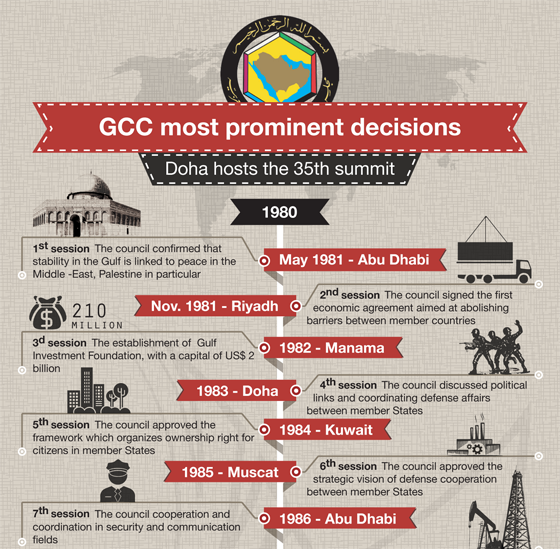
The GCC was established during a period of intense regional uncertainty. Three events catalyzed the decision to form a collective alliance. First, the Iranian Revolution of 1979 overthrew the Shah and installed an Islamist theocracy openly seeking to export its revolutionary ideology to neighboring Gulf monarchies. Second, the Soviet invasion of Afghanistan in December 1979 raised fears about superpower adventurism near the Arabian Gulf. Third, and most pressing, the Iran-Iraq War that erupted in September 1980 brought armed conflict to the doorstep of the Gulf and directly threatened the vital Strait of Hormuz shipping lanes through which the region’s oil exports traveled.
Facing these converging threats, the leaders of Saudi Arabia, Kuwait, Bahrain, Qatar, the UAE, and Oman concluded that collective action was essential. A unified organization would give them shared intelligence, coordinated defense, and a powerful collective voice on the global stage.
The Founding and Early Years
The founding summit was held in Abu Dhabi on May 25, 1981, where heads of state signed the GCC Charter and established the Secretariat-General in Riyadh. The Peninsula Shield Force the bloc’s joint military command was created in 1984. Through the 1990s, particularly after the Iraqi invasion of Kuwait in 1990 and the subsequent Gulf War, the GCC deepened both its security architecture and its economic cooperation. A GCC Common Market was formally launched in 2008, allowing citizens to work, invest, and trade freely across all member states.
The 2010s and 2020s saw each member launch sweeping national development visions Saudi Vision 2030, UAE Centennial 2071, Qatar National Vision 2030 signaling a decisive pivot toward post-oil economic planning and modernization.
GCC Countries The Six Member Nations
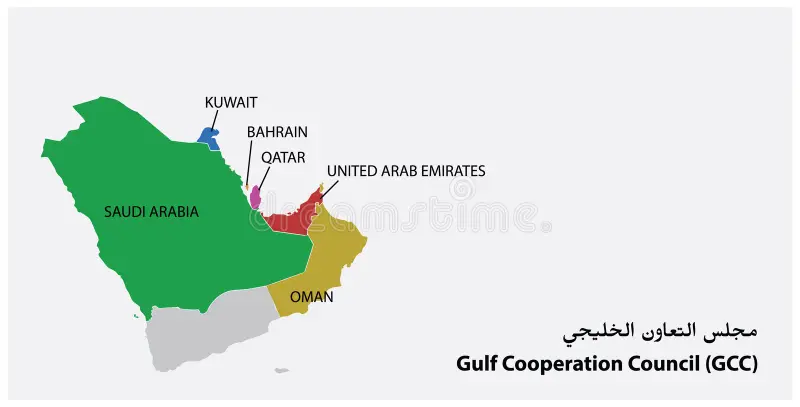
The GCC consists of six member nations, each with a distinct character, economic profile, and strategic importance. Together they form one of the world’s most cohesive and resource-rich regional blocs.
| Saudi Arabia | The anchor of the GCC with the largest economy (~$1.1T GDP) and population (~35M). World’s top oil exporter. Vision 2030 is transforming the economy through mega-projects like NEOM, the Red Sea Project, and Qiddiya. |
| United Arab Emirates | Most diversified GCC economy (~$500B GDP). Dubai is a global hub for trade, tourism, logistics, and finance. Abu Dhabi Investment Authority (ADIA) manages ~$900B. Over 88% of the population are expatriates. |
| Qatar | Small but globally powerful (~$220B GDP). World’s largest LNG natural gas exporter. Hosted FIFA World Cup 2022. Qatar Investment Authority (QIA) holds ~$450B in global assets including Harrods and PSG. |
| Kuwait | Wealthy oil-based monarchy (~$140B GDP, population ~4.7M). Kuwait Investment Authority (KIA) at ~$750B is the world’s oldest sovereign wealth fund, founded 1953. Kuwait Vision 2035 targets diversification. |
| Oman | Geographically diverse (~$105B GDP). Known for independent, balanced foreign policy. Vision 2040 focuses on tourism, manufacturing, logistics, and fisheries to reduce oil dependency. |
| Bahrain | Smallest member (~$40B GDP) but most financially diversified relative to size. First Gulf state to discover oil (1932). Leading regional banking and FinTech hub. Bahrain Economic Vision 2030 drives modernization. |
The GCC Region Geography and Characteristics
Geographic Overview
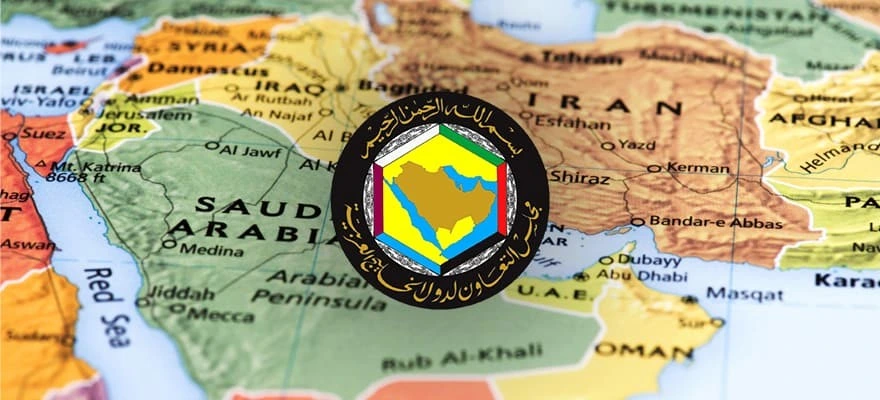
The GCC region spans approximately 2.67 million square kilometers along the western shores of the Arabian Gulf (also called the Persian Gulf). The Strait of Hormuz at its narrowest just 33 kilometers wide is the region’s most critical geographic feature: roughly 20% of the world’s total oil supply transits this chokepoint daily, making any disruption there an immediate global economic crisis.
The terrain is predominantly desert, featuring the vast Rub’ al Khali (Empty Quarter) the world’s largest contiguous sand desert as well as salt flats, rocky plateaus, and, along the Omani and UAE coastlines, dramatic mountains and lush wadis. The region contains some of the world’s fastest-growing and most visually dramatic cities.
Key Characteristics of the GCC Region
- Energy Dominance: The GCC holds approximately 30% of the world’s proven crude oil reserves and 20% of global natural gas reserves, making it the centerpiece of global energy supply.
- Strategic Trade Location: Positioned at the crossroads of Asia, Europe, and Africa, the region is a natural global logistics, aviation, and trade hub. Dubai International Airport is the world’s busiest for international passengers.
- Rapid Urban Development: Cities like Dubai, Riyadh, Doha, Abu Dhabi, and Muscat have undergone extraordinary physical transformation into world-class centers of finance, culture, and tourism.
- Large Expatriate Workforce: Millions of skilled and semi-skilled workers from South Asia, Southeast Asia, and the West contribute to economic growth. Expatriates form the majority of the population in UAE, Qatar, and Kuwait.
- Strong Sovereign Wealth Funds: GCC countries manage some of the world’s largest investment funds — collectively exceeding $3 trillion — which influence global financial markets, real estate, and technology sectors.
GCC Organizational Structure
The GCC operates through a structured institutional framework ensuring both strategic direction and day-to-day coordination.
Supreme Council
The Supreme Council is the highest decision-making authority, comprising the heads of state of all six member nations. It convenes annually at formal summits and can hold emergency sessions when urgent issues arise. The Council sets broad strategic goals, approves major agreements, and arbitrates disputes. Substantive decisions require unanimous consent, giving each member an effective veto over collective action.
Ministerial Council
Composed of the foreign ministers of all six nations, the Ministerial Council meets quarterly. It serves as the primary executive body implementing Supreme Council decisions, preparing summit agendas, and coordinating diplomatic positions on international issues such as trade agreements, security partnerships, and UN resolutions.
Secretariat General
Headquartered in Riyadh, the Secretariat-General is the administrative backbone of the GCC. Led by a Secretary-General appointed on a rotating basis among member states for three-year terms, it conducts policy research, drafts agreements, monitors the implementation of GCC decisions, and coordinates the work of numerous technical committees covering economy, finance, social affairs, environment, and security.
Dispute Settlement Commission
The GCC Charter provides for a Dispute Settlement Commission to resolve disagreements between member states through structured conciliation and arbitration helping manage the inevitable tensions that arise even among close partners.
Economic Importance of the GCC
Oil and Gas Exports
Hydrocarbon exports remain the backbone of GCC economies. Saudi Arabia, the UAE, Kuwait, and Qatar are consistently among the world’s top oil and gas exporters. Saudi Arabia alone holds the world’s second-largest proven crude oil reserves, while Qatar’s North Field is the single largest natural gas reservoir on the planet. GCC nations exercise significant influence within OPEC+ the expanded oil producers’ alliance with Saudi Arabia serving as the de facto swing producer capable of stabilizing or disrupting global oil prices.
Sovereign Wealth Funds
GCC sovereign wealth funds collectively represent some of the most powerful pools of investment capital in the world, with assets estimated above $3 trillion. These funds have been deployed globally, acquiring stakes in major corporations, luxury real estate, financial institutions, football clubs, and emerging technology firms.
| Abu Dhabi Investment Authority (ADIA) | ~$900 billion UAE’s primary SWF investing in global equities, bonds, real estate |
| Kuwait Investment Authority (KIA) | ~$750 billion World’s oldest sovereign wealth fund, established 1953 |
| Public Investment Fund (PIF) | ~$700 billion Saudi Arabia’s vehicle for Vision 2030 mega-projects and global investments |
| Qatar Investment Authority (QIA) | ~$450 billion Owns stakes in Harrods, PSG, Volkswagen, and major real estate |
| Investment Corp of Dubai (ICD) | ~$300 billion Manages Dubai’s portfolio of strategic investments |
| Oman Investment Authority (OIA) | ~$40 billion Manages Oman’s reserves and state-owned enterprises |
Infrastructure and Mega-Projects
GCC nations have invested hundreds of billions of dollars in transformational infrastructure. Landmark projects include the Riyadh Metro (one of the world’s largest), the Etihad Rail connecting UAE and Saudi Arabia, Qatar’s FIFA World Cup 2022 stadiums, Abu Dhabi’s Midfield Terminal, and Saudi Arabia’s NEOMa $500 billion futuristic smart city being built from scratch in the northwest of the kingdom. Dubai’s Expo 2020 (held in 2021-2022) attracted over 24 million visitors and generated enormous economic activity.
GCC Common Market and Trade
The GCC Common Market, launched in January 2008, allows citizens of member states to work, invest, own property, and conduct business across all six countries with equal treatment creating a unified economic space of over 60 million people. The GCC’s strategic location has made it a critical global trade corridor, and its members have signed significant bilateral trade deals, including the landmark UAE-India Comprehensive Economic Partnership Agreement (CEPA) in 2022, which boosted bilateral trade significantly.
GCC Labor Market and Expatriate Opportunities
Scale of the Expatriate Workforce
One of the most distinctive characteristics of the GCC is its extraordinary reliance on foreign labor. Expatriates constitute over 88% of the UAE’s total population, over 85% of Qatar’s, and roughly 70% of Kuwait’s. Even in Saudi Arabia, which has the most aggressive nationalization programs, expatriates account for approximately 38% of the population. This makes the GCC home to one of the most unique demographic compositions of any region in the world.
More than 8.9 million Indians live and work across the six GCC nations the single largest expatriate community in the region sending home approximately $40-50 billion in remittances annually. Workers from Pakistan, Bangladesh, Nepal, Sri Lanka, the Philippines, Egypt, and Jordan also form large and economically important communities.
Why Expatriates Choose the GCC
- High salary potential relative to home country earnings
- Tax-free or low-tax income in several countries (UAE, Qatar, Kuwait, Bahrain)
- High-quality infrastructure including world-class hospitals, schools, and transport
- Career opportunities in oil & gas, healthcare, construction, IT, finance, and education
- Cultural openness and growing entertainment and lifestyle options
- Proximity to South Asia and easy connectivity via major Gulf airlines
Labor Reforms
The GCC’s labor market has historically operated under the kafala (sponsorship) system, tying a migrant worker’s legal status to a specific employer. This system has been criticized by international human rights organizations for creating conditions of vulnerability. In response, several GCC states notably Qatar, Bahrain, and the UAE have undertaken significant reforms allowing workers greater freedom to change employers and leave the country, in what represents the most significant restructuring of Gulf labor law in decades.
Security and Defense Cooperation
Security cooperation was the original founding rationale for the GCC and remains one of its most critical functions. The Gulf region sits in one of the world’s most volatile neighborhoods, bordered by Iraq, Iran, and Yemen — each having experienced major armed conflicts in recent decades and positioned at the junction of vital global energy supply chains.
Peninsula Shield Force
The Peninsula Shield Force (PSF) is the joint military command of the GCC, established in 1984 and headquartered in Hafar Al-Batin, Saudi Arabia. It maintains a standing force for collective defense. In 2011, the PSF was deployed to Bahrain during the Arab Spring protests, demonstrating that the force is operationally active and politically deployable.
Key Security Initiatives
- Joint military exercises and interoperability training among member armed forces
- Intelligence sharing and joint databases to track extremist and criminal networks
- Counter-terrorism cooperation, significantly intensified after September 11, 2001
- Maritime security coordination through the Combined Maritime Forces coalition
- Cyber security cooperation to protect critical national infrastructure
The 2017 Qatar Diplomatic Crisis
The most significant internal rupture in GCC history occurred in June 2017 when Saudi Arabia, the UAE, Bahrain, and Egypt severed diplomatic ties with Qatar and imposed an air, land, and sea blockade, accusing Qatar of supporting terrorism and maintaining inappropriate ties with Iran charges Qatar denied. The crisis lasted three and a half years before the Al-Ula Declaration of January 2021 restored relations, though underlying tensions between the members persisted.
GCC Vision for Economic Diversification
Recognizing the existential risks of oil dependence both from volatile prices and the long-term global energy transition all six GCC nations have launched ambitious economic diversification strategies. These national visions represent the most comprehensive economic transformation programs ever attempted by resource-dependent states.
1. Tourism and Hospitality
Tourism has become a centerpiece of GCC diversification. Saudi Arabia, which opened tourist visas only in 2019, targets 100 million visitors annually by 2030. Key tourism investments include Al-Ula (UNESCO-listed Hegra archaeological site), the Red Sea Project, and Diriyah. The UAE particularly Dubai is already a world-class destination welcoming over 17 million visitors annually. Qatar leveraged FIFA World Cup 2022 to transform its global image. Oman, with its dramatic wadis, deserts, and fjords, is positioning as an eco-tourism destination.
2. Technology and Artificial Intelligence
GCC governments are investing massively in technology ecosystems. Saudi Arabia’s NEOM envisions a city run by artificial intelligence and robotics. The UAE appointed the world’s first Minister of Artificial Intelligence in 2017. Abu Dhabi’s Hub71 and Dubai’s Silicon Oasis are emerging tech startup ecosystems. Qatar Foundation hosts branch campuses of Carnegie Mellon, Georgetown, Northwestern, and Cornell Medicine. Bahrain and the UAE have established crypto and FinTech regulatory sandboxes to attract blockchain and financial technology companies from around the world.
Renewable Energy
Despite being the world’s largest oil exporters, GCC nations are investing heavily in renewable energy recognizing that burning oil for domestic power generation forgoes lucrative export revenues. The UAE’s Mohammed bin Rashid Al Maktoum Solar Park is among the world’s largest solar installations with a planned 5,000 MW capacity. Saudi Arabia aims to generate 50% of its electricity from renewables by 2030. Green hydrogen produced using abundant solar power is emerging as a major potential export commodity. The UAE’s hosting of COP28 in Dubai in late 2023 signaled the region’s intention to be part of the global climate solution.
3. Financial Services and Entertainment
Financial services diversification is well advanced in Bahrain and the UAE, which host hundreds of international banks, insurance companies, and asset managers. Saudi Arabia is transforming Riyadh into a regional financial capital and has mandated that multinationals wishing to bid for Saudi government contracts must base their regional headquarters there. Entertainment historically restricted in conservative Gulf societies is now a major growth sector, particularly in Saudi Arabia, which has opened cinemas, concerts, and mixed-gender public events as part of Vision 2030’s social reforms.
Challenges Facing the GCC
1. Oil Price Volatility
Despite diversification progress, GCC government budgets remain deeply sensitive to oil price movements. Fiscal breakeven prices the oil price needed to balance budgets range from roughly $50 to $80 per barrel across the six nations. When oil prices crashed to nearly $20 per barrel during the COVID-19 pandemic in 2020, GCC governments faced significant deficits and were forced to draw on reserves, introduce VAT (as Saudi Arabia and the UAE had done in 2018), and cut public subsidies.
2. Youth Unemployment
GCC populations are young and growing rapidly approximately 60% of Saudi Arabia’s population is under 35. Creating sufficient private-sector employment for young nationals is a major ongoing challenge. The private sector has historically preferred cheaper expatriate labor, making nationalization programs (Saudization, Emiratization, Omanization) difficult to enforce effectively. Many GCC nationals remain oriented toward government employment, which offers better pay and job security.
3. Water Scarcity and Climate Change
The GCC region is among the world’s most water-stressed areas, with negligible natural freshwater resources. GCC nations are among the world’s largest users of energy-intensive desalination. Climate change threatens to make the region hotter and drier temperatures regularly exceed 45°C in summer and are projected to rise further potentially rendering parts of the Gulf uninhabitable during peak heat periods. Coral reef degradation in the Arabian Gulf and sea-level rise threatening coastal desalination infrastructure are also growing environmental concerns.
4. Political Disagreements and Regional Tensions
Diplomatic tensions can fracture GCC unity, as the 2017-2021 Qatar crisis demonstrated. The broader geopolitical environment the ongoing Yemen conflict, the Saudi-Iran rivalry, Iraqi instability, and the Israeli-Palestinian conflict creates persistent uncertainty that affects investment confidence, infrastructure security, and social cohesion across the bloc.
India GCC Relations
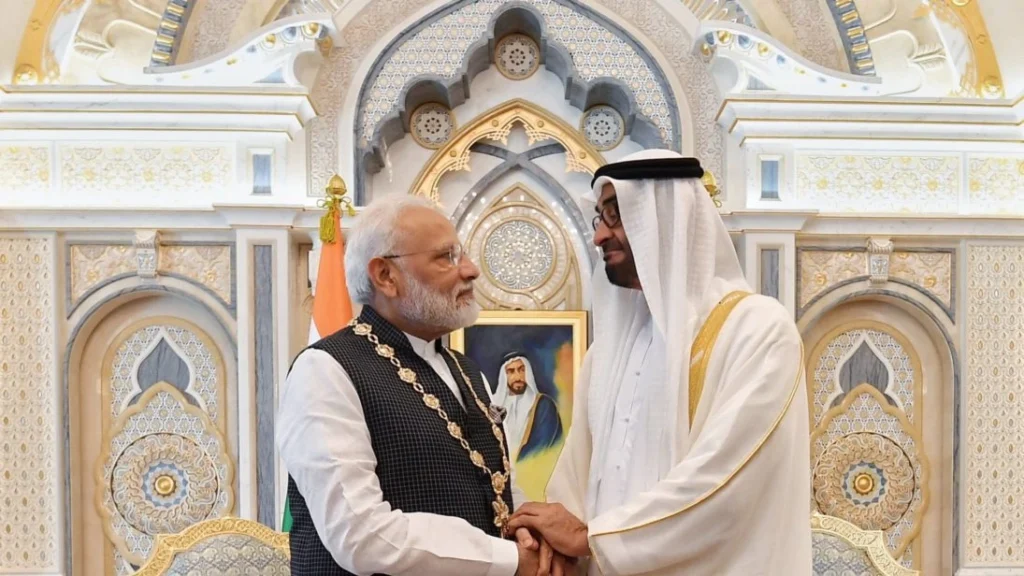
India has one of the world’s most significant relationships with the GCC both as a collective bloc and with its individual members. Over 8.9 million Indians live and work across the six GCC nations the largest expatriate community in the region and send home approximately $40-50 billion in remittances annually, making the Gulf the single most important source of foreign remittances for India.
Trade relations are equally significant. The UAE is consistently one of India’s top three trading partners. India imports vast quantities of crude oil from Saudi Arabia and the UAE. The India-UAE Comprehensive Economic Partnership Agreement (CEPA), signed in February 2022, was the UAE’s first such agreement with a major economy and has significantly boosted bilateral trade toward a target of $100 billion annually. Beyond economics, there are deep cultural and historical ties spanning over two millennia of Indian Ocean trade.
Future Outlook of the GCC
The GCC’s future looks highly promising, driven by several powerful converging trends. Continued infrastructure expansion airports, rail networks, smart cities, ports will enhance connectivity and competitiveness. The growth of tourism and the hosting of mega-events (FIFA World Cup, Expo 2020, Formula 1, and more) will keep GCC cities on the global stage. The rising digital economy, with GCC governments investing billions in AI, cloud infrastructure, and startup ecosystems, creates new engines of growth.
Strong foreign investment inflows attracted by political stability, tax-friendly environments, world-class infrastructure, and strategic location will sustain economic momentum. Increasing cooperation with Asia, particularly China and India, diversifies the GCC’s economic partnerships beyond traditional Western relationships.
The single most consequential long-term question is how successfully GCC nations manage the global energy transition. Those that build diversified, knowledge-based economies and deploy sovereign wealth effectively will maintain prosperity well beyond the oil era. The bloc is expected to remain a global economic, energy, and geopolitical powerhouse for decades to come, with its combination of financial firepower, strategic geography, and ambitious national visions making it one of the most watched regions in the world.
Frequently Asked Questions (FAQs)
Q1: What is the GCC?
A: The Gulf Cooperation Council (GCC) is a regional political, economic, and security alliance of six Arab nations Saudi Arabia, UAE, Qatar, Kuwait, Oman, and Bahrain founded on May 25, 1981, to promote cooperation, integration, and stability across the Gulf region.
Q2: How many countries are in the GCC?
A: There are six member countries in the GCC: Saudi Arabia, the United Arab Emirates, Qatar, Kuwait, Oman, and Bahrain. No new members have been admitted since the organization’s founding in 1981, though Jordan and Morocco were once considered for membership.
Q: What is the GCC region?
A: The GCC region refers to the geographic and economic area formed by the six member states along the Arabian Gulf. It spans approximately 2.67 million square kilometers and is characterized by desert terrain, vast hydrocarbon reserves, rapidly growing cities, and the strategically vital Strait of Hormuz.
Q: Why is the GCC important globally?
A: The GCC is globally important due to its enormous oil and gas reserves (approximately 30% and 20% of global proven reserves respectively), its sovereign wealth funds totaling over $3 trillion, its strategic trade routes connecting Asia, Europe, and Africa, and its geopolitical influence in the volatile Middle East. Any disruption in the GCC directly impacts global energy prices and financial markets.
Q: Which is the richest GCC country?
A: In terms of total GDP, Saudi Arabia is the largest GCC economy at approximately $1.1 trillion. However, in terms of GDP per capita, Qatar consistently ranks among the world’s very highest, often exceeding $80,000 USD per person per year due to its large gas wealth and comparatively small citizen population.
Q: What is the GCC Common Market?
A: The GCC Common Market, launched in January 2008, allows citizens of all six member states to work, invest, own real estate, and conduct business across borders with equal treatment similar to the freedoms EU citizens enjoy within Europe. This has significantly increased intra-GCC trade and investment flows.
Q: What is the Peninsula Shield Force?
A: The Peninsula Shield Force is the joint military command of the GCC, established in 1984 and headquartered in Hafar Al-Batin, Saudi Arabia. It provides collective defense capabilities for member states and has been operationally deployed, most notably when it was sent to Bahrain in 2011 during the Arab Spring.
Q: What is the kafala system?
A: The kafala (sponsorship) system is the framework that has historically governed migrant labor in GCC countries, tying a foreign worker’s legal residency to a specific employer or sponsor. It has been widely criticized for creating worker vulnerability. Several GCC nations particularly Qatar, Bahrain, and the UAE have recently reformed or partially dismantled kafala to give workers greater freedom.
Q: Is there a GCC currency?
A: There is no unified GCC currency at present. Discussions about a Gulf Monetary Union and a common currency began in the early 2000s but have stalled, with the UAE and Oman withdrawing from the negotiations. Each member state maintains its own currency, most of which are pegged to the US dollar.
Q: What are the major GCC diversification visions?
A: Each GCC member has launched a national development vision: Saudi Arabia’s Vision 2030 (reducing oil dependency and modernizing society), UAE Centennial 2071, Qatar National Vision 2030, Kuwait New Kuwait 2035, Oman Vision 2040, and Bahrain Economic Vision 2030. All share common themes of private sector growth, technology investment, tourism development, and reducing reliance on government employment
Conclusion
The Gulf Cooperation Council stands as one of the most consequential regional organizations in the modern world. Born from security necessity in the turbulent early 1980s, it has evolved into a sophisticated alliance that manages the collective economic, diplomatic, and military interests of six nations, over 60 million citizens, and tens of millions of expatriate workers who call the Gulf home.
Its vast hydrocarbon wealth, powerful sovereign wealth funds, strategic geography at the crossroads of global trade, and ambitious modernization programs make the GCC a bloc of immense and enduring global importance. The extraordinary transformation of Gulf cities over the past four decades from modest outposts to gleaming global metropolises is testament to what strategic vision combined with resource wealth can achieve.
The central challenge of the coming decades is navigating the global energy transition while sustaining economic growth, social cohesion, and political stability. The GCC’s national visions demonstrate that its leaders understand the urgency and are investing heavily to secure a prosperous post-oil future. Whether through tourism, technology, green energy, financial services, or cultural investment, GCC nations are actively building the foundations of 21st century economies.
The GCC region will remain a critical hub for global trade, energy, investment, and diplomacy for decades to come and its story, still unfolding, is one of the most remarkable economic and social transformations in modern history.