Introduction
The Union Budget is one of the most important financial documents that shapes India’s economic direction every year. It’s essentially the government’s financial plan that outlines how the country’s money will be spent on various sectors like education, healthcare, infrastructure, and defense.
Why Union Budget 2026 matters: The 2026 budget comes at a critical time for India’s economy. After navigating global economic challenges, this budget will set the tone for how the government plans to boost growth, create jobs, and improve citizens’ lives. Whether you’re a taxpayer, a business owner, an MSME entrepreneur, a startup founder, or a young person entering the job market, this budget will directly or indirectly impact your finances and opportunities.
Every Union Budget brings changes that affect everyone—from the salary you earn, the taxes you pay, to the prices of goods you buy at the market. That’s why understanding the key announcements is crucial.
What Is a Union Budget?
Before diving into the specifics of the 2026 budget, let’s understand what a Union Budget actually is.
A Union Budget is the annual financial statement of India that outlines the government’s expected revenues and planned expenditures for the coming financial year (April to March). It’s the government’s way of saying: “This is how much money we expect to collect, and this is how we plan to spend it.”
Constitutional Background: The Union Budget is mandated by Article 112 of the Indian Constitution, which requires the President to cause a statement of the estimated revenues and expenditures to be laid before Parliament.
Interim Budget vs Full Budget: You might have heard about both “Interim Budget” and “Full Budget.” Here’s the difference:
- Interim Budget is usually presented when there’s political uncertainty (like before elections). It covers essential government expenses and doesn’t announce major new policies or schemes.
- Full Budget is presented after elections when the new government has a clear mandate. It includes comprehensive policy announcements, tax changes, and new schemes.
Why it impacts every citizen: The Union Budget affects nearly every aspect of your life. A change in income tax rates impacts your salary. New education schemes influence where your children study. Infrastructure spending affects the roads you drive on and the trains you travel in. Healthcare allocations determine the quality of public hospitals and medicines you can access.
Union Budget 2026: Date & Time
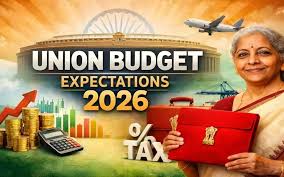
When it will be presented: The Union Budget 2026 is expected to be presented on 1st February 2026 (or close to this date, as per the government’s fiscal calendar).
Where and how it’s presented: The Finance Minister will present the budget in Parliament. This is a formal ceremony where the Finance Minister tables the budget documents in both houses of Parliament—the Lok Sabha (Lower House) and Rajya Sabha (Upper House).
How to watch: The budget speech is broadcast live on all major news channels, government websites, and social media platforms. You can watch it on:
- Doordarshan (DD National)
- All leading news channels (NDTV, Times Now, India Today, etc.)
- Official government website: www.indiabudget.gov.in
- YouTube channels of the Ministry of Finance
After the speech, detailed budget documents are released, and you can download them from the official website to read the full details.
Major Highlights of Union Budget 2026
The Union Budget 2026 is expected to focus on several key areas that will shape India’s economic future:
Economic Growth Targets: The government aims to maintain high GDP growth rates while creating a strong foundation for long-term development. India’s growing economy needs continued focus on manufacturing, technology, and services sectors to compete globally.
Fiscal Deficit Management: The fiscal deficit (the gap between government spending and revenue) is a critical indicator of economic health. The 2026 budget will aim to maintain a sustainable fiscal deficit while still investing in growth-oriented areas.
Capital Expenditure Allocation: Capital expenditure—money spent on creating infrastructure like roads, railways, ports, and airports—is crucial for long-term growth. The 2026 budget is expected to prioritize this to create jobs and boost productivity.
Digital and Technology Push: In today’s world, digital transformation is essential. The budget will likely focus on increasing digital infrastructure, cybersecurity, and technology adoption across government services and the economy.
Infrastructure Development Plans: From building new highways and railways to developing ports and airports, infrastructure is fundamental to economic growth. The 2026 budget will outline plans for projects that create jobs and improve connectivity across India.
Union Budget 2026: Sector-Wise Analysis
Different sectors of the economy receive different focus and funding in each budget. Let’s look at what we can expect for key sectors:
Agriculture Sector
Agriculture remains the backbone of India’s economy, employing millions of farmers and workers. In the 2026 budget, we expect to see:
- Farmer Welfare Schemes: New schemes to provide income support, insurance, and financial assistance to farmers.
- Minimum Support Price (MSP): Announcements about MSP for various crops to ensure farmers get fair prices for their produce.
- Irrigation and Water Management: Funding for irrigation projects to help farmers in water-scarce regions grow better crops.
- Rural Development: Investments in rural infrastructure, electricity, and connectivity to improve the lives of people in villages.
Education Sector
Education is an investment in the future. The 2026 budget is expected to focus on:
- School Education: Funding for improving government schools, building new schools in underserved areas, and providing better educational materials.
- Higher Education Reforms: Support for universities, research centers, and making higher education more accessible and affordable.
- Skill Development: Programs to teach job-ready skills to young people so they can find better employment.
- Digital Learning: Investments in online education platforms and technology to reach students in remote areas.
Healthcare Sector
The COVID-19 pandemic showed us how important strong healthcare infrastructure is. The 2026 budget will likely include:
- Health Budget Allocation: Increased spending on hospitals, clinics, and medical services across the country.
- Insurance and Public Health Initiatives: Expansion of health insurance schemes that provide free or subsidized medical care to poor and middle-class families.
- Disease Prevention Programs: Funding for vaccination, disease surveillance, and public health campaigns.
Infrastructure and Real Estate
A modern economy needs modern infrastructure. The 2026 budget will focus on:
- Roads and Highways: New road projects, widening of existing roads, and maintenance of national highways.
- Railways: Investment in new train routes, modernizing existing railways, and improving passenger comfort.
- Housing Projects: Affordable housing schemes for low-income families and middle-class professionals.
- Urban Development: Building smart cities and improving urban infrastructure.
Startups and MSMEs
Small and medium enterprises (MSMEs) are the backbone of India’s job creation. Startups drive innovation. The 2026 budget is expected to include:
- Tax Benefits: Reduced tax rates or exemptions for startups and MSMEs to encourage business growth.
- Credit and Funding Support: Easier access to loans and funding for small businesses to expand operations.
- Technology and Skill Support: Help for MSMEs to adopt new technology and train their workforce.
- Regulatory Ease: Simpler rules and procedures to reduce the burden on small business owners.
Union Budget 2026: Taxation Changes
One of the most watched aspects of the budget is taxation—whether income taxes will increase or decrease, and how it affects your pocket.
Income Tax Slab Changes
Income tax is what you pay on your salary or income. The government can change the tax slabs (the income ranges at which you pay different percentages of tax) in the budget.
Old Tax Regime vs New Tax Regime:
- The old tax regime has more deductions and exemptions but comes with more complex calculations.
- The new tax regime (introduced a few years ago) is simpler with fewer deductions but potentially lower tax rates.
In the 2026 budget, we might see changes like:
- Increased standard deduction (money you can earn tax-free)
- New tax brackets that are more favorable to salaried employees
- Benefits for middle-class families earning between 5-15 lakhs per year
Corporate Tax Updates
Companies also pay taxes. The government might announce:
- Tax Relief: Reduced tax rates for companies, especially small and medium enterprises, to encourage investment.
- Compliance Changes: New rules that make it easier for companies to file taxes and report finances.
GST and Indirect Taxes
Goods and Services Tax (GST) is a tax you pay when you buy things. The budget might include:
- Rate Revisions: Changes in GST rates for certain products (for example, GST on food items, medicines, or luxury goods might change).
- Simplifications: Easier rules for calculating GST and filing returns.
Impact of Union Budget 2026 on Common People
Let’s talk about what the 2026 budget means for different groups of people:
Salaried Individuals
If you earn a salary, the budget affects you through:
- Changes in income tax slabs (you might pay more or less tax)
- Changes in deductions like HRA (House Rent Allowance) and standard deduction
- Changes in benefits like life insurance and investment incentives
Middle-Class Families
Middle-class families (typically earning 5-20 lakhs per year) are closely watching the 2026 budget for:
- Relief in income taxes to keep more of their earned money
- Affordable housing schemes for buying a home
- Better healthcare and education facilities
- Lower prices for essential goods through indirect tax changes
Students and Youth
Young people entering the job market will be interested in:
- Education Scholarships: More funds for scholarships and grants
- Skill Development Programs: Job-ready training programs
- Youth Employment Schemes: Government schemes to create jobs for young people
- Startup Incentives: Benefits if they want to start their own business
Senior Citizens
People who are retired or nearing retirement want to know about:
- Pension Schemes: Increases in pension amounts
- Healthcare Benefits: Better health insurance and medical facilities
- Tax Concessions: Tax breaks for people over 60 years of age
- Safety Net Schemes: Social security programs to support elderly people
Union Budget 2026: Winners and Losers
Every budget has winners and losers—sectors and groups that benefit more and those that face challenges.
Who Benefits the Most?
- Manufacturing Sector: If the budget focuses on ‘Make in India,’ manufacturing companies will see incentives and growth opportunities.
- Technology Companies: Special funds for digital infrastructure and tech innovation benefit IT companies and startups.
- Agriculture: New schemes and MSP announcements benefit farmers directly.
- Energy Sector: If green energy gets emphasis, renewable energy companies will benefit.
- Middle-Income Taxpayers: Tax rate reductions or increased deductions benefit salaried employees.
Who Faces Challenges?
- High Earners: If tax rates increase for high-income groups, wealthy individuals and businesses might see less take-home profit.
- Certain Industries: Industries deemed less strategic might see reduced subsidies or support.
- Import-Dependent Businesses: If tariffs increase on imports, businesses that rely on imported goods might face higher costs.
- Sin Industries: Businesses selling cigarettes, alcohol, or other “sin goods” often face increased taxes.
Expert Opinions and Market Reaction
After the Union Budget is announced, economists, business leaders, and financial experts share their views on whether it’s good or bad for the economy.
What Economists Say: Financial experts analyze whether the budget will actually achieve its goals of growth, job creation, and stability. Some might praise it as progressive, while others might criticize it as too conservative or too aggressive.
Stock Market Response: The stock market often reacts immediately to budget announcements. If investors think the budget is good for companies, stock prices might rise. If they think it’s negative, prices might fall.
Business Sentiment: Business owners and entrepreneurs share their views on whether the budget helps them grow or puts obstacles in their way. Their confidence about the future economy affects how much they invest in new projects and hiring.
Comparison: Union Budget 2025 vs Union Budget 2026
To understand what changed from last year’s budget to this year’s, here’s a simple comparison:
| Aspect | Budget 2025 | Budget 2026 |
|---|---|---|
| Focus Areas | Previous priorities | New focus on growth and innovation |
| Tax Rates | Previous tax slabs | Updated tax structures (expected) |
| Infrastructure Spending | Previous allocation | Increased investment (expected) |
| Healthcare Budget | Previous amount | Higher allocation (expected) |
| Education Funding | Previous level | Enhanced support (expected) |
| Startup Incentives | Previous benefits | Expanded programs (expected) |
| Fiscal Deficit Target | Previous target | New sustainable target |
Looking at year-on-year changes helps us understand the government’s evolving priorities and where the economy is heading.
FAQs on Union Budget 2026
Q1. What is Union Budget 2026? The Union Budget 2026 is India’s annual financial statement that outlines how the government will spend money and collect revenues for the financial year. It affects taxes, spending on schools, hospitals, roads, and various government schemes.
Q2. Who presents the Union Budget in India? The Finance Minister of India presents the Union Budget. They present it to Parliament, and the speech is broadcast live so all citizens can watch it.
Q3. When will Union Budget 2026 be announced? The Union Budget 2026 is expected to be presented on 1st February 2026, as per the government’s fiscal calendar.
Q4. What are the key highlights of Union Budget 2026? Key highlights are expected to include focus on economic growth, infrastructure development, tax changes, increased spending on education and healthcare, and support for startups and small businesses. Specific highlights will be revealed during the budget announcement.
Q5. How does Union Budget 2026 affect the common man? The budget affects common people through changes in income taxes, prices of goods (via GST changes), availability of jobs (through government schemes), quality of education and healthcare, and prices of essential commodities.
Q6. Where can I find the full Union Budget 2026 documents? After the budget is presented, complete documents are available on the official government website: www.indiabudget.gov.in. You can also download a PDF summary and detailed documents from there.
Q7. How do I understand a Union Budget if I’m not an expert? Start with the Finance Minister’s budget speech summary. Major news channels and financial websites publish simple explanations the next day. Focus on changes that directly affect you (taxes, education, healthcare) rather than trying to understand everything.
Q8. Will income taxes increase or decrease in Budget 2026? This will only be known when the budget is announced. However, the government often tries to provide some tax relief to the middle class while managing fiscal stability.
Q9. Are there benefits for startups in the Union Budget 2026? Startups have received benefits in recent budgets, and we can expect continued support through tax exemptions, easier funding access, and regulatory support in the 2026 budget.
Q10. How can I benefit from Union Budget 2026 schemes? Different schemes benefit different groups. To find schemes that apply to you, visit the official website after the budget announcement and check the category that matches your profile (student, farmer, entrepreneur, senior citizen, etc.).
Conclusion
The Union Budget 2026 will play a crucial role in shaping India’s economic future. It’s more than just a government financial document—it’s a reflection of the country’s priorities and a roadmap for where India is heading.
What to expect: The 2026 budget is likely to balance growth with fiscal responsibility, invest in infrastructure and technology, support key sectors like agriculture and small business, and provide relief to middle-class taxpayers.
Long-term impact: Good budgets create the conditions for sustainable economic growth, job creation, and improved living standards. They help businesses grow, help families afford education and healthcare, and help farmers increase their productivity.
Your takeaway: Whether you’re an employee worried about taxes, a parent concerned about education, a farmer hoping for better support, or an entrepreneur launching a startup, the Union Budget 2026 will have something that affects you. Take time to understand the key announcements relevant to your life, and you’ll be better prepared to make financial decisions that benefit you and your family.
Stay tuned for February 1st, 2026, when the budget is announced. Major news outlets and financial websites will provide detailed analysis the same day to help you understand what it means for your life and finances.
About this article: This guide is designed to help ordinary Indians understand the Union Budget 2026 in simple, everyday language. Whether you follow financial news closely or are hearing about the budget for the first time, this article provides the foundation you need to grasp the key concepts and implications.
Last updated: January 2026