
What markets expected to be a de-escalation signal turned into fresh uncertainty after Donald Trump’s Iran war address. While the US President spoke of ending the conflict without a deal, rising oil prices and Pentagon troop deployments told a more complex story.
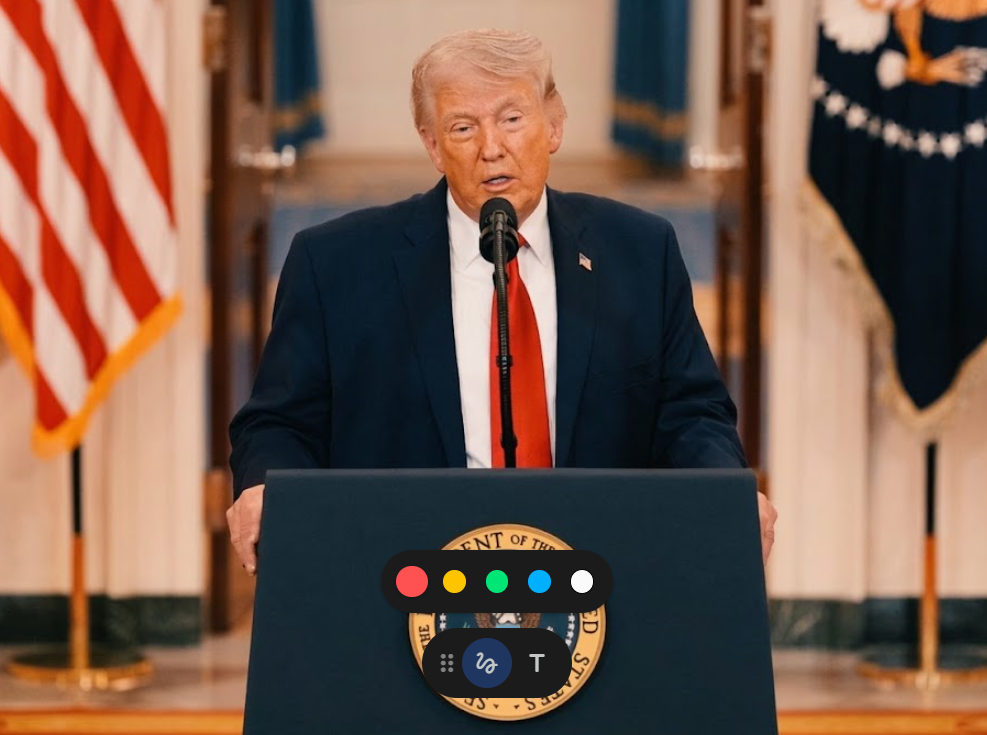
Trump’s Iran War Statement Surprises Global Markets Amid Expectations of De-escalation
Going into April 1, 2026, global markets were cautiously optimistic. Trump had told reporters at the White House that the US would “probably” stop attacks on Iran within two to three weeks “whether we have a deal or not.” The S&P 500 rose 2.9% the day before his primetime address, its largest single-day gain since May. Oil prices dropped below $100 a barrel. South Korea’s Kospi jumped over 8%. Investors interpreted Trump’s remarks as the clearest signal yet that the five-week-old conflict was winding down.
Then Trump addressed the nation on the evening of April 1, and those hopes collapsed quickly.
The primetime address delivered none of what markets were pricing in. There was no exit timeline and no plan to reopen the Strait of Hormuz. Instead, Trump said the US would “hit them extremely hard over the next two to three weeks” and warned of strikes on Iran’s electricity infrastructure if Tehran did not yield to US terms. Crude oil futures spiked more than 5% immediately after the speech. S&P 500 futures fell 0.75%, Nasdaq futures dropped 1%, and Dow futures lost over 310 points. Asian markets reversed their earlier gains, with Japan’s Nikkei down 1.4% and South Korea’s Kospi falling nearly 3%.
“The markets are certainly not interpreting the speech as positive,” said Russel Chesler of VanEck Australia. “The key question in all investors’ minds is: when is this going to be over?”
Trump Says War May End Without Any Formal Deal
The phrase “with or without a deal” has become one of the defining features of how Trump has communicated about this conflict. He has repeatedly claimed the US military is nearing the completion of its objectives, framing the war as a mission with a defined finish line rather than an open-ended engagement.
“We’re achieving major strides toward completing our military objectives,” Trump said nine days after launching the war with Israel on February 28. In the weeks that followed, the language escalated. In his April 1 address, Trump said the “core strategic objectives are nearing completion,” while simultaneously saying the US would intensify strikes for another two to three weeks.
The contradiction was not lost on markets. Secretary of Defense Pete Hegseth had said publicly that the war was “just beginning,” prompting a reporter to ask Trump how both statements could be true. Trump’s answer: “It’s the beginning of building a new country.” No clarification followed.
Markets React: Stocks Fall While Oil Prices Climb
Markets move on certainty, not just outcomes. When Trump’s April 1 speech failed to provide any timeline for reopening the Strait of Hormuz, traders sold equities and bought crude. Every week the strait remains effectively closed means more energy supply disruption, elevated shipping costs, rising inflation, and compressed corporate margins.
Brent crude surged nearly 8% the day following Trump’s speech, nearing $110 per barrel. US regular gasoline has risen to $4.08 per gallon, up 37% since the war began. The Strait of Hormuz carries roughly 20% of global oil and LNG daily. Iran has effectively shut it down using drone and missile attacks on tankers. On some days, no oil tankers have transited the strait at all, according to Lloyd’s List data.
Asian markets reversed sharply post-speech. Japan’s Nikkei fell 1.4%, South Korea’s Kospi dropped nearly 3%, and Hong Kong’s Hang Seng opened lower, giving back all gains built on earlier de-escalation expectations.
US futures saw S&P 500, Nasdaq, and Dow all slide as investors absorbed the reality of a conflict lasting at minimum two to three more weeks with no Hormuz resolution in sight.
Safe haven assets moved as expected: gold rose, the dollar firmed. TD Securities’ Prashant Newnaha captured the investor consensus simply: “The only thing that really matters is whether the Strait of Hormuz will open soon.”
Trump Claims Deal is Close. Iran Continues to Deny Negotiations.
One of the more striking features of this conflict is the divergence between what Trump says about diplomatic progress and what Iran’s government says about the same question.
On March 24, Trump told reporters that Iran wants “to make a deal so badly” and that Iran had agreed to “never have a nuclear weapon.” On March 9, he predicted the war would end “very soon.” In his April 1 address, he again signalled that Iran was seeking a ceasefire.
Iran has consistently denied all of this. Mohammad Bagher Qalibaf, speaker of the Iranian parliament, posted on X on March 23 that “No negotiations have been held” with the United States, and described Trump’s deal talk as designed to “manipulate the financial and oil markets.” Iran’s parliament speaker went further on March 29, saying the “enemy openly sends messages of negotiation and dialogue and secretly plans a ground attack.”
Pakistan has offered to mediate, hosting two days of talks with the foreign ministers of Saudi Arabia, Turkey, and Egypt. Whether direct US-Iran talks are happening remains unverified by any independent source.
Contradictory Signals: Peace Talk Claims vs Military Buildup
Pentagon Moving Thousands of Troops Despite Deal Narrative
The clearest evidence that diplomacy and military strategy are running in parallel comes from the ground. While Trump speaks of deals and exit timelines, the Washington Post reported on March 28 that the Pentagon is preparing for weeks of limited ground operations in Iran, with thousands of American soldiers and Marines arriving in the Middle East.
The plans, according to US officials cited by the Post, fall short of a full invasion but could involve raids on Kharg Island and coastal sites near the Strait of Hormuz using special operations and conventional infantry troops. Whether Trump would approve these plans remains uncertain.
This is maximum pressure strategy in practice: maintain public rhetoric about deals and swift endings while simultaneously confronting Iran with the threat of a dangerous new phase. Iran’s parliament speaker read the situation plainly on March 29: “The enemy openly sends messages of negotiation and dialogue and secretly plans a ground attack.”
The air campaign has so far been the primary instrument. The ground operation threat appears to function as leverage rather than a decided course, designed to force Iranian concessions on the nuclear program and Hormuz before any US withdrawal is formalised.
The Cost the US Is Paying, and the Pressure It Is Generating
This war is expensive in ways that are generating serious domestic political friction.
The Pentagon told Congress that the first six days of Operation Epic Fury cost $11.3 billion, roughly $1.88 billion per day. By March 19, the estimated total US military cost had reached $18 billion, and the Pentagon requested a supplemental $200 billion from Congress. Penn Wharton Budget Model estimates a two-month war could cost between $40 billion and $95 billion directly, with broader economic impact potentially reaching $210 billion.
House Minority Leader Hakeem Jeffries called it “another endless conflict in the Middle East” costing “billions of dollars to bomb Iran.” Even within the Republican Party, members have privately expressed alarm at the burn rate. US gasoline above $4 per gallon for the first time since 2022 is a domestic political problem that no speech can resolve. The pressure on Trump to show a credible exit is real and growing by the week.
Uncertainty Remains as Diplomacy and Military Strategy Move in Parallel
What Investors Are Watching
Markets are watching one variable above all others: the Strait of Hormuz. If credible signals emerge that tanker traffic will resume, a sharp equity rally and an oil price drop will follow quickly. Until then, volatility is the operating condition.
Capital Economics’ Thomas Mathews framed it well: “De-escalation hopes have given markets a lift, but we think the effects of the war would, in many cases, persist even if it were to end soon.” The supply chain damage and inflationary pressure are not switched off the moment a ceasefire is announced.
The key indicators to monitor in the coming weeks: whether any tanker traffic resumes through Hormuz, whether Trump approves or walks back the Pentagon’s ground operation plans, whether Iran’s denials of negotiations shift, and whether Congressional pressure on war costs forces a more concrete timeline from the White House.
Trump says the war will end with or without a deal. Markets, and the strait, suggest the exit will not be as clean as that framing implies.
FAQs
Why did stock markets react negatively to Trump’s Iran statement?
Markets had rallied sharply on expectations that Trump’s April 1 address would provide a clear exit timeline and a plan to reopen the Strait of Hormuz. When neither came, and Trump instead announced an intensification of strikes over the following two to three weeks, futures sold off and oil spiked. Investors are not reacting to the war itself but to how long the energy supply disruption will last. Every additional week of Hormuz disruption means more inflation, higher input costs for companies, and lower growth. That is why uncertainty, more than any specific military development, is what moves markets.
Why are oil prices rising due to the Iran conflict?
The Strait of Hormuz carries roughly 20% of the world’s daily oil and LNG supply. Iran has effectively closed it using drone and missile attacks on tankers. With that corridor blocked, global energy supply is significantly constrained. Oil prices have surged past $100 per barrel and at points neared $110 during the conflict. These elevated prices flow directly into gasoline, diesel, jet fuel, and the input costs of virtually every manufactured good and transported service. The disruption has been described as the world’s largest supply shock since the 1970s energy crisis.
Is the US preparing for a ground invasion of Iran?
Not a full invasion, but something potentially close to it in a limited form. The Washington Post reported on March 28, citing US officials, that the Pentagon is preparing for weeks of ground operations in Iran that could include raids on Kharg Island and coastal sites near the Strait of Hormuz. These would involve special operations and conventional infantry troops. Whether Trump will approve these plans is still uncertain. The Iranian parliament speaker responded by saying that Iran is aware of the plans and that ground troops would be met with retaliation.
The ground operation option appears to be serving as leverage rather than a decided course of action, consistent with Trump’s stated preference for resolving the conflict without a prolonged military commitment.
Disclaimer: This article is for informational purposes only and reflects publicly reported developments as of April 2, 2026. It does not constitute investment or geopolitical advice.