Temple Money Belongs to Deity: Historic Supreme Court Judgment
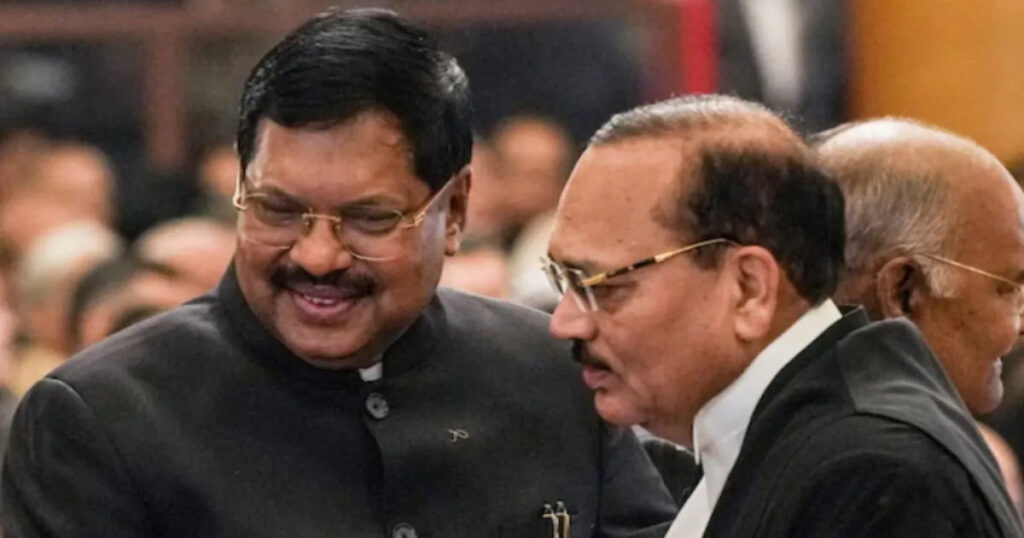
In a groundbreaking decision, Chief Justice Surya Kant and Justice Joymalya Bagchi have delivered a historic ruling that reinforces the protection of temple funds and establishes clear legal precedent regarding the use of temple money. The Supreme Court has categorically stated that temple money belongs to the deity and cannot be used for any other purpose, including providing relief to struggling financial institutions.
The Thirunelly Temple Deposits Case
The case centers around Thirunelly Temple Devaswom, a significant religious institution whose deposits were trapped in Kerala-based cooperative banks. The Thirunelly Service Cooperative Bank and Mananthawady Cooperative Bank had received substantial temple fixed deposits from the Devaswom board but refused to return these funds despite multiple requests.
Background: The Thirunelly Devaswom Predicament
Thirunelly Devaswom filed a petition with the Supreme Court after facing difficulties in retrieving their temple deposits from various cooperative banks. The Malabar Devaswom Board, which oversees the temple’s religious and financial affairs, decided to escalate the matter to the highest court in the land. This led to the SLP (Special Leave Petition) being filed before the Supreme Court, creating what would become a landmark case on temple asset protection.
CJI Surya Kant’s Ruling on Temple Money
In his judgment, CJI Surya Kant made it abundantly clear that temple money has a sacred purpose that transcends commercial considerations. The Chief Justice emphasized:
“Temple money belongs to the deity. Therefore, this money has to be saved, protected and utilised only for the interests of the temple. It can’t become a source of income or survival for a cooperative bank.”
This statement by CJI Surya Kant redefines the legal framework surrounding temple funds and religious trust deposits in India.
Supreme Court’s Decision on Temple Fixed Deposits
The Supreme Court rejected all petitions filed by the cooperative banks seeking relief or an extended timeline. The court ordered the Thirunelly Service Cooperative Bank and other cooperative banks to return all temple fixed deposits within a strict two-month timeframe, irrespective of their financial difficulties.
The court’s decision demonstrates that temple asset protection is non-negotiable and supersedes the financial interests of cooperative banks.
Key Aspects of the Supreme Court Temple Money Ruling
1. Temple Money Protection is Paramount
The Supreme Court established that temple funds require the highest level of legal protection. The ruling applies equally to all Kerala temple deposits and sets a precedent for religious trust deposits across the nation.
2. Rejection of Hardship Arguments
Despite arguments from the cooperative banks that returning deposits would cause them financial hardship, CJI Surya Kant ruled that temple money cannot be compromised for bank survival. The Thirunelly Devaswom cooperative bank and similar institutions cannot use temple fixed deposits as a source of income.
3. Timeline Enforcement
The court directed immediate return of all temple deposits, rejecting requests for extended timelines. This firm stance reinforces that temple asset protection takes absolute precedence.
Implications for Kerala High Court and Religious Institutions
This CJI Surya Kant judgment builds upon principles established by the Kerala High Court regarding temple deposits and religious trusts. The ruling provides clarity for the Malabar Devaswom Board and similar religious organizations managing temple funds.
Impact on Thirunelly Temple and Other Devaswoms
The Thirunelly Devaswom case serves as a protective precedent for all temple money management in Kerala and beyond. Religious organizations can now rely on this Supreme Court temple money ruling to safeguard their temple funds.
What This Means for Cooperative Banks
The decision sends a clear message to all cooperative banks, particularly those holding temple fixed deposits. Financial institutions cannot use religious trust deposits to bail themselves out of troubled situations. The ruling ensures that temple money remains inviolable regardless of economic pressures facing financial institutions.
Broader Legal Framework: Temple Asset Protection
This landmark judgment by CJI Surya Kant strengthens the legal framework for:
- Temple money protection in all forms
- Religious trust deposits management
- Temple fixed deposits security
- Devaswom asset safeguarding
Conclusion: A Victory for Temple Money Believers
The Supreme Court under CJI Surya Kant’s leadership has delivered a decisive and clear ruling that temple money belongs to the deity. This judgment ensures that religious institutions like Thirunelly Devaswom can confidently manage their temple funds without fear of misappropriation or entanglement with struggling cooperative banks.
The case demonstrates that in India’s constitutional framework, temple asset protection is a sacred principle that cannot be compromised for commercial considerations. All Devaswoms, temple trusts, and religious organizations managing temple deposits now have strong legal backing from the highest court of the land.