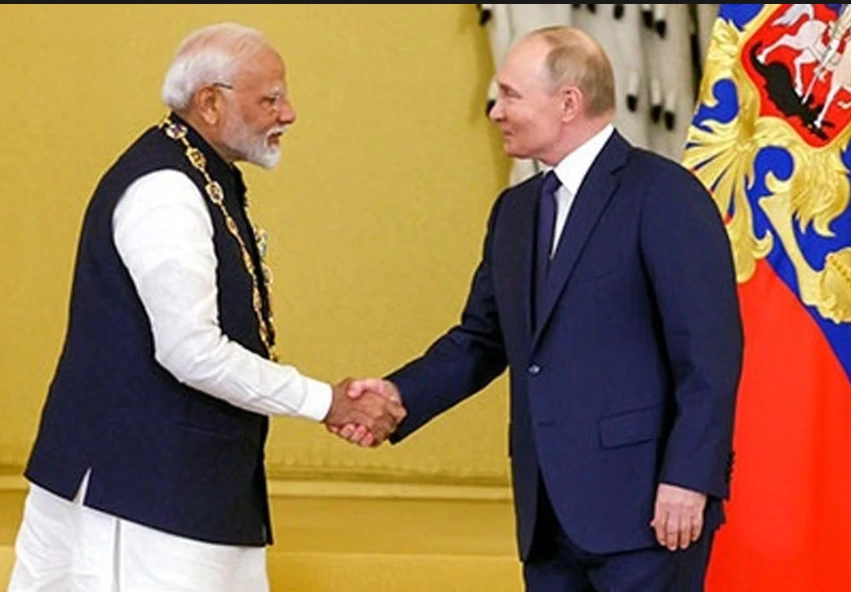
Breaking: Putin Arrives in Delhi Today for Landmark 23rd India-Russia Summit
Putin India Visit 2025 marking a watershed moment in India-Russia relations. The Putin India visit December 2025 represents the Russia President India visit that analysts describe as pivotal for both nations navigating complex global geopolitics. As Putin in Delhi today, the stage is set for one of the most significant diplomatic engagements of the year.
This Vladimir Putin India visit is particularly noteworthy as it marks Putin first visit India since Ukraine war, occurring more than three years after the February 2022 conflict began. The Russian President will arrive in New Delhi on Thursday afternoon for a 28-hour visit, a carefully choreographed diplomatic engagement designed to strengthen bilateral cooperation across multiple domains.
Putin India Visit Full Schedule: A Detailed Timeline
The Putin India visit full schedule reveals a meticulously planned diplomatic agenda. Putin will arrive in New Delhi on December 4 and meet Prime Minister Narendra Modi in an informal setting at 7 p.m. local time, beginning with private discussions reserved for the most sensitive bilateral and global issues.
Day One: December 4, 2025 – Private Dinner and Informal Talks
Putin will likely arrive in New Delhi at 4:30 pm on Thursday and will straight head to PM Modi’s residence where he will attend a one-on-one dinner with him. This Modi Putin private dinner Delhi sets the tone for the entire visit, allowing both leaders to discuss strategic matters in an intimate setting away from formal protocols.
The Modi hosts dinner for Putin arrangement reflects the personal rapport between the two leaders, who have met multiple times over the years. This informal beginning to the Putin India visit today allows for candid conversations on sensitive topics including regional security, the Ukraine conflict, and bilateral strategic concerns.
Day Two: December 5, 2025 – Official Summit and Ceremonies
On Friday, he will attend the 23rd annual India-Russia Summit at the Hyderabad House, where he will be accorded a ceremonial welcome. The India Russia summit Hyderabad House will feature both restricted and expanded format discussions.
Putin and Modi are slated to hold official talks in both narrow and expanded formats on December 5, ensuring comprehensive coverage of bilateral issues. The Putin Hyderabad House meeting will include:
- Bilateral talks in restricted format between the two leaders
- Expanded delegation meetings with cabinet ministers
- Joint participation at the India Russia Business Forum 2025
- Signing of approximately 10 intergovernmental agreements and over 15 commercial deals
- Joint media statements to the press
Cultural and Symbolic Engagements
The Putin Rajghat visit represents an important cultural gesture. Putin will visit the Mahatma Gandhi memorial, paying respects to India’s founding father—a traditional step for visiting heads of state that demonstrates acknowledgment of India’s values and heritage.
The Putin Rashtrapati Bhavan visit includes a state banquet hosted by President Droupadi Murmu in honor of the Russian President, marking the formal culmination of this historic visit.
Modi Putin Meeting: Core Agenda and Discussion Points
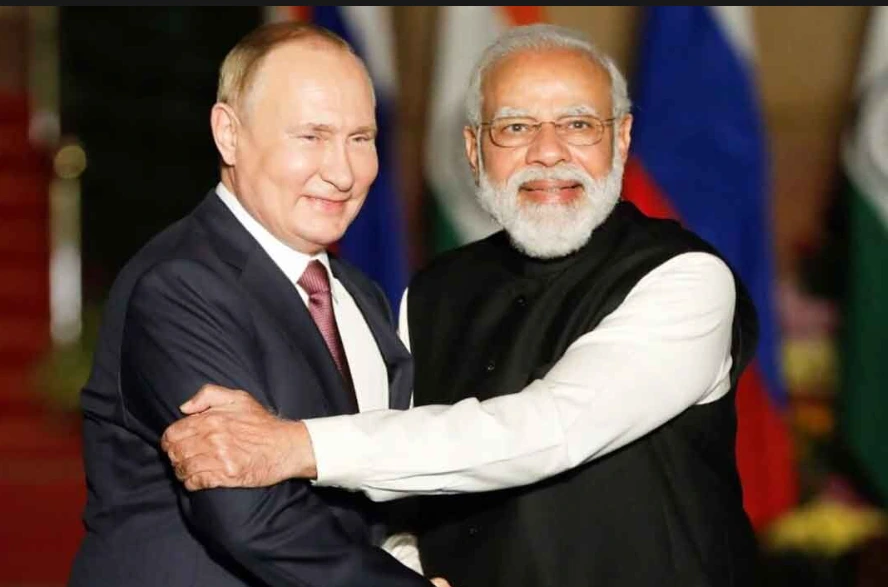
The Modi Putin meeting represents more than ceremonial diplomacy. The Modi Putin talks will address critical areas where India and Russia share strategic convergence, economic interests, and mutual concerns about global order.
Strategic Partnership and Geopolitics
Both nations seek to reaffirm their “Special and Privileged Strategic Partnership”, which has been the foundation of bilateral ties for decades. This partnership has withstood significant global pressures, particularly after the Ukraine conflict began in 2022.
The Putin Modi bilateral talks will navigate India’s delicate balancing act between maintaining its historic ties with Russia while expanding partnerships with Western nations, particularly the United States. The visit will test New Delhi’s efforts to balance relations with Moscow and Washington as the war in Ukraine grinds on.
Defense Cooperation: S-400, Su-57, and BrahMos Discussions
Defense remains the cornerstone of India-Russia relations, with the India Russia defense cooperation talks expected to produce significant outcomes during this Putin India visit 2025.
S-400 Air Defense System Expansion
The S400 deal Putin India visit discussions will focus on additional procurement. India is poised to approve the acquisition of 280 additional missiles for the S-400 Sudarshan Chakra air defence system, which was effectively employed against multiple Pakistani targets across various regions.
India already operates several S-400 systems, which have proven their effectiveness in operational scenarios. The additional units will further strengthen India’s air defense architecture against emerging threats from multiple adversaries.
Su-57 Fighter Jet Collaboration
The Su-57 fighter jet India Russia discussions represent potential next-generation fighter cooperation. Russia has offered India its advanced Su-57 stealth fighter jet, a proposal likely to feature in the talks. This fifth-generation fighter aircraft could address India’s long-term air superiority requirements, though technical and financial considerations remain under evaluation.
BrahMos Missile Program: Next Generation Variants
The BrahMos supersonic cruise missile represents the most successful defense cooperation model between India and Russia. India and Russia are preparing to open a significant new chapter in their missile cooperation, with talks on the BrahMos-NG and future long-range strike capabilities expected to feature prominently.
The Modi Putin meeting on trade defense will explore advanced variants:
BrahMos-NG (Next Generation): Designed to be compact enough to integrate across all frontline fighter aircraft of the Indian Air Force, the BrahMos-NG will allow platforms such as the Tejas Mk1A, Tejas Mk2, Su-30MKI, Rafale, and even future AMCA to carry a high-precision standoff strike weapon. This smaller, lighter variant will maintain supersonic speed while offering over 400 km range.
Extended Range Variants: India and Russia are likely to discuss the development of advanced variants of the BrahMos supersonic cruise missiles, and longer range versions of the missiles which can engage targets at more than three times of the present capability. These versions could extend strike distances well beyond 1,000 km, dramatically expanding India’s precision-strike reach.
Hypersonic BrahMos-II: India and Russia are poised to resume high-level discussions for the co-development of the BrahMos-II, a next-generation hypersonic cruise missile aimed at achieving speeds of Mach 6 or higher. This game-changing weapon system would provide India with cutting-edge hypersonic strike capabilities.
Trade and Economic Cooperation: Addressing the Imbalance
The Russia India oil trade talks and broader economic discussions aim to address a critical challenge: the massive trade imbalance favoring Russia.
Current Trade Scenario
Bilateral trade in goods between India and Russia has grown more than five-fold, rising from USD 13 billion in 2021 to USD 68 billion in 2024-25. However, this growth masks a serious structural problem.
A major trade imbalance has accompanied this growth; it has widened from USD 6.6 billion to USD 58.9 billion, which is about nine times. This disparity stems primarily from India’s massive energy imports from Russia.
Russia’s Exports to India (FY 2024-25): Approximately $63.84 billion
- Crude petroleum dominates at over $40 billion annually
- Coal, fertilizers, and defense equipment constitute the remainder
India’s Exports to Russia (FY 2024-25): Only $4.88 billion
- Pharmaceuticals lead Indian exports
- Tea, engineering products, marine items, and textiles
- Agricultural products and consumer goods
Energy Partnership and Oil Trade
The Putin Modi meeting oil trade discussions occur against the backdrop of recent challenges. India continues to reduce its Russian oil imports, Kremlin spokesperson Dmitry Peskov said the dip may last only for “a brief period” as Moscow plans to boost supplies to New Delhi.
Major Indian oil refiners are cutting or stopping Russian oil imports because of steep US tariffs amounting to 50 per cent, including a 25 per cent levy specifically on Russian oil. Despite these pressures, Russia remains committed to maintaining energy supplies to India.
Russia aims to increase crude oil sales to India and expand cooperation in civil nuclear energy, including next-generation small modular reactors, demonstrating Moscow’s long-term commitment to India’s energy security.
Strategies to Balance Trade
India is keen to increase exports of pharmaceuticals, agriculture and textiles to Russia and is seeking the removal of non-tariff barriers. New Delhi is also seeking long-term supplies of fertilizers from Moscow.
Additional measures under discussion include:
- Expanding Indian pharmaceutical exports to Russian markets
- Boosting agricultural product exports including rice, spices, and processed foods
- Increasing engineering goods and machinery exports
- Promoting Indian IT and software services in Russia
- Facilitating easier market access for Indian textiles and consumer goods
Another key area where the two countries are working to finalize an agreement is the safe and regulated migration of Indian skilled workers to Russia, which could generate remittances while addressing Russia’s labor shortage.
India Russia Business Forum 2025: Commercial Engagement
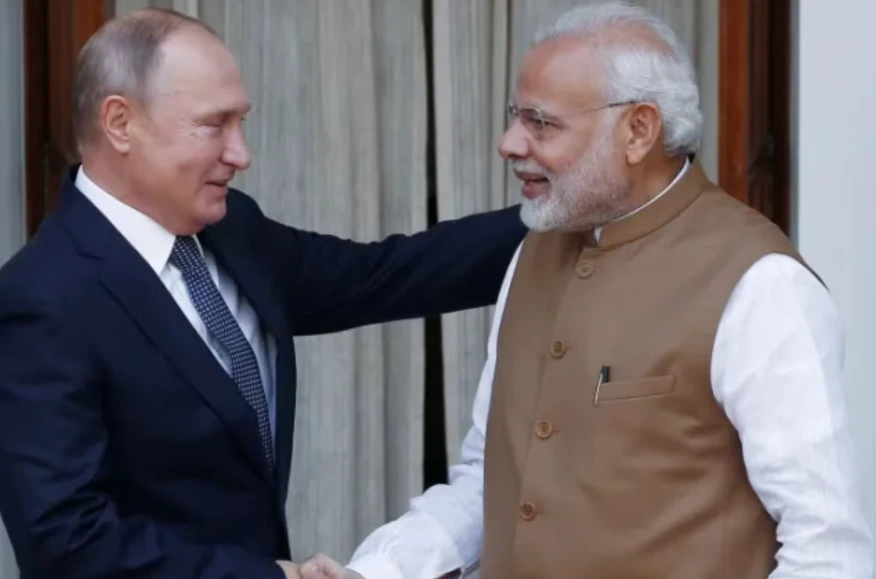
Putin and Modi will attend the plenary session of the Russia–India Business Forum, bringing together business leaders from both nations to explore commercial opportunities beyond government-to-government deals.
The business forum will focus on:
- Joint ventures in manufacturing and technology sectors
- Investment opportunities in infrastructure development
- Collaboration in pharmaceutical manufacturing and exports
- Digital economy partnerships
- Small and medium enterprise cooperation
- Banking and financial sector integration
Russia India Annual Summit 2025: Multilateral Cooperation
The 23rd India Russia summit continues a tradition dating back decades, representing one of the world’s most enduring strategic partnerships. Around 10 intergovernmental agreements and over 15 commercial deals are expected to be signed during this summit.
Key Expected Agreements
Economic Cooperation Through 2030: Putin and Modi are expected to adopt a joint statement and approve a Russia–India economic cooperation program through 2030, providing a roadmap for bilateral trade expansion toward the $100 billion target.
Defense and Security Pacts: Building on the existing 2021 military-technical cooperation agreement that runs until 2031, new protocols will update defense collaboration for evolving security challenges.
Energy Agreements: Long-term contracts for oil, gas, and fertilizer supplies ensuring predictable energy security for India and stable revenue streams for Russia.
Technology Transfer: Agreements facilitating joint development and production in defense manufacturing, nuclear energy, and space cooperation.
People-to-People Exchanges: Russia will announce joining the International Big Cat Alliance, demonstrating cooperation beyond traditional strategic domains.
Putin Modi Meeting Ukraine Discussion: The Peace Dialogue
The Putin Modi meeting Ukraine discussion represents a sensitive but crucial component of the talks. India has maintained strategic autonomy on the Ukraine conflict, refusing to condemn Russia while consistently calling for dialogue and respect for territorial integrity.
Modi could try to nudge Putin “to accommodate some Ukrainian and European concerns to bring about a cessation of hostilities”, leveraging India’s position as one of the few nations maintaining dialogue with all parties.
India’s balanced approach includes:
- Maintaining humanitarian concerns about civilian casualties
- Advocating for dialogue and diplomatic solutions
- Respecting territorial sovereignty principles
- Keeping communication channels open with all stakeholders
- Offering potential mediation if requested by all parties
Prime Minister Modi has met both President Putin and Ukrainian President Volodymyr Zelensky multiple times, positioning India as a potential bridge between conflicting positions. While not expected to produce immediate breakthroughs, these discussions ensure India remains engaged in global peace efforts.
High-Level Delegation: Ministers Accompanying Putin
The Russian delegation includes seven ministers, among them: Defense Minister Andrei Belousov, Finance Minister Anton Siluanov, Agriculture Minister Oksana Lut, Economic Development Minister Maxim Reshetnikov, and Health Minister Mikhail Murashko.
This high-powered delegation ensures substantive discussions across all sectors:
Defense Cooperation: Defence Minister Rajnath Singh will co-chair the 22nd India-Russia Inter-Governmental Commission on Military & Military Technical Cooperation ministerial meeting in New Delhi with his Russian counterpart Andrei Belousov, finalizing defense agreements before the summit.
Financial Integration: Finance Minister Anton Siluanov will discuss payment mechanisms, currency settlements, and financial architecture to bypass Western sanctions.
Agricultural Cooperation: Agriculture Minister Oksana Lut will explore fertilizer supplies, agricultural technology transfer, and food security cooperation.
Economic Development: Maxim Reshetnikov will focus on trade facilitation, investment promotion, and removing non-tariff barriers affecting bilateral commerce.
Healthcare Collaboration: Health Minister Mikhail Murashko will discuss pharmaceutical cooperation, medical equipment manufacturing, and traditional medicine exchanges.
Geopolitical Context: India’s Strategic Autonomy
The Putin visit New Delhi occurs within a complex global landscape where India pursues multi-alignment rather than alignment with any single power bloc.
Balancing Act with Washington
The India-Russia summit comes as the United States renews its push for a Ukraine peace plan and seeks broader cooperation from key partners. However, India has maintained that its foreign policy decisions are based on national interests rather than external pressure.
Despite occasional friction with Washington over India’s Russian oil purchases, the India-US strategic partnership continues deepening through defense cooperation, technology sharing, and Indo-Pacific coordination.
Managing China Factor
India’s partnership with Russia also serves strategic purposes regarding China. While Russia and China have strengthened ties since the Ukraine conflict, India maintains its relationship with Moscow partly to ensure it doesn’t become entirely dependent on Beijing. This triangular dynamic influences all three nations’ calculations.
Regional Stability and Afghanistan
Both India and Russia share concerns about regional stability, particularly regarding Afghanistan following the Taliban takeover. Counter-terrorism cooperation and preventing extremist spillover remain shared priorities discussed during the India Russia bilateral talks 2025.
Global Reactions to Putin India Visit News Today
The Putin India visit news today has generated significant international commentary, with varying reactions from different capitals.
Western Concerns: Some Western commentators express unease about India maintaining close ties with Russia during the Ukraine conflict. However, most Western governments recognize India’s strategic autonomy and the depth of India-Russia historical ties.
Russian Perspective: Kremlin spokesperson said, “What we like is that Prime Minister Modi and our Indian counterparts want to listen to our position, they want to understand our position and it gives us a possibility to explain ourselves”, appreciating India’s willingness to engage substantively.
Asian Reactions: Most Asian nations view the visit as natural given India’s independent foreign policy, with many pursuing similar balanced approaches between major powers.
Domestic Indian Opinion: Within India, there’s broad support for maintaining the Russia relationship given its historical importance, defense supply reliability, and energy security contributions.
Payment Mechanisms and De-Dollarization
A critical technical discussion during the Putin India visit 2025 involves creating sanction-resistant payment systems. Russia is advocating for a shift away from the dollar-dominated global trade system, suggesting that future discussions could focus on settling transactions in national currencies.
Options under consideration include:
- Rupee-Ruble Trade: Direct currency settlements bypassing the dollar
- Cryptocurrency Systems: Exploring blockchain-based payment mechanisms
- SWIFT Alternatives: Using alternative banking communication systems
- Barter Arrangements: Direct exchange of goods in certain sectors
- Third-Country Currency: Using currencies like UAE dirham for triangular trade
Technology and Innovation Cooperation
Beyond traditional defense and energy, the Modi Putin Delhi meeting will explore emerging technology cooperation:
Space Exploration: Building on the historic Gaganyaan program cooperation, discussions will cover future joint missions, satellite development, and space station collaboration.
Nuclear Energy: Bilateral talks are expected to cover energy collaboration, including Russia’s readiness to supply technology for small and medium nuclear reactors to India, advancing India’s clean energy goals.
Arctic Resources: India’s potential role in Arctic development given Russia’s extensive Arctic territories and India’s scientific interest in polar research.
Digital Economy: Cooperation in 5G technology, cybersecurity, artificial intelligence, and digital payment systems.
Cultural and Educational Exchanges
The Putin visits New Delhi December engagement extends beyond government-to-government relations. Discussions will cover:
- Student exchange programs between Indian and Russian universities
- Joint cultural festivals and art exhibitions
- Film and media co-production agreements
- Tourism promotion including simplified visa procedures
- Russian language teaching in India and Hindi teaching in Russia
- Academic research collaboration in science and technology
Historical Context: Evolution of India-Russia Relations
The Russia India summit 2025 builds on over seven decades of partnership:
Cold War Era: India’s non-aligned movement maintained friendly ties with the Soviet Union, with Moscow providing crucial diplomatic and military support during India’s conflicts.
Post-Soviet Transition: Despite initial uncertainties after the USSR’s collapse, India and Russia preserved their strategic relationship, signing the Declaration on Strategic Partnership in 2000.
21st Century Evolution: Annual summit mechanisms established in 2000 have institutionalized regular high-level engagement, making the relationship predictable and resilient.
Recent Deepening: The 2021 summit extended military-technical cooperation until 2031 and set ambitious trade targets, while Modi’s 2024 Moscow visit reinforced personal ties between leaders.
Economic Cooperation Program Through 2030
The India Russia summit 2025 will finalize an economic roadmap with specific targets:
$100 Billion Trade Target: Both nations aim to reach $100 billion in bilateral trade by 2030, up from the current $68.7 billion, requiring annual growth of approximately 7-8%.
Sector-Specific Goals:
- Energy: Long-term contracts ensuring stable supplies
- Defense: Joint development programs generating $10+ billion annually
- Pharmaceuticals: Tripling Indian pharmaceutical exports to Russia
- Agriculture: Establishing stable fertilizer supply chains
- Technology: Creating joint ventures in IT and manufacturing
Investment Targets: Expanding bilateral investment flows to $50 billion by 2030, with Russian investments in Indian infrastructure and Indian investments in Russian energy sectors.
Defense Manufacturing: Make in India Integration
Both sides agreed to continue working on joint manufacturing in India of spare parts and components for Russian-origin arms and defense equipment, aligning with India’s Make in India initiative.
This cooperation includes:
- Local production of spare parts for Su-30MKI fighters
- Manufacturing components for T-90 tanks
- Producing ammunition for Russian-origin weapons
- Developing joint production facilities for future systems
- Technology transfer for indigenous capability building
Maritime Security and Indian Ocean Cooperation
While not always highlighted, India-Russia cooperation extends to maritime domains:
- Joint naval exercises in the Indian Ocean
- Information sharing on maritime threats
- Cooperation on anti-piracy operations
- Port access agreements facilitating naval visits
- Underwater domain awareness collaboration
Fertilizer Security: Critical Agricultural Input
India is also looking at boosting cooperation in the fertiliser sector. Russia supplies three to four million tonnes of fertilisers to India annually, making this a critical component of India’s agricultural security.
With India dependent on fertilizer imports for its agricultural productivity, long-term contracts with Russia ensure stable supplies at predictable prices, directly impacting food security for 1.4 billion Indians.
Looking Ahead: Future Summit Locations
Following the Putin India visit December 2025 in New Delhi, future summits will alternate between countries. India’s next turn to host will likely come in 2027, maintaining the annual summit tradition that has endured for over two decades.
Media and Public Diplomacy
Both leaders will deliver statements to the media following the talks, ensuring transparency about outcomes and agreements reached. The joint statement will outline:
- Shared assessments of global and regional situations
- Specific agreements and their expected impacts
- Future roadmap for bilateral cooperation
- Positions on international issues of mutual concern
Conclusion: Strengthening an Enduring Partnership
The Putin India visit 2025 successfully reinforces one of the world’s most important bilateral relationships. The Modi Putin meeting December 2025 demonstrates that India-Russia ties transcend temporary global upheavals, rooted instead in decades of mutual trust, shared interests, and complementary capabilities.
As Putin visits New Delhi December for these crucial talks, several conclusions emerge:
Strategic Autonomy Affirmed: India’s willingness to host Putin despite Western pressures demonstrates its commitment to independent foreign policy based on national interests.
Pragmatic Partnership: The relationship is neither sentimental nor purely transactional but based on concrete benefits in defense, energy, and strategic coordination.
Future-Oriented: Rather than focusing solely on legacy cooperation, both nations are exploring emerging technologies, new trade mechanisms, and next-generation defense systems.
Global Significance: As multipolarity becomes reality, the India-Russia partnership represents an important axis in the emerging world order, distinct from both Western alliances and China-centric arrangements.
Resilience Tested and Proven: The partnership’s survival through the Ukraine crisis, Western sanctions, and global realignments proves its fundamental strength and mutual importance.
The outcomes of this 23rd India Russia summit will shape bilateral cooperation for years to come, ensuring this relationship remains a cornerstone of India’s foreign policy and Russia’s engagement with Asia. As both nations navigate an increasingly complex global landscape, their partnership offers stability, mutual benefit, and strategic depth that few bilateral relationships can match.
The success of the Putin India visit today reaffirms that time-tested partnerships, built on mutual respect and convergent interests, can weather even the most challenging global circumstances. As international relations become more competitive and uncertain, such relationships become even more valuable—not as remnants of past eras, but as foundations for future prosperity, security, and global stability.