Introduction: A Landslide Victory Reshapes Bihar Politics
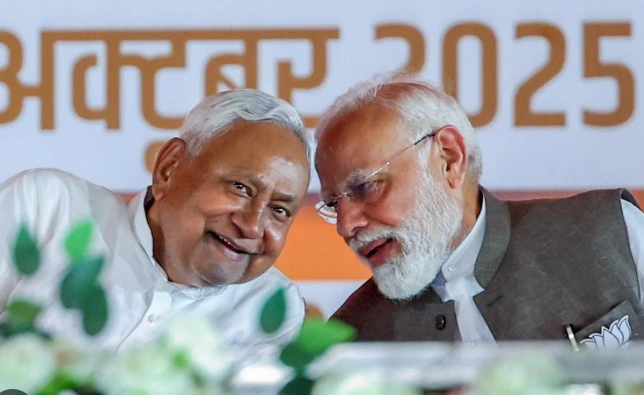
The Bihar Assembly Election results of 2025 have delivered a resounding verdict, with the National Democratic Alliance (NDA) securing a historic mandate. Nitish Kumar CM of Bihar, once again demonstrated his political acumen as the alliance crossed the crucial 200-seat mark in the 243-member assembly. This victory marks a significant chapter in the political career of Nitish Kumar, political party leader of Janata Dal (United), commonly known by its JDU full form.
The results announced on Thursday were nothing short of spectacular for the NDA, fundamentally altering Bihar’s political landscape. With Bihar CM Nitish Kumar leading from the front, the alliance not only secured power but did so with such authority that it has left the opposition scrambling for answers.
Nitish Kumar Remarkable Journey: Becoming Bihar Chief Minister for the 10th Time
About Nitish Kumar CM of Bihar – his story is one of unparalleled political longevity and strategic brilliance. Nitish Kumar has once again created a political milestone in Bihar, preparing to take oath as the state’s Chief Minister for the 10th time. When people ask how many times Nitish Kumar CM of Bihar has served, the answer speaks volumes about his political staying power: this will be his tenth term as the state’s leader.
Known for his long and eventful political career, Kumar has previously served as CM on nine different occasions, leading multiple coalition governments and navigating shifting political alliances over the years. His return to the top post highlights his enduring influence in Bihar’s politics and his ability to remain at the center of power despite frequent realignments among major parties.
Bihar CM 2025 Nitish Kumar journey from his first term in 2005 to now becoming Chief Minister for the tenth time demonstrates exceptional political survival skills. He has worked with different allies, faced electoral setbacks, and yet managed to bounce back stronger each time. As he gets ready for another term, all eyes are on how he will shape Bihar’s governance and political direction in the coming years.
This unprecedented achievement of becoming Nitish Kumar CM of Bihar for the tenth time places him among the most successful regional leaders in Indian political history. His ability to adapt to changing political circumstances while maintaining his core support base has become a case study in political management.
Understanding JDU: The Political Vehicle of Nitish Kumar
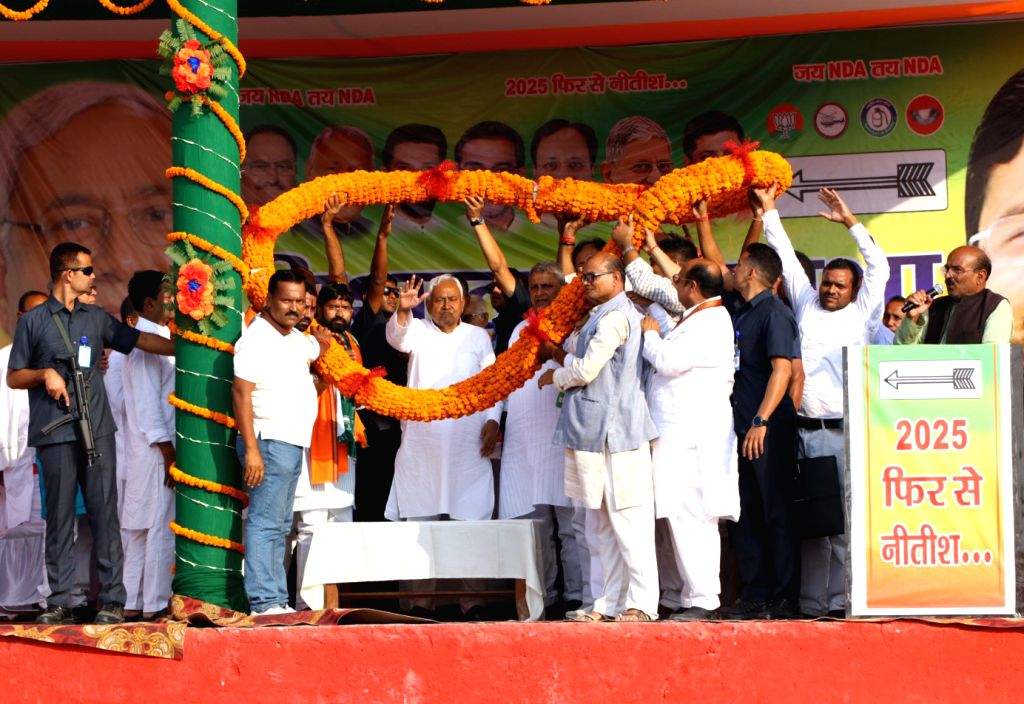
Before diving deeper into the election results, it’s important to understand Nitish Kumar political party. The JDU full form stands for Janata Dal (United), a party that has become synonymous with Bihar CM Nitish Kumar political identity. Founded in 2003 through a merger of various factions, JDU has evolved into a formidable force in Bihar politics under Kumar’s leadership.
Nitish Kumar political party has maintained its relevance despite the rise of BJP and the historical dominance of RJD Lalu Yadav in the state. The party’s focus on development, social justice, and inclusive governance has helped it carve out a distinct political space in Bihar’s complex caste-based electoral landscape.
NDA Strategic Seat Sharing Success
The NDA seat sharing in Bihar 2025 was meticulously planned, with each alliance partner receiving a fair share of constituencies. The seat sharing in Bihar assembly 2025 breakdown reflected careful negotiation and mutual respect among allies:
Seat Allocation Details:
- BJP: 101 seats
- JD(U): 101 seats (equal partnership with BJP)
- LJP (Ram Vilas) led by Chirag Paswan: 29 seats
- Hindustani Awam Morcha (HAM-S): 6 seats
- Rashtriya Lok Morcha (RLM): 6 seats
This equitable distribution, particularly the equal allocation between BJP and JDU, reflected a mature understanding between the two principal partners. Bihar CM Nitish Kumar insistence on an equal partnership paid rich dividends, as it allowed both major parties to maximize their electoral presence while ensuring smaller allies felt valued.
The NDA seat sharing in Bihar 2025 formula proved to be a winning strategy. Unlike previous elections where seat-sharing disputes had weakened alliances, this time the agreement was honored in letter and spirit. Nitish Kumar CM of Bihar, played a crucial role in finalizing this arrangement, using his experience from previous coalition governments to ensure smooth coordination.
JDU Candidate List 2025 Bihar: A Winning Formula
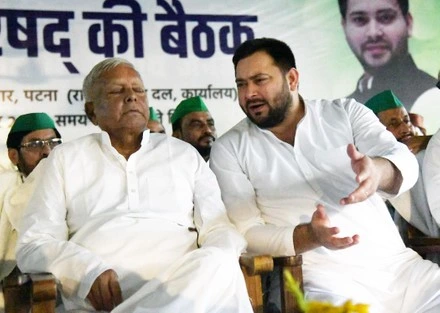
The JDU candidate list 2025 Bihar was carefully crafted, featuring a strategic mix of experienced leaders, young faces, and representatives from various social groups. The party released its candidates in two phases, demonstrating careful planning and consideration.
First List: 57 Strategic Selections
The initial JDU candidate list 2025 Bihar featured strong contenders across diverse constituencies:
Key Candidates from First List:
- Narendra Narayan Yadav (Alamnagar)
- Niranjan Kumar Mehta (Bihariganj)
- Ramesh Rishidev (Singheshwar)
- Kavita Saha (Madhepura)
- Ratnesh Sada (Sonbarsa)
- Gunjeshwar Sah (Mahishi)
- Atirek Kumar (Kusheshwar Asthan)
- Vinay Kumar Chaudhary (Benipur)
- Ishwar Manda (Darbhanga Rural)
- Madan Sahni (Bahadurpur)
- Komal Singh (Gaighat)
- Ajay Kushwaha (Minapur)
- Aditya Kumar (Sakra)
- Ajit Kumar (Kanti)
- Amarendra Kumar Pandey (Kuchaikote)
- Sunil Kumar (Bhore)
- Ramsevak Singh (Hathua)
- Manjeet Singh (Barauli)
- Bhishm Kushwaha (Ziradei)
- Vikas Kumar Singh (Raghunathpur)
- Indradev Patel (Barharia)
- Hem Narayan Sah (Maharajganj)
- Dhumal Singh (Ekma)
- Randhir Singh (Manjhi)
- Chhote Lal Rai (Parsa)
- Sidharth Patel (Vaishali)
- Mahendra Ram (Rajapakar)
- Umesh Singh Kushwaha (Mahnar)
- Maheshwar Hazari (Kalyanpur)
- Manjula Mungil (Warisnagar)
- Akhamdeo Devi (Samastipur)
- Vidyasagar Singh Nishad (Morwa)
- Vijay Kumar Chaudhary (Sarairanjan)
- Raveena Kushwaha (Bibhutipur)
- Raj Kumar Rai (Hasanpur)
- Ashok Kumar (Cheriya Bariyarpur)
- Raj Kumar Singh (Mokama)
- Ramchandra Sada T (Alauli)
Second List: 44 Complementary Candidates
The final JDU candidate list 2025 Bihar added 44 more candidates, completing the party’s lineup across 101 constituencies:
Notable Additions:
- Dhirendra Pratap Singh (Valmik Nagar) – Rajput consolidation
- Samriddha Verma (Sikata) – Young professional
- Vishal Sah (Nirkatiya) – Community leader
- Shalini Mishra (Kesariya) – Brahmin woman candidate
- Shweta Gupta (Shivhar) – Urban professional
- Nagendra Raut (Sursand) – Regional influence
- Pankaj Mishra (Runni Saidpur) – Upper caste balance
- Sudhanshu Shekhar (Harlakhi) – Development focus
The JDU candidate list 2025 Bihar reflected Nitish Kumar’s political party’s commitment to social engineering – balancing caste equations, ensuring adequate women’s representation, and mixing experienced politicians with fresh faces. This careful curation proved instrumental in the party’s electoral success.
BJP Emerges as Single Largest Party
While Nitish Kumar political party JDU secured an equal share of seats (101) in the alliance agreement, the Bharatiya Janata Party emerged as the single largest party in terms of actual seats won in the assembly. The saffron party’s strategic campaigning, superior booth-level organization, and effective messaging helped it maximize seat conversions from its allocated constituencies.
Key BJP Victories:
- Ram Kripal Yadav won Danapur by over 20,000 votes, demonstrating BJP’s strength in urban-rural interfaces
- Maithili Thakur’s victory in Alinagar showed the party’s youth appeal
- Vijay Kumar Sinha, serving as Deputy Chief Minister, successfully retained Lakhisarai
- Samrat Choudhary, another Deputy CM, comfortably held Tarapur
The BJP’s performance complemented Bihar CM Nitish Kumar’s JDU perfectly, creating a formidable combination that the opposition couldn’t counter. The party’s 101-seat allocation translated into significant representation in the assembly, though exact numbers showed BJP slightly ahead in final tally.
The Opposition Crumbles: Mahagathbandhan’s Devastating Defeat
The election dealt a crushing blow to the opposition Mahagathbandhan (Grand Alliance), particularly to the RJD Lalu Yadav political legacy and the Congress party. What was expected to be a competitive election turned into a one-sided affair, leaving opposition leaders shocked and their supporters demoralized.
RJD Lalu Yadav Legacy Faces Critical Test
The Rashtriya Janata Dal, the political vehicle created by RJD Lalu Yadav, faced its most humiliating defeat in recent memory. Despite being founded by the charismatic RJD Lalu Yadav and having a strong organizational network, the party could manage only 25 seats in the 243-member assembly.
The RJD Paradox:
What makes RJD’s performance particularly perplexing is the vote share versus seat conversion gap. The party secured 22.76% of the total votes cast – the highest among all parties, even more than BJP (20.90%) and JDU (18.92%). Yet, this impressive vote share translated into a measly 25 seats.
Why Did RJD Fail Despite High Vote Share?
- Inefficient Vote Distribution: RJD Lalu Yadav party had concentrated vote banks in certain areas but failed to win seats by mobilizing just enough votes across more constituencies
- Poor Targeting: The party contested in constituencies where it came second or third, wasting valuable votes
- Wave Factor: The strong pro-NDA sentiment meant even traditional RJD bastions witnessed erosion
- Alliance Coordination Failure: Unlike NDA’s smooth coordination, Mahagathbandhan suffered from poor seat-sharing execution
Tejashwi Yadav Personal Victory, Political Defeat:
Tejashwi Prasad Yadav, son of RJD Lalu Yadav and the face of RJD campaign, did win his traditional seat of Raghopur. However, his personal victory was overshadowed by the party’s overall collapse. His “youth versus experience” narrative and promises of employment generation failed to create the electoral wave he had hoped for.
The defeat raises serious questions about Tejashwi’s leadership and whether he can carry forward RJD Lalu Yadav’s political legacy effectively. Many party insiders are now questioning whether the party needs to reimagine its strategy or if the problem lies deeper in its organizational structure and messaging.
Congress Historic Collapse
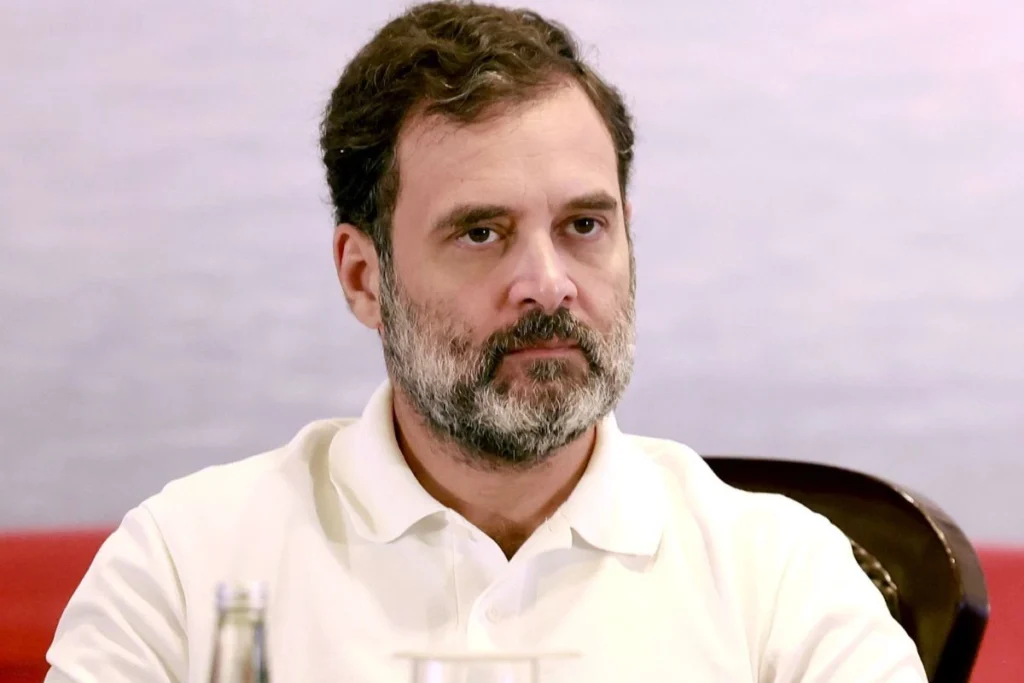
If RJD’s performance was disappointing, Congress showing was downright catastrophic. The grand old party managed to win just 6 seats across Bihar – one of its worst performances in the state’s electoral history.
Congress’s Decline in Numbers:
- Seats Won: 6 (out of constituencies allocated)
- Vote Share: Approximately 8.71%
- Performance: Among the worst in Bihar’s modern political history
What Went Wrong for Congress?
- Diminished Relevance: Congress has been steadily losing ground in Bihar, and this election confirmed its marginal status
- Alliance Liability: Instead of being an asset, Congress became a burden for the Mahagathbandhan
- Weak Campaign: The party failed to run an effective ground campaign or connect with voters
- Leadership Vacuum: Lack of strong local leadership and over-reliance on national narratives
- Strategic Blunders: Poor seat selection and inadequate resource deployment
The Congress’s failure is particularly significant because it questions the viability of the Mahagathbandhan itself. With such a weak partner, RJD’s challenge in fighting Bihar CM Nitish Kumar and the NDA becomes exponentially harder.
What Made NDA Win: The Nitish Kumar Factor
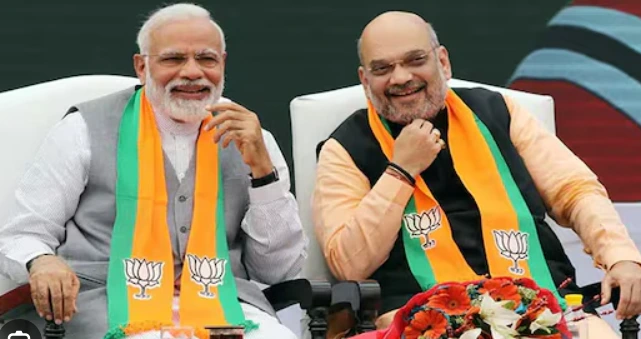
Several factors contributed to the NDA’s landslide victory, with about Nitish Kumar CM of Bihar’s governance track record and political management playing a central role:
1. Development-Led Messaging
Bihar CM Nitish Kumar’s administration has consistently emphasized infrastructure development, welfare schemes, and economic revival. Over his multiple terms as Chief Minister, he has built a reputation as a development-oriented leader. This election saw the NDA campaign heavily focused on:
- Road and bridge construction achievements
- Rural electrification success
- Educational infrastructure improvements
- Healthcare facility expansion
- Women’s welfare schemes
This development narrative resonated strongly with voters across rural and urban areas, giving them tangible reasons to vote for continuity rather than change.
2. Women Voter Mobilization: The Game Changer
One of the most striking features of this election was the unprecedented turnout and support from women voters. Nitish Kumar, CM of Bihar, has historically focused on women’s empowerment, and this investment paid massive electoral dividends.
Women-Centric Initiatives that Worked:
- Direct benefit transfer schemes for women
- Safety and security measures
- Self-help group support
- Healthcare schemes targeting maternal health
- Educational scholarships for girls
Women voters turned out in record numbers and overwhelmingly endorsed the NDA, particularly appreciating Bihar CM 2025 Nitish Kumar’s focus on their welfare and security.
3. Youth Appeal and Employment Focus
Young and first-time voters were attracted to NDA’s promises of:
- Infrastructure development creating employment opportunities
- Skill development programs
- Educational institution expansion
- Industrial growth and investment
- Political stability for long-term planning
Nitish Kumar’s political party successfully positioned itself as the youth-friendly option, despite Kumar himself being a veteran politician.
4. Superior Booth-Level Organization
The NDA’s ground game was exceptional. While the opposition relied on traditional rallies and meetings, Bihar CM Nitish Kumar and his allies focused on:
- Booth-level committees with clear responsibilities
- Targeted voter outreach programs
- Micro-management of campaign logistics
- Real-time feedback and course correction
- Effective use of social media and traditional media
This organizational superiority translated directly into vote conversion efficiency.
5. Strategic Alliance Management
Perhaps the most crucial factor was about Nitish Kumar CM of Bihar’s expertise in coalition management. The NDA seat sharing in Bihar 2025 arrangement kept all partners satisfied while maximizing electoral efficiency.
Key Alliance Management Strategies:
- Equal partnership with BJP (101 seats each) satisfied both parties
- Respectable allocation to smaller allies maintained their commitment
- Clear communication channels prevented last-minute disputes
- Coordinated campaigning amplified individual strengths
- No public airing of internal differences
Bihar CM 2025 Nitish Kumar’s experience in managing coalitions – having worked with different parties over his ten terms – was evident throughout the campaign.
6. Welfare Delivery and Governance Record
Nitish Kumar, CM of Bihar, could point to tangible governance achievements:
- Bihar’s GDP growth rate improvement
- Reduction in crime rates compared to previous decades
- Infrastructure index improvements
- Social indicator enhancements
- Administrative stability
This record allowed the NDA to run a positive campaign based on achievements rather than merely attacking opponents.
Key Constituency Results: Where the Battle Was Won
Several constituencies witnessed dramatic outcomes that tell the story of this election:
Major NDA Victories:
Govindganj (Patna District): LJP (Ram Vilas) candidate Raju Tiwari defeated Congress’s Shashi Bhushan Rai by over 32,000 votes, showing the alliance partner’s contribution to the overall victory.
Tarapur: Deputy Chief Minister Samrat Choudhary retained his seat comfortably, proving that governance and grassroots connect matter.
Lakhisarai: BJP’s Vijay Kumar Sinha, another Deputy CM, won convincingly, demonstrating the advantage of incumbency when backed by performance.
Alinagar: BJP’s Maithili Thakur’s victory showed how new faces and fresh energy can energize campaigns.
Danapur: BJP’s Ram Kripal Yadav secured victory by over 20,000 votes in this politically significant constituency near Patna.
Opposition’s Limited Success:
Raghopur: RJD’s Tejashwi Yadav won, but with a reduced margin compared to previous elections, indicating erosion even in traditional strongholds.
These results across traditionally contested seats demonstrated a clear shift in political mood. Constituencies that had alternated between alliances now showed a decisive preference for the NDA.
Vote Share Analysis: Understanding the Numbers
The vote share distribution revealed interesting insights into Bihar’s political dynamics:
Vote Share Breakdown:
- RJD: 22.76% (highest share, but only 25 seats)
- BJP: 20.90% (highly efficient seat conversion)
- JD(U): 18.92% (strong performance under Nitish Kumar’s political party)
- Congress: ~8.71% (historic low, reflecting declining relevance)
What the Numbers Tell Us:
The efficiency of seat conversion, rather than raw vote share, determined this election’s outcome. Bihar CM Nitish Kumar’s party demonstrated superior electoral strategy despite having a lower vote share than RJD.
NDA’s Efficiency: The combined NDA vote share (BJP + JDU + allies) was around 43-45%, translating to over 200 seats – a highly efficient conversion rate.
Opposition’s Inefficiency: The Mahagathbandhan’s vote share was substantial but scattered. RJD Lalu Yadav’s party particularly suffered from vote concentration in pockets rather than winning distribution across constituencies.
This analysis shows that about Nitish Kumar CM of Bihar’s strategic acumen extends beyond governance to electoral mathematics – understanding where to contest, how to mobilize, and how to convert votes into seats.
Implications for Bihar Future
With this emphatic mandate, Bihar CM 2025 Nitish Kumar and the NDA face both opportunities and challenges:
Governance Priorities:
- Economic Revival: Bihar needs accelerated economic growth, job creation, and industrial investment
- Infrastructure Development: Continuing the momentum on roads, bridges, electricity, and digital connectivity
- Welfare Scheme Expansion: Building on successful programs while ensuring leakage-free delivery
- Agricultural Sector Reforms: Improving farmer income, modernizing agriculture, and ensuring market access
- Education and Healthcare: Upgrading institutions, improving quality, and ensuring accessibility
High Expectations:
Nitish Kumar, CM of Bihar, now serving his tenth term, faces higher expectations than ever. Voters have given him a massive mandate, and they will expect:
- Faster decision-making without coalition compulsions
- Visible development in every constituency
- Employment generation for youth
- Enhanced quality of life for women
- Agricultural prosperity and rural development
Political Ramifications:
For NDA:
- Nitish Kumar, CM of Bihar, has reaffirmed his indispensability in the state’s politics
- BJP’s emergence as the single largest party strengthens its negotiating position
- The alliance has a free hand for five years to implement its agenda
- Success in Bihar could influence NDA’s strategy in other states
For Opposition:
- RJD Lalu Yadav’s political legacy faces its greatest existential threat
- Congress must decide if it wants to remain relevant in Bihar or accept marginal status
- The Mahagathbandhan needs complete restructuring or may cease to exist as a viable alliance
- Tejashwi Yadav’s leadership will face intense scrutiny and internal challenges
Future of the Opposition: Can They Bounce Back?
The Mahagathbandhan’s crushing defeat raises serious questions about its survival and relevance:
RJD’s Challenges:
Despite RJD Lalu Yadav building a formidable political organization over decades, the party now faces:
- Credibility crisis after failing to convert votes into seats
- Leadership questions about Tejashwi Yadav’s capabilities
- Need to rebuild organizational strength
- Requirement to craft new narratives beyond caste politics
- Challenge of retaining core supporters who might lose faith
Congress’s Existential Crisis:
With just 6 seats, Congress faces:
- Possibility of being dropped from future opposition alliances
- Complete loss of bargaining power
- Brain drain as leaders may switch parties
- Financial constraints affecting organizational activities
- Identity crisis – whether to focus on Bihar or cut losses
Path Forward for Opposition:
For the opposition to remain relevant:
- Leadership Renewal: Fresh faces and new energy needed urgently
- Strategy Overhaul: Moving beyond personality-driven to issue-based politics
- Alliance Rethinking: Whether Mahagathbandhan should continue or alternatives explored
- Grassroots Rebuilding: Focus on booth-level organization like NDA
- Narrative Crafting: Developing compelling alternative vision for Bihar
The opposition’s ability to learn from this devastating defeat will determine whether it can mount a credible challenge when Bihar CM Nitish Kumar and the NDA seek re-election.
The Seat Sharing Formula That Worked
The seat sharing in Bihar assembly 2025 deserves detailed analysis as it became a template for successful coalition management:
The Formula:
The NDA seat sharing in Bihar 2025 was based on:
- Equality between principal partners: BJP and JDU got 101 seats each
- Respectful allocation to junior allies: LJP (29), HAM-S (6), RLM (6)
- Constituency-wise strength mapping: Each party contested where it was strongest
- No last-minute changes: Agreement honored completely
- Coordinated campaigning: All partners supported each other
Why It Worked:
- Mutual Respect: Bihar CM Nitish Kumar insisted on equal treatment, which BJP accepted
- Clear Communication: No ambiguity about responsibilities and expectations
- Historical Learning: Nitish Kumar’s political party applied lessons from previous alliance experiences
- Electoral Mathematics: Scientific seat allocation based on winnability rather than ego
- United Messaging: Despite multiple parties, single narrative about development and governance
This seat sharing in bihar assembly 2025 model contrasted sharply with the opposition’s disputes and confusion, giving NDA a significant strategic advantage.
Long-term Impact: Reshaping Bihar’s Political Landscape
This election will have lasting consequences:
For Nitish Kumar:
How many times Nitish Kumar CM of Bihar has served (now ten times) places him in a unique position. He has:
- Established himself as indispensable to Bihar politics
- Created a legacy that will influence state politics for decades
- Demonstrated that governance and development can win elections
- Shown how to manage coalitions successfully
- Built a political model that others will study and emulate
For Bihar:
The state now has:
- Political stability for at least five years
- Clear governance mandate without coalition blackmail
- Opportunity for consistent policy implementation
- Chance to accelerate development without political disruptions
- Platform to showcase what focused governance can achieve
For National Politics:
This result sends signals beyond Bihar:
- Regional leaders remain important in Indian politics
- Development narrative can trump caste-based politics
- Well-managed coalitions can deliver electoral success
- Opposition needs to offer credible alternatives, not just criticism
Conclusion: A New Chapter in Bihar’s Political History
The 2025 Bihar Assembly Elections mark a watershed moment in the state’s political journey. Nitish Kumar, CM of Bihar, has once again proven his exceptional political mastery, securing his position through strategic alliance-building and effective governance messaging. The NDA seat sharing in Bihar 2025 model worked perfectly, with each partner contributing to the landslide victory.
When people ask how many times Nitish Kumar CM of Bihar has served, this latest term – his tenth – adds another remarkable chapter to an already illustrious political career spanning over two decades at the helm. As Bihar CM 2025, he faces the exciting challenge of meeting the high expectations of voters who have given the NDA such a decisive mandate.
The carefully selected JDU candidate list 2025 Bihar paid rich dividends, reflecting the party’s understanding of social dynamics and voter preferences. The seat sharing in Bihar assembly 2025 arrangement kept the alliance united and focused, preventing the internal bickering that has derailed many coalitions in the past.
Meanwhile, the opposition, particularly RJD Lalu Yadav’s party and Congress, must undertake deep soul-searching to remain relevant in Bihar’s evolving political landscape. RJD Lalu Yadav built a formidable political machine, but its current leadership needs to reimagine strategy to honor that legacy.
As the new government takes charge under Bihar CM Nitish Kumar, all eyes will be on the NDA to deliver on its promises and justify the faith placed by the electorate. This victory is not just an electoral triumph – it’s a mandate for transformation, development, and responsive governance that Bihar’s citizens have long awaited.
About Nitish Kumar CM of Bihar – his tenth term as Chief Minister represents not just political survival but political dominance. His journey from 2005 to 2025, navigating complex caste equations, managing difficult alliances, facing electoral setbacks and bouncing back, provides valuable lessons in political management and governance.
The question now is not just how many times Nitish Kumar CM of Bihar will serve, but what legacy he will leave when he finally steps aside. With a massive mandate, stable alliance, and clear governance agenda, this could be his most impactful term yet.
Nitish Kumar’s political party JDU, along with its NDA partners, has been handed the keys to Bihar’s future. The responsibility is immense, the expectations are high, and the opportunities are unprecedented. The next five years will determine whether this victory translates into transformative governance or becomes just another electoral statistic.
The 2025 Bihar Assembly Elections will be remembered as the election where strategic planning, grassroots organization, effective leadership, and the Nitish Kumar factor trumped vote share arithmetic, redefining what it means to win in India’s complex multi-party democracy. For Bihar CM 2025 Nitish Kumar, this is not just another term – it’s his tenth act in a political drama that continues to captivate and inspire.