Introduction: The Story of Journalist Arfaz Daing
In November 2025, Journalist Arfaz Ahmad Daing became the center of a national controversy when the Jammu Development Authority (JDA) demolished his home in the Narwal area of Jammu without prior notice. The demolition of Arfaz Daing’s house sparked outrage across India, raising serious questions about selective targeting, freedom of the press, and due process. But who is Journalist Arfaz Daing? What made his story go viral? And why is his case so important for journalism and democracy in India?
This comprehensive guide explores the biography of Journalist Arfaz Daing, his career in digital journalism, the JDA controversy, and the inspiring community response that followed.
Who is Journalist Arfaz Daing? – Background and Early Life
Arfaz Ahmad Daing is a Jammu-based journalist who runs the digital news channel News Sehar India, a platform that has garnered nearly half a million followers and subscribers on social media. Born and raised in Kashmir, Journalist Arfaz represents a new generation of fearless, independent journalists committed to reporting the truth without compromising on editorial integrity.
The Family’s Journey to Jammu
Arfaz Daing’s father, Ghulam Qadir Daing, provides crucial context to understand the Journalist Arfaz Daing story. In the early 1990s, fleeing the terror of militant activities in Doda’s Bhalesa region, Ghulam Qadir made the difficult decision to leave everything behind. With his eldest son, just 12 years old at the time, and barely Rs 200-300 in his pocket, Ghulam Qadir arrived in Jammu with a single dream: to provide a safe home for his family.
Starting from scratch, Ghulam Qadir took odd jobs, eventually starting a small food stall for truckers at Narwal Mandi. Over decades of hard work, he purchased a plot of land and built a modest single-storey house where the family settled permanently. For nearly 35-40 years, the Daing family lived peacefully in Narwal, establishing themselves as respected members of the community.
Key Takeaways: The Arfaz Daing Story
| Aspect | Details |
|---|---|
| Full Name | Arfaz Ahmad Daing |
| Profession | Journalist and Digital Media Founder |
| Platform | News Sehar India (500K+ followers) |
| Incident Date | November 27, 2025 |
| Location | Narwal, Jammu |
| Property Status | 40-year-old family home |
| Authority Involved | Jammu Development Authority (JDA) |
| Community Support | Kuldeep Sharma donated 5-marla land |
| Key Issue | Selective demolition, press freedom, due process |
| Impact | Symbol of Hindu-Muslim unity, fight for justice |
Journalist Arfaz Daing’s Career: From Local Journalist to National Voice
While his father built a small food business, Arfaz Ahmad Daing chose journalism as his profession. He founded News Sehar India, a digital media platform dedicated to investigative reporting and ground-level journalism. Unlike mainstream media outlets, Journalist Arfaz’s channel focuses on stories that affect common people—issues of justice, transparency, and accountability.
Why Did Journalist Arfaz Daing Become Famous?
Arfaz Daing gained recognition for his fearless reporting, particularly his investigation into alleged police corruption and narcotics smuggling in Jammu. In October 2025, he reported connections between a Deputy Superintendent of Police (DSP) and suspected drug trafficking networks, implicating officials who were supposedly protecting criminal activities.
This reporting made him a target.
The Arfaz Daing House Demolition: What Happened on November 27, 2025?
The Demolition of Journalist Arfaz Daing’s Home
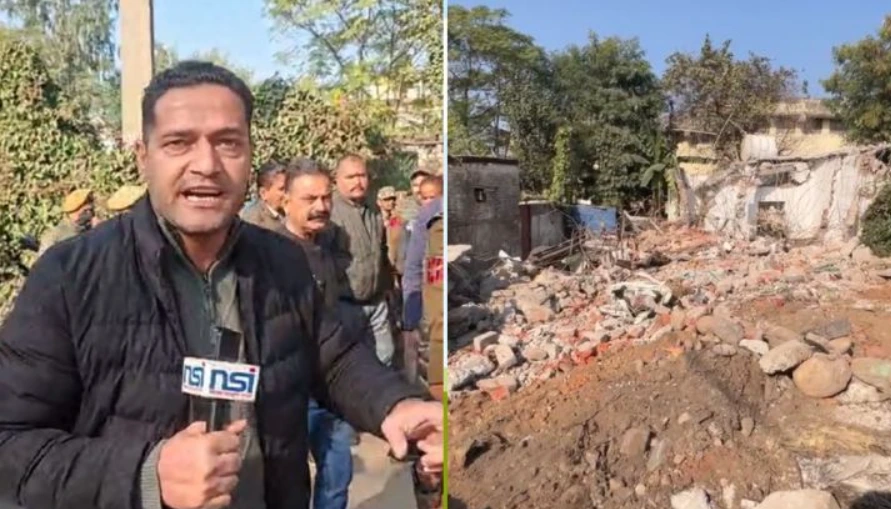
On November 27, 2025, early morning, around 80-100 police and paramilitary personnel, accompanied by JDA officials and bulldozers, arrived at Arfaz Daing’s house in the Narwal area. The family claims they received no prior warning. What followed was a shocking demolition that would make Journalist Arfaz’s case a symbol of state overreach and selective targeting.
Key facts about the JDA demolition of Arfaz Daing’s house:
- No Prior Notice Given: While the JDA claims they sent notices on October 29 and November 18, the family contends they never received them properly or had time to appeal.
- Selective Targeting: Only one house was demolished that day—Arfaz Daing’s house—despite numerous other alleged encroachments in Jammu.
- Police Presence: Hundreds of police personnel were stationed to prevent Journalist Arfaz from filming or recording live commentary of the demolition.
- Detained and Bruised: Arfaz Ahmad Daing and his two brothers were detained during the demolition. Videos show police preventing him from documenting the destruction.
- 40-Year-Old Property: The family had lived in the house for nearly 40 years, during which time the government never objected to their presence.
The JDA’s Defense vs. The Ground Reality
The Jammu Development Authority defended the demolition, claiming the house was built on JDA land and that the family was encroaching. However, this explanation fails to address critical questions:
- Why was only Journalist Arfaz’s house demolished when other alleged encroachers remain untouched?
- Why were there no proper legal procedures followed?
- Why did the administration use such excessive police force?
- Why was Journalist Arfaz Daing prevented from recording?
Arfaz Daing himself questioned this selective action: “Is my house the only illegal one in the entire Jammu city?”
The Viral Controversy: Why Did Journalist Arfaz Daing’s Story Go Viral?
Political Reaction to the Arfaz Daing Demolition
The demolition of Journalist Arfaz Daing’s house quickly became a political flashpoint:
Chief Minister Omar Abdullah called the demolition “a conspiracy” to malign his government, stating that the JDA acts independently without the elected government’s permission. He demanded answers about why Journalist Arfaz was being selectively targeted and raised the sensitive question of whether his religion played a role in the targeting.
PDP Leader Waheed-ur-Rehman Para condemned the demolition, calling for an end to the “bulldozer practice” in Jammu and Kashmir, stating: “Homes are lives, not lines to be erased.”
CPI(M) Leader M Y Tarigami criticized the absence of due notice, highlighting serious lapses in legal procedure: “No authority can bypass the procedure established by law. Accountability must follow.”
Even Senior Lawyers Sheikh Shakeel and Zulkarnain Choudhary condemned the action, arguing that the JDA violated the principle of equal application of law.
The Kuldeep Sharma Gesture: A Symbol of Hindu-Muslim Unity
How a Neighbor’s Kindness Changed the Narrative
In a heartwarming moment that restored faith in communal harmony, Kuldeep Sharma, a Hindu social activist and neighbor of Journalist Arfaz Daing, decided to donate his own 5-marla land to help rebuild the journalist’s home.
Handing over the land papers, an emotional Kuldeep Sharma said:
“I will build a house for you even if I have to beg for funds. The conspiracy of pitting Hindus against Muslims will never succeed. Our brotherhood will always exist. You are a good man. May your children prosper.”
Kuldeep Sharma revealed that he was a regular viewer of News Sehar India and was deeply troubled by the demolition. His daughter, Tania Sharma, expressed pride in her father’s decision: “I am very sad. How can anyone be turned homeless overnight? He is like a brother to me. Not just me, my family and the entire community stands with him.”
This gesture transformed Journalist Arfaz Daing’s tragedy into a powerful message of unity and brotherhood, making it a national story about resilience, compassion, and the fight for justice.
Journalist Arfaz Daing’s Impact: Why His Story Matters
Freedom of the Press Under Attack
The case of Journalist Arfaz Ahmad Daing raises critical questions about press freedom in India:
- Retaliation for Reporting: Was the demolition of Arfaz Daing’s house a form of retaliation for his investigative reporting on police corruption?
- Selective Targeting: Why is Journalist Arfaz Daing being singled out when powerful, influential figures occupy hundreds of acres in Jammu?
- Intimidation of Journalists: As Arfaz Daing himself stated, is this “a message for those who are into fair and truthful journalism”?
The Role of News Sehar India
News Sehar India, founded by Journalist Arfaz Daing, has become a voice for the voiceless. With nearly 500,000 followers, the digital platform has:
- Investigated police corruption and alleged narcotics smuggling
- Covered stories ignored by mainstream media
- Provided a platform for common citizens to voice their grievances
- Challenged official narratives with ground-level reporting
Community Support and Political Response
Who Visited the Daing Family After the Demolition?
Following the demolition of Arfaz Daing’s house, multiple political leaders and social activists visited the family:
- Former BJP State Chief Ravinder Raina assured all possible help and mentioned the Prime Minister Awas Yojana for urban poor
- Senior Congress Leader Raman Bhalla came to sympathize with the family
- Community members from both Hindu and Muslim communities rallied around Journalist Arfaz Daing
- Legal experts and human rights activists offered support
The Broader Context: Demolitions and Justice in Jammu
A Pattern of Selective Action?
Arfaz Daing is not the first to face a similar situation. Earlier, another house allegedly built by him or his family in Bhatindi was also demolished. However, the critical difference is the selective nature of the recent demolition and the excessive police presence during the action.
Chief Minister Omar Abdullah’s statement highlights the real issue: “Why this single person was targeted by the authorities and if his religion is the reason for that?”
Where is Journalist Arfaz Daing Now?
Following the demolition, Arfaz Ahmad Daing and his family have been living under a makeshift tarpaulin shelter. However, thanks to the support of Kuldeep Sharma and the broader community, they have the land and resources to rebuild their home. Journalist Arfaz Daing continues to run News Sehar India and has not stopped his investigative journalism despite the hardship.
How to Support Journalist Arfaz Daing?
If you believe in the cause of fearless journalism and want to support Journalist Arfaz Ahmad Daing, here are ways to help:
- Follow News Sehar India on social media platforms
- Share his reporting to amplify the voice of independent journalism
- Support community initiatives that help rebuild homes for victims of selective demolitions
- Raise awareness about press freedom and the need for accountability from authorities
Frequently Asked Questions About Journalist Arfaz Daing
Q: Who is Journalist Arfaz Daing?
A: Arfaz Ahmad Daing is a Jammu-based journalist who founded News Sehar India, a digital media platform known for investigative reporting. He became nationally known after his house was demolished by the JDA in November 2025.
Q: Why was Journalist Arfaz Daing’s house demolished?
A: The Jammu Development Authority (JDA) claimed the house was built on state land. However, the family had lived there for nearly 40 years and claim selective targeting, possibly for his investigative reporting on police corruption.
Q: Is Journalist Arfaz Daing still working?
A: Yes, Journalist Arfaz Daing continues to run News Sehar India despite the personal hardship from the demolition.
Q: Who is Kuldeep Sharma?
A: Kuldeep Sharma is a Hindu social activist and neighbor who donated his 5-marla land to Journalist Arfaz Daing after the demolition, symbolizing communal harmony.
Q: What is News Sehar India?
A: News Sehar India is a digital news channel founded by Journalist Arfaz Ahmad Daing, with nearly 500,000 social media followers. It focuses on investigative journalism and stories affecting common people.
Conclusion: Journalist Arfaz Daing and the Future of Indian Journalism
The story of Journalist Arfaz Ahmad Daing is not just about a demolished house. It is about the struggle for press freedom, the fight against corruption, and the power of community support. In a time when independent journalism faces mounting pressure, Journalist Arfaz Daing stands as a symbol of courage and resilience.
The Arfaz Daing demolition controversy has sparked important conversations about selective targeting, due process, and the protection of journalists. The gesture of Kuldeep Sharma proves that Hindu-Muslim unity remains strong at the grassroots level, even as political forces try to divide communities.
As Journalist Arfaz Daing rebuilds his home with community support, his story inspires millions to believe that truth, justice, and compassion can prevail against all odds. The fight for free and fearless journalism continues, and Journalist Arfaz Ahmad Daing remains at the forefront of this crucial battle.