Introduction: Cricket India’s Religion
Cricket in India is not merely a sport. It is an emotion, a passion, and a way of life for over a billion people. From the narrow gullies of Mumbai to the grand stadiums of Kolkata and Chennai, cricket is played, discussed, debated, and celebrated with unmatched intensity. Children grow up dreaming of donning the blue jersey and representing the nation, while older generations recount classic victories with nostalgia and pride.
India today stands as the most powerful cricketing nation in the world not just in terms of playing strength, but also in economic might, fan following, and global influence. The Board of Control for Cricket in India (BCCI) is the wealthiest cricket board on the planet, and the Indian Premier League (IPL) has transformed the sport commercially in ways unimaginable just two decades ago.
Yet, this extraordinary journey began not with Indians picking up a bat, but with British sailors introducing the game to Indian shores in the early 18th century. Understanding how cricket evolved from a colonial import to a national obsession requires exploring its very roots.
Origin of Cricket Where Did It All Begin?
The English Roots of Cricket
Cricket is widely accepted to have originated in the county of Kent in southeast England, sometime in the early to mid-16th century. The earliest definitive reference to the game dates back to 1598, when a court case in Guildford, Surrey mentioned a game called “crickett” being played on common land.
Initially, cricket was considered a children’s pastime. Shepherds in the weald (heavily wooded areas) of southeast England are believed to have used their crooks or curved staffs to hit stones or balls of wool, with a tree stump or gate as a target. As the game grew in popularity, adults began adopting it in the 17th century, particularly among the rural working class and later the aristocracy.
By the early 1700s, cricket had spread widely across England, and gambling on matches became common among the nobility. Large sums of money were wagered, and this financial interest led to a drive for standardized rules.
Formal Rules and Early Governance
The first formal Laws of Cricket were written in 1744, codifying the game’s structure for the first time. These laws established guidelines for the pitch, wickets, and the conduct of play. The Marylebone Cricket Club (MCC), founded in 1787, soon became the guardian of these laws and remains so to this day, even though the ICC (International Cricket Council) governs the global game.
The first officially recognized county match took place in 1709 between Kent and Surrey. By the late 18th century, counties like Hampshire, Sussex, and Middlesex had established strong cricketing traditions. The sport’s association with English culture, gentlemanly conduct, and fair play earned it the reputation of being “more than a game.”
Early International Cricket
The first recorded international cricket match was played not between England and another European nation, but between the United States of America and Canada in 1844 in New York. This match, though not classified as a Test match, holds the distinction of being the first international sporting event in history.
The first official Test match came later. On 15 19 March 1877, Australia hosted England at the Melbourne Cricket Ground. Australia won the inaugural Test match by 45 runs, establishing a fierce rivalry that continues to this day through the legendary Ashes series.
| Year | Event | Location |
| 1598 | Earliest documented reference to cricket | Guildford, England |
| 1646 | First recorded cricket match | England |
| 1744 | First formal Laws of Cricket written | England |
| 1787 | MCC founded | London, England |
| 1844 | First international cricket match (USA vs Canada) | New York, USA |
| 1877 | First official Test match (Australia vs England) | Melbourne, Australia |
Cricket in India From Colonialism to National Pride
Who Introduced Cricket to India?
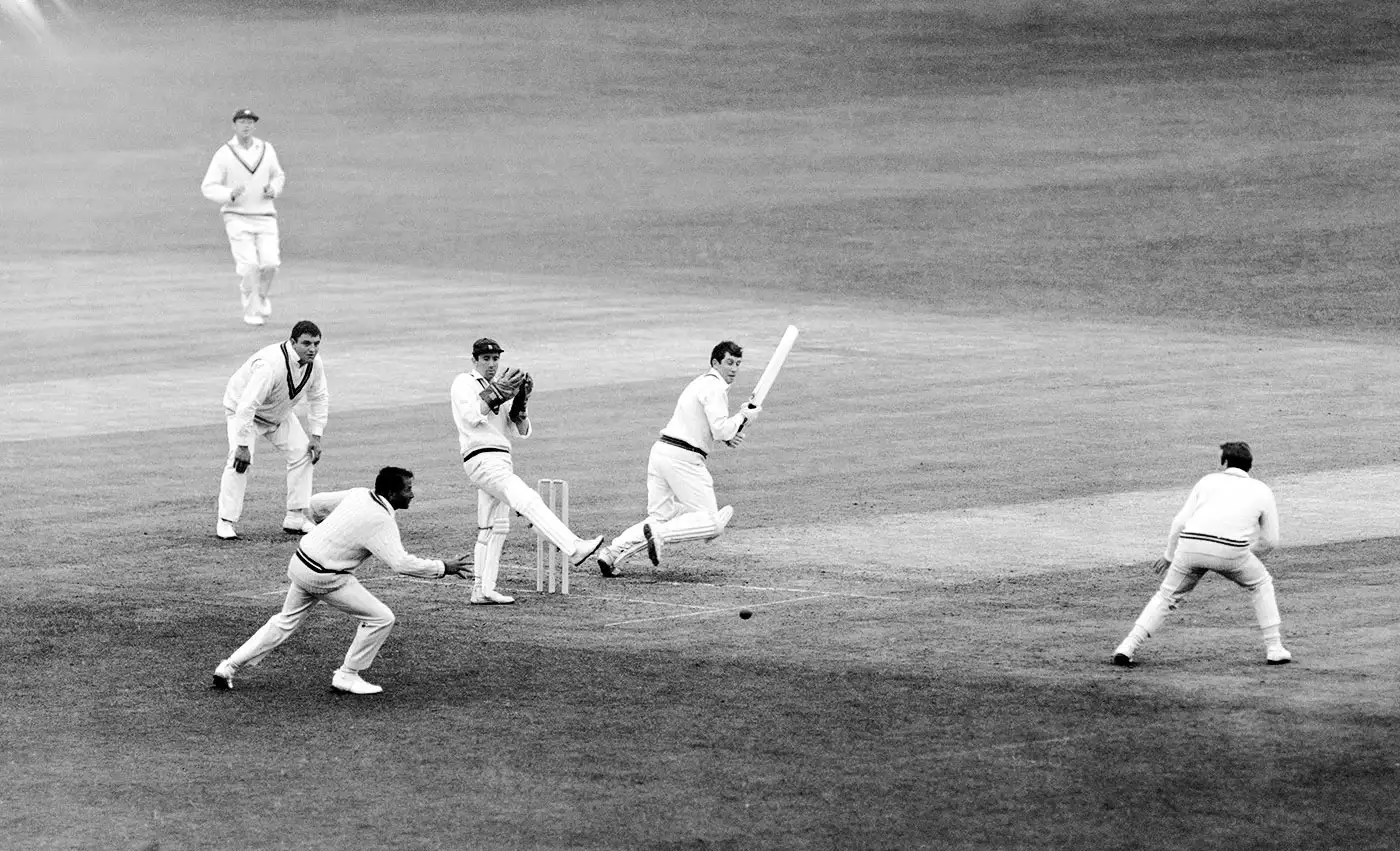
Cricket was not invented in India it was brought to Indian shores by the British. The first recorded cricket match on Indian soil was played in 1721 in Cambay (modern-day Khambhat), Gujarat. The players were English sailors from the East India Company, who had docked at the port and organized a game to pass the time.
As the British East India Company expanded its administrative and military presence across India, cricket spread from port cities and military cantonments into the broader Indian society. Soldiers and civil servants introduced the game at their stations, and cricket grounds began appearing in Bombay (Mumbai), Calcutta (Kolkata), and Madras (Chennai) the three major British administrative centers.
The Parsi Community First Indian Cricketers
Among Indian communities, the Parsis (Zoroastrians originally from Persia who had settled in Gujarat and Maharashtra) were the first to take up cricket enthusiastically. Attracted by the social and commercial advantages of associating with the British elite, the Parsis began playing cricket in the mid-19th century.
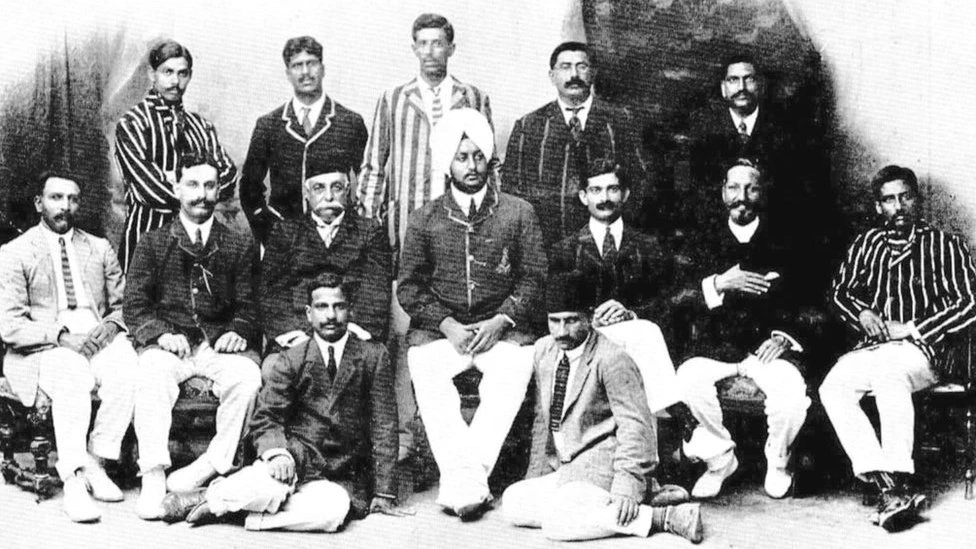
In 1848, the Parsi community established the Oriental Cricket Club in Bombay the first Indian cricket club in history. Their keenness to learn the game and compete on equal terms with the British was a symbol of their progressive outlook and adaptability. By 1886, a Parsi team toured England, and a second tour followed in 1888. These tours, though not triumphant, demonstrated that Indians could compete at a high level.
The Hindu and Muslim Cricketers Enter the Scene
Inspired by the Parsis, the Hindu and Muslim communities also began forming their own teams in the late 19th and early 20th centuries. This led to the famous Bombay Triangular tournament in 1907, contested between the Parsis, Hindus, and Europeans (British). When Muslims joined, it became the Bombay Quadrangular. Later, a fifth team representing the Rest (Indian Christians and other minorities) was added, creating the Bombay Pentangular.
The Pentangular became the most celebrated domestic cricket tournament of pre-independence India. It was however criticized later for promoting communal divisions, and was discontinued after independence in 1947 in favor of more integrated competitions.
Ranjitsinhji The First Indian Cricket Icon
Kumar Shri Ranjitsinhji, popularly known as Ranji, is one of the most celebrated cricketers of the late Victorian era. Born in 1872 in Saurashtra (present-day Gujarat), he played for Cambridge University and later Sussex, before representing England in Test cricket. He was the first cricketer of Indian origin to play Test cricket, and his elegant, wristy batting style revolutionized the art of batting.
Ranji scored 154 not out on his Test debut against Australia in 1896 and went on to score over 24,000 first-class runs. The Ranji Trophy, India’s premier domestic cricket competition, is named in his honor. His nephew, Duleepsinhji, also played Test cricket for England, and the Duleep Trophy is named after him.
BCCI The World’s Richest Cricket Board
BCCI Full Form
BCCI stands for: Board of Control for Cricket in India.
The BCCI is the national governing body for cricket in India. It is responsible for the administration, promotion, development, and regulation of cricket throughout the country, at both domestic and international levels.
Establishment of BCCI
The BCCI was established in December 1928 in Chennai (then known as Madras). It was formed as a successor to the Cricket Board of Control, which had been set up a few years earlier. India’s growing cricketing community needed a unified body to represent the country in international cricket and organize domestic tournaments.
The founding of BCCI came at a critical time just four years before India played its first official Test match. The founding members included representatives from several provincial cricket associations, and Grant Govan was elected as the first president of the BCCI.
Role and Functions of BCCI
The BCCI’s responsibilities span a wide range of functions:
- Selecting the Indian national cricket team for all formats Tests, ODIs, and T20Is
- Organizing and conducting domestic tournaments including the Ranji Trophy, Duleep Trophy, Vijay Hazare Trophy, Syed Mushtaq Ali Trophy, and Irani Cup
- Hosting international matches and series in India
- Managing broadcasting rights and negotiating media deals the BCCI’s media rights deal for IPL alone was worth billions of dollars
- Conducting the Indian Premier League (IPL), the most lucrative Twenty20 league in the world
- Administering player contracts, salaries, and central contracts
- Developing cricket at the grassroots level through academies and state associations
- Representing India in ICC meetings and influencing global cricket policy
BCCI’s Financial Dominance
The BCCI is the wealthiest cricket board in the world, with an annual revenue that dwarfs other cricket boards. Its revenue comes from multiple sources: IPL media rights and sponsorships, bilateral series broadcasting rights, international match hosting fees, and board-level sponsorships.
The BCCI’s financial muscle gives India immense influence in global cricket governance. Critics argue this sometimes leads to an imbalance of power within the ICC, while supporters argue it reflects India’s unparalleled contribution to the sport’s commercial growth.
India’s Journey into International Cricket
India’s First Test Match (1932)
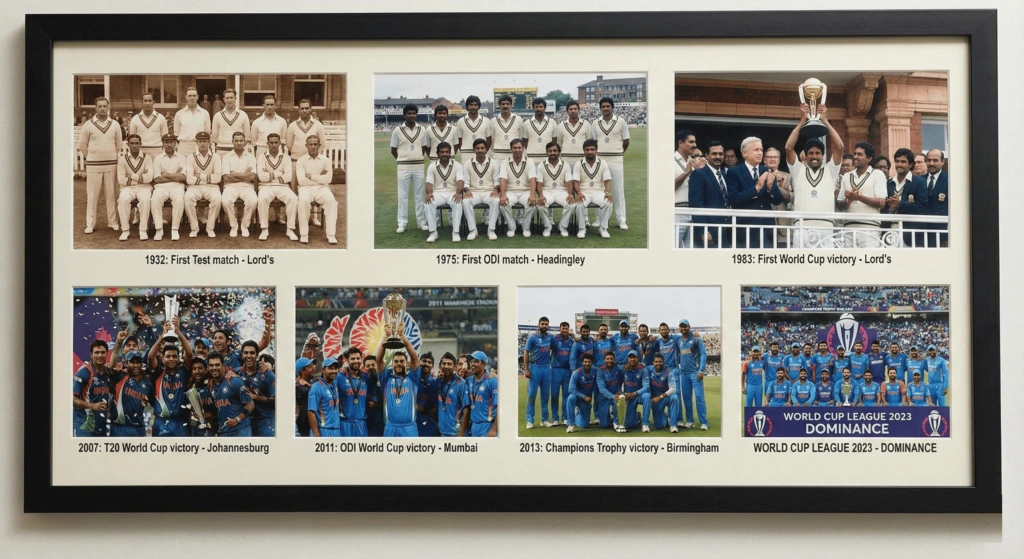
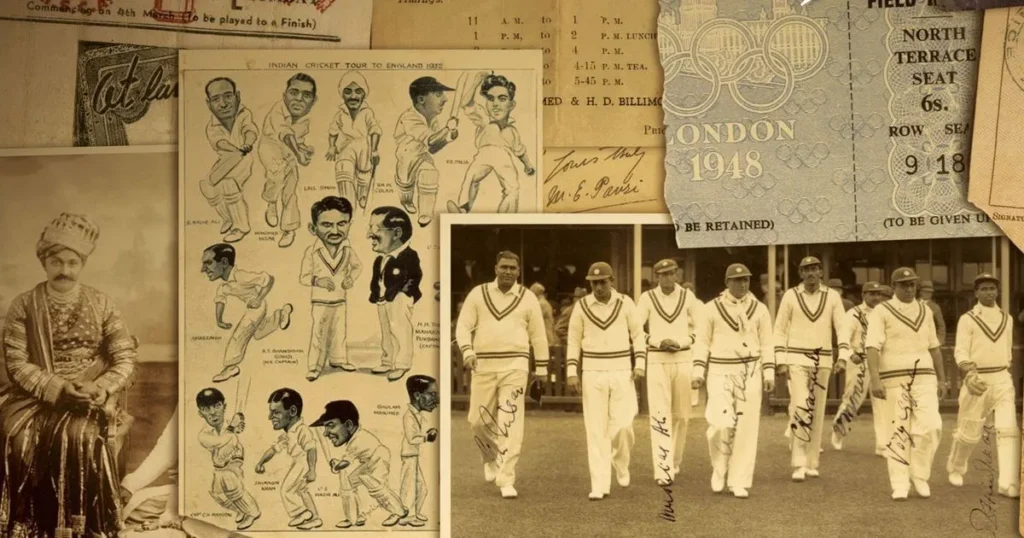
India played its first official Test match on 25–28 June 1932 against England at Lord’s Cricket Ground in London. India became the sixth country to be granted Test status, following England, Australia, South Africa, West Indies, and New Zealand.
The match was a significant moment for Indian cricket. India’s team was led by Colonel C.K. Nayudu, one of the finest all-rounders of his generation, known for his fearless batting and medium-pace bowling. Though India lost the match by 158 runs, their performance showed promise and determination.
India’s first Test squad included several talented cricketers like Wazir Ali, Nazir Ali, Amar Singh, and the young Lala Amarnath. Despite the defeat, the tour was celebrated across the country as a milestone in India’s sporting history.
India’s First Test Victory (1952)
India had to wait 20 years and 24 Test matches before recording its first Test victory. In February 1952, in the fifth Test match against England in Madras (Chennai), India won by an innings and 8 runs. It was a historic moment that sparked celebrations across the nation.
The hero of the match was Vinoo Mankad, who took 8 wickets and scored crucial runs in both innings. Mankad remains one of India’s greatest all-rounders of the early era, and his contribution to Indian cricket is immeasurable.
The Era of Legends 1960s to 1980s
The 1960s and 1970s produced India’s famous spin quartet Bishen Singh Bedi, E.A.S. Prasanna, Srinivas Venkataraghavan, and B.S. Chandrasekhar. These four spinners became world-renowned for their craft and helped India win Test series on home soil against powerful opponents.
Sunil Gavaskar emerged in the 1970s as India’s first modern batting superstar. He was the first batsman in history to score 10,000 Test runs and his 29 Test centuries stood as the world record for nearly two decades. Gavaskar’s technical perfection and mental toughness set the gold standard for Indian batting.
Formats of Cricket
Test Cricket
Test cricket is the oldest, longest, and most prestigious form of the game. Matches last up to five days with each team getting two innings. Test cricket is the ultimate examination of a player’s technique, temperament, and endurance.
India has traditionally been a strong Test team at home, where spin-friendly pitches suit the conditions. Overseas, India has significantly improved in recent decades, winning Test series in England, Australia, and South Africa.
One Day Internationals (ODIs)
ODIs were introduced in 1971 after a Test match in Australia was washed out and teams decided to play a 40-over match instead. ODIs quickly became popular due to their shorter format and guaranteed result in a single day. Each team bats once for a maximum of 50 overs.
India has been one of the dominant forces in ODI cricket, winning the Cricket World Cup in 1983 and 2011, and reaching multiple finals. ODIs also gave rise to specialist roles like the pinch-hitter opener and the death-over specialist.
Twenty20 (T20) Cricket
T20 cricket was introduced by the England and Wales Cricket Board (ECB) in 2003 as a way to attract younger audiences. Each team faces only 20 overs, making matches last approximately three hours. The format prioritizes aggressive batting, clever bowling variations, and sharp fielding.
India won the inaugural ICC T20 World Cup in 2007 under MS Dhoni’s captaincy in South Africa, a watershed moment that accelerated the popularity of T20 cricket globally. The success of T20 cricket inspired the launch of the IPL in 2008.
The IPL Revolution
Birth of the Indian Premier League
The Indian Premier League (IPL) was conceived by BCCI vice-president Lalit Modi and launched in 2008. It is a franchise-based Twenty20 cricket league featuring teams representing various Indian cities. The inaugural edition was held in South Africa due to security concerns around simultaneous Indian elections.
The IPL borrowed its franchise model from American professional leagues like the NFL and NBA. Teams were sold to investors through an auction system, and players from around the world were contracted via an annual player auction. This created an unprecedented commercial ecosystem around cricket.
The IPL’s Global Impact
The IPL transformed cricket in ways both celebrated and controversial. On the positive side, it provided a platform for domestic Indian players to earn life-changing money and compete alongside the world’s best cricketers. Young talents from small towns and villages got an opportunity to showcase their skills before global audiences.
Commercially, the IPL became the richest cricket tournament in the world. Broadcasting rights deals grew exponentially each cycle, crossing billions of dollars in recent years. Franchises like Mumbai Indians, Chennai Super Kings, and Kolkata Knight Riders became global brands.
The IPL also attracted stars from every cricketing nation from Shane Warne and Ricky Ponting in the early years to Ben Stokes and Pat Cummins in later editions. Cricketers’ earnings skyrocketed, and the league is widely credited with driving up player salaries globally.
| IPL Season | Champion Team | Runner-Up | Player of the Tournament |
| 2008 (1st) | Rajasthan Royals | Chennai Super Kings | Shane Watson |
| 2011 (4th) | Chennai Super Kings | Royal Challengers Bangalore | Chris Gayle |
| 2013 (6th) | Mumbai Indians | Chennai Super Kings | Shane Watson |
| 2016 (9th) | Sunrisers Hyderabad | Royal Challengers Bangalore | Virat Kohli |
| 2020 (13th) | Mumbai Indians | Delhi Capitals | Suryakumar Yadav |
| 2023 (16th) | Chennai Super Kings | Gujarat Titans | Shubman Gill |
Major Milestones in Indian Cricket
The 1983 World Cup — India’s First World Cup Victory
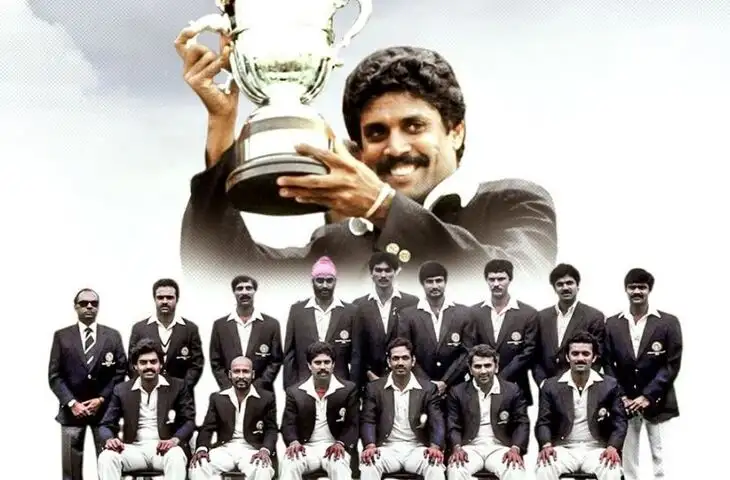
India’s victory at the 1983 Cricket World Cup is the most transformative event in Indian cricket history. Led by the charismatic Kapil Dev, India defeated the mighty West Indies — two-time defending champions — by 43 runs in the final at Lord’s on 25 June 1983.
The victory was stunning. India had entered the tournament as decided underdogs, with odds of 66-1 against them winning. The most iconic moment came when Kapil Dev took a brilliant running catch to dismiss Viv Richards for 33 in the final, turning the match decisively.
The 1983 triumph inspired an entire generation of Indian cricketers and cricket fans. It is widely credited for sparking the cricketing revolution that would eventually make India the sport’s global powerhouse.
The 2007 T20 World Cup
India’s victory in the inaugural ICC World Twenty20 in 2007 in South Africa announced a new era. Led by a young MS Dhoni, India defeated Pakistan in a nail-biting final in Johannesburg. The match was decided by a bowl-out similar to a penalty shootout in football after which India triumphed.
The tournament introduced several then-young players who would define Indian cricket for the next decade: Virat Kohli, Rohit Sharma, Suresh Raina, and Ravindra Jadeja all featured in the squad. The 2007 T20 World Cup win laid the groundwork for India’s future cricketing dominance.
The 2011 World Cup Dhoni’s Iconic Six
India’s second World Cup victory came on home soil on 2 April 2011. Chasing Sri Lanka’s target of 275 at the Wankhede Stadium in Mumbai, India appeared to be struggling at 114 for 3 before MS Dhoni promoted himself above the in-form Yuvraj Singh. What followed became one of cricket’s most dramatic finishes.
Dhoni finished the match with a towering six over long-on off Sri Lanka’s Nuwan Kulasekara, ending 28 years of World Cup drought for India. The image of Dhoni raising his bat after hitting that six became one of the most iconic photographs in Indian sports history. Yuvraj Singh, who scored 362 runs and took 15 wickets in the tournament, was named Player of the Tournament.
India’s Rise in Test Cricket
India reached the pinnacle of Test cricket when they became the top-ranked Test team in the ICC rankings for the first time in 2009, under the captaincy of MS Dhoni. Under Virat Kohli’s aggressive leadership from 2014 onwards, India solidified their position at the top, winning Test series in Australia (2018-19 and 2020-21), which were particularly celebrated as landmark achievements.
Legendary Players Who Shaped Indian Cricket
Sachin Tendulkar The God of Cricket
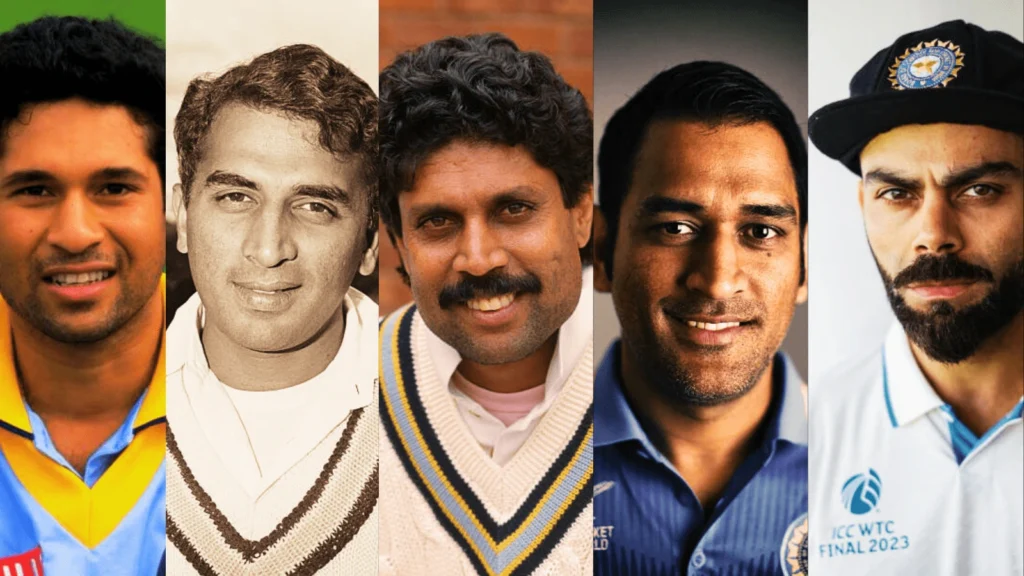
Sachin Ramesh Tendulkar is widely considered the greatest batsman in cricket history and is revered as the God of Cricket in India. Born in Mumbai on 24 April 1973, Tendulkar made his Test debut at just 16 years old in 1989 against Pakistan in Karachi.
Over a career spanning 24 years, Tendulkar accumulated staggering records: 100 international centuries (the only player to achieve this), 15,921 Test runs, and 18,426 ODI runs. He was named Player of the Tournament at the 2003 World Cup, and his century against Pakistan in the 1996 World Cup quarterfinal is among the most memorable innings ever played.
Tendulkar retired in November 2013 after his 200th Test match at the Wankhede Stadium in Mumbai. His retirement drew an outpouring of emotion from fans worldwide. He was awarded the Bharat Ratna — India’s highest civilian honor in 2014.
MS Dhoni Captain Cool
Mahendra Singh Dhoni, born in Ranchi on 7 July 1981, is regarded as India’s greatest captain. His calm demeanor under pressure, unconventional decision-making, and natural leadership earned him the nickname “Captain Cool.”
Dhoni led India to victories in all three major ICC tournaments: the T20 World Cup (2007), the ODI World Cup (2011), and the ICC Champions Trophy (2013). This made him the only captain in cricket history to win all three ICC limited-overs trophies. He is also one of the finest wicketkeeper-batsmen ever, with over 10,000 ODI runs to his name.
Virat Kohli The Chase Master
Virat Kohli, born in New Delhi on 5 November 1988, is one of the most prolific run-scorers in cricket history. Known for his exceptional fitness, aggressive captaincy, and relentless consistency, Kohli is widely regarded as the best batsman of his generation.
Kohli holds the record for the highest number of ODI centuries (50 as of 2024) and is the fastest to reach numerous batting milestones. His ability to chase targets earning him the nickname “Chase Master” is unparalleled. Under his Test captaincy, India achieved their historic series victories in Australia.
Kapil Dev India’s Greatest All-Rounder
Kapil Dev Nikhanj, born on 6 January 1959, is India’s greatest all-rounder. His devastating swing bowling and fearless lower-order batting were game-changing assets. He was the first player in history to take 400 Test wickets and score 5,000 Test runs.
Kapil Dev’s greatest achievement was captaining India to their first World Cup in 1983. His 175 not out against Zimbabwe in the group stages of that tournament in an era without live television coverage remains one of the most celebrated innings in World Cup history.
Complete Timeline of Cricket in India
| Year | Event |
| 1598 | Earliest written reference to cricket in England |
| 1646 | First recorded cricket match in England |
| 1721 | First cricket match played on Indian soil (Cambay, Gujarat) |
| 1744 | First formal Laws of Cricket codified |
| 1787 | MCC founded in London |
| 1844 | First international cricket match: USA vs Canada, New York |
| 1848 | Parsi community forms Oriental Cricket Club, Mumbai India’s first cricket club |
| 1877 | First official Test match: Australia vs England, Melbourne (Australia wins by 45 runs) |
| 1886 | First Parsi cricket team tours England |
| 1907 | Bombay Triangular tournament begins (Parsis, Hindus, Europeans) |
| 1928 | BCCI established in Chennai (December) |
| 1932 | India plays first Test match vs England at Lord’s (India loses by 158 runs) |
| 1952 | India wins first Test match vs England in Chennai |
| 1971 | First ODI ever played Australia vs England in Melbourne |
| 1974 | Sunil Gavaskar becomes India’s batting cornerstone |
| 1983 | India wins Cricket World Cup under Kapil Dev (Lord’s) |
| 1987 | India and Pakistan co-host the Cricket World Cup |
| 1996 | India, Pakistan, Sri Lanka co-host the World Cup; Sri Lanka wins |
| 2003 | Sachin Tendulkar’s iconic tournament; India reaches World Cup final |
| 2007 | India wins inaugural ICC T20 World Cup under MS Dhoni |
| 2008 | Indian Premier League (IPL) launched |
| 2011 | India wins Cricket World Cup on home soil under MS Dhoni |
| 2013 | India wins ICC Champions Trophy Dhoni becomes only captain to win all three ICC trophies |
| 2018-19 | India wins Test series in Australia for the first time in history |
| 2023 | India reaches ODI World Cup final (on home soil) |
Why Cricket Became India’s National Obsession
Colonial Legacy and Cultural Adoption
Cricket’s deep roots in India stem from the British colonial period. The British not only brought the game but created the infrastructure grounds, clubs, and tournaments. Over time, Indians did not merely adopt cricket; they transformed it, infusing it with their own passion and cultural identity.
Unlike other colonial legacies that were rejected after independence, cricket was embraced and re-owned as something quintessentially Indian. The early victories against England and other Test nations in the 1950s and 1960s took on a patriotic significance far beyond sport.
The 1983 Effect
India’s 1983 World Cup victory was the single biggest catalyst for cricket’s explosion in popularity. When Kapil Dev’s men defeated the mighty West Indies, it triggered a national euphoria. Suddenly, millions of children wanted to be cricketers, not just film stars or politicians. Television coverage of cricket expanded rapidly in the 1980s, and the 1983 victory was at the center of it all.
Television, Media, and Commercialization
The expansion of cable television in India during the 1990s brought cricket into every household. Doordarshan was joined by ESPN, Star Sports, and later Sony LIV in broadcasting cricket. Commentary in Hindi and regional languages made the game accessible to millions across linguistic and cultural barriers.
The 1996 Cricket World Cup, co-hosted by India, Pakistan, and Sri Lanka, was a commercial milestone. It demonstrated that cricket in India could generate massive advertising revenue and sponsorship interest. Companies like Pepsi, Coca-Cola, and major Indian brands competed fiercely to associate with cricket.
Cricket Heroes as National Icons
Perhaps no factor explains cricket’s dominance in India better than the cult status of its heroes. Sunil Gavaskar in the 1970s and 1980s, Kapil Dev in the 1980s, and Sachin Tendulkar from the 1990s through 2013 were not just sportsmen they were cultural icons, role models, and sources of national pride in a way few figures in any field achieved.
Tendulkar in particular transcended cricket. His every innings was followed by hundreds of millions, and his retirements from ODIs and Tests were treated as national events. The commercialization of cricket created a new breed of celebrity cricketer wealthy, glamorous, and nationally celebrated.
Frequently Asked Questions (FAQs)
Q1: Who invented cricket?
Cricket was not invented by any single person. It evolved organically in southeast England in the 16th century, starting as a children’s game and gradually becoming a structured sport with codified rules by 1744.
Q2: Who invented cricket in India?
Cricket was not invented in India. It was introduced by the British East India Company in the early 18th century. The first recorded cricket match in India was played in 1721 in Cambay (Khambhat), Gujarat, by English sailors.
Q3: What is the full form of BCCI?
BCCI stands for Board of Control for Cricket in India.
Q4: When was BCCI established?
The BCCI was established in December 1928 in Chennai (then Madras).
Q5: When did India play its first Test match?
India played its first Test match on 25–28 June 1932 against England at Lord’s Cricket Ground in London. India lost by 158 runs.
Q6: When did India win its first Test match?
India won its first Test match in February 1952 against England in Madras (Chennai), winning by an innings and 8 runs.
Q7: Who is the greatest Indian cricketer of all time?
Sachin Tendulkar is widely regarded as the greatest Indian cricketer of all time and one of the greatest in world cricket history. He holds numerous records including 100 international centuries and the most Test and ODI runs.
Q8: Which is the first cricket club in India?
The Oriental Cricket Club, established by the Parsi community in Mumbai in 1848, is the first Indian cricket club.
Q9: Who is BCCI’s current president?
The BCCI has had several presidents over its history. As of 2024, the BCCI’s leadership includes figures from both cricketing and legal backgrounds. For the most current information, please refer to the official BCCI website.
Q10: How many times has India won the Cricket World Cup?
India has won the ODI Cricket World Cup twice in 1983 under Kapil Dev and in 2011 under MS Dhoni. India also won the inaugural T20 World Cup in 2007 under MS Dhoni.
Conclusion
Cricket’s journey in India is one of the great stories of cultural transformation in modern history. A sport introduced by colonial rulers became the heartbeat of a nation. From the English sailors playing a match at Cambay in 1721 to Dhoni hitting that iconic six at the Wankhede in 2011, cricket in India has traveled an extraordinary distance.
The BCCI’s establishment in 1928 provided the organizational backbone. India’s first Test match in 1932 gave the country a place on the international stage. The 1983 World Cup win made cricket a religion. The IPL in 2008 made it a billion-dollar business. And through it all, the generations of extraordinary players from Vijay Merchant and Vinoo Mankad to Gavaskar, Kapil Dev, Tendulkar, Dravid, Dhoni, and Kohli gave the sport its soul.
Today, cricket in India is not just a sport. It is identity, passion, commerce, and culture all rolled into one. As long as there are streets wide enough for a bat swing and walls broad enough to mark a wicket, cricket will remain the soul of India.