
Introduction
India is undergoing a remarkable entrepreneurial transformation. With affordable internet connectivity reaching every corner of the country, digital payment infrastructure maturing rapidly best Small Business Ideas in India, and rising consumer demand across income segments, starting a business has never been more accessible. The number of new MSME registrations has grown year on year, and platforms like GeM (Government e-Marketplace), Meesho, and Flipkart Seller Hub have created entry points for even first-time entrepreneurs.
Today, starting a small business doesn’t require huge capital. Many profitable ventures can be launched with as little as ₹5,000–₹50,000, and scaled gradually as revenue grows. The most important asset isn’t money it’s the willingness to start, learn, and adapt.
Whether you are a student, homemaker, working professional, farmer, or someone living in a rural area, small businesses provide:
- Financial independence and a steady income stream
- Flexibility to work on your own schedule
- Long-term wealth creation and asset building
- Practical skills in sales, marketing, accounting, and management
For those preparing for competitive careers such as CA, MBA, or commerce-related fields, running even a small side business builds practical knowledge that textbooks cannot provide including pricing strategy, customer psychology, cash flow management, and negotiation skills.
Why India Is the Right Time to Start a Business
1. Low Entry Barriers
Service-based and digital businesses can be started with minimal capital. Unlike manufacturing or retail, many modern small businesses have near-zero infrastructure costs. A smartphone, internet connection, and a skill are often all you need to get started.
2. Digital Payments Revolution
UPI (Unified Payments Interface) has made collecting payments instant and free. With QR codes and apps like Google Pay, PhonePe, and Paytm, even a street vendor can accept cashless payments. This has removed the friction from transactions and enabled trust between buyers and sellers who’ve never met.
3. Government Support & Schemes
The Indian government actively promotes entrepreneurship through:
- Startup India & Stand Up India initiatives offering tax benefits and legal simplification
- MSME registration (Udyam) providing access to subsidized loans and priority sector lending
- Mudra Loans offering up to ₹10 lakh without collateral for micro-entrepreneurs
- Skill India and PMKVY offering free vocational training across 300+ trades
- PM SVANidhi scheme providing working capital loans for street vendors
4. Massive Domestic Market
India’s population of 1.4 billion ensures there is demand for virtually every product and service. Even hyperlocal businesses serving a few thousand people can be highly profitable. The growing middle class, increasing spending power, and urbanization create consistent demand across categories like food, education, healthcare, beauty, and digital services.
5. Social Commerce & Influencer Economy
Platforms like WhatsApp, Instagram, and YouTube have created zero-cost distribution channels. A business can go from zero to thousands of customers through organic content, word-of-mouth referrals, and community groups without spending a single rupee on traditional advertising.
Best Small Business Ideas in India :Low Investment, High Profit
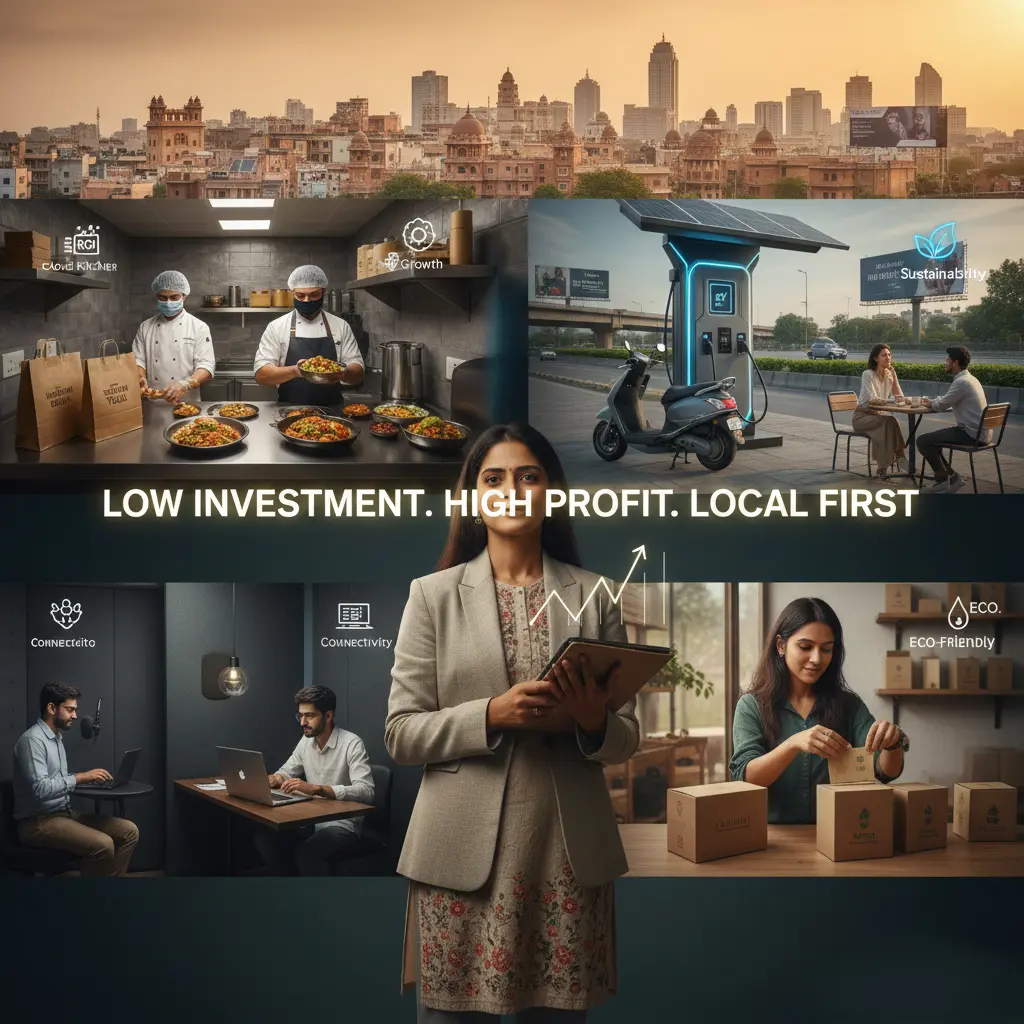
1. Tiffin / Cloud Kitchen Business
The food business is one of the most recession-proof businesses in India. People will always need food, and with rapid urbanization, millions of students and working professionals live away from home and rely on tiffin services or online food ordering for daily meals.
Starting a home-based tiffin service requires only a functional kitchen, basic cooking skills, containers, and a small delivery radius. Once you build a customer base of 30–50 subscribers paying ₹1,500–₹2,500/month, revenue becomes consistent and predictable.
A cloud kitchen takes it further you operate entirely for delivery apps (Zomato, Swiggy) without a dine-in space, significantly reducing overhead. Many cloud kitchen operators run 2–3 virtual restaurant brands from the same kitchen, maximizing the use of equipment and ingredients.
- ₹10,000–₹50,000 (kitchen setup, packaging, registration): Investment required
- ₹20,000–₹1,50,000+ depending on scale: Monthly revenue potential
- 40–60%: Profit margins
2. Digital Marketing Services
Every business from a local bakery to a multinational now needs a digital presence. Yet most small business owners don’t know how to manage social media, run Google Ads, write SEO-optimized content, or create video content. This is where a digital marketing freelancer or agency steps in.
The barrier to entry is low — you can learn these skills for free or cheaply through YouTube, Google Digital Garage, Meta Blueprint, and HubSpot Academy. Once you have a portfolio of 3–5 clients, referrals will grow your business organically.
Services you can offer:
- Social media management (Instagram, Facebook, LinkedIn)
- Search Engine Optimization (SEO) for local and e-commerce businesses
- Google Ads / Facebook Ads management
- Content writing, blogging, and email newsletters
- Video editing, reel creation, and YouTube channel management
- Website design and maintenance (WordPress, Shopify)
Income range: ₹15,000–₹1,00,000+/month depending on your skill level and client base.
3. Reselling & Dropshipping
Reselling is one of the lowest-risk businesses you can start. You simply buy products at wholesale prices (or earn commissions) and sell them at retail prices. Platforms like Meesho, GlowRoad, and Shop101 have made this entirely accessible from a smartphone.
Dropshipping takes it a step further you sell products online without ever stocking inventory. When an order is placed, the supplier ships directly to the customer. You profit from the margin without handling logistics.
Popular categories for reselling:
- Women’s fashion (kurtis, sarees, lehengas)
- Kids’ clothing and accessories
- Home décor and kitchenware
- Skincare, cosmetics, and beauty products
- Stationery, gifts, and novelty items
4. Tuition & Online Coaching
Education is one of the highest-margin businesses in India, and the demand only grows. From school students needing subject tutoring to professionals seeking certification courses, the market is enormous and underserved.
You can start with your existing knowledge whether it’s Mathematics, English, Science, or a vocational skill like cooking or music. Physical tuition classes at home require zero infrastructure investment beyond a whiteboard and some chairs.
Online coaching, through platforms like Zoom, Google Meet, or dedicated apps like Teachable or Thinkific, scales even further you can teach students across India without geographic limitations.
Coaching niches with high demand:
- Class 10 and 12 board exam preparation
- JEE, NEET, CLAT, CAT coaching
- Spoken English and communication skills
- Computer programming and coding for kids
- Music, dance, yoga, and art classes
- Competitive exam prep (UPSC, SSC, Bank PO)
5. Customized Gift Business
The personalized gift industry is booming in India. From birthdays to weddings, anniversaries to corporate gifting, people are increasingly choosing personalized items over generic gifts. The emotional value attached to customized products allows you to charge a significant premium.
Products in demand:
- Custom photo frames, photo books, and canvas prints
- Printed mugs, t-shirts, and cushions
- Name jewellery and engraved accessories
- Gift hampers with curated products
- Personalized stationery and planner kits
- Scrapbooks and memory albums
6. Mobile Repair & Accessories Business
With over 750 million smartphone users in India, mobile repair is among the most recession-proof service businesses. Phones break constantly cracked screens, dead batteries, and software issues keep repair shops consistently busy.
You can learn basic repair skills through YouTube tutorials or a short course at a local institute. Starting costs are low a basic toolkit and some common spare parts. Upselling accessories (cases, screen protectors, chargers) adds significant revenue.
Best Small Business Ideas for Women
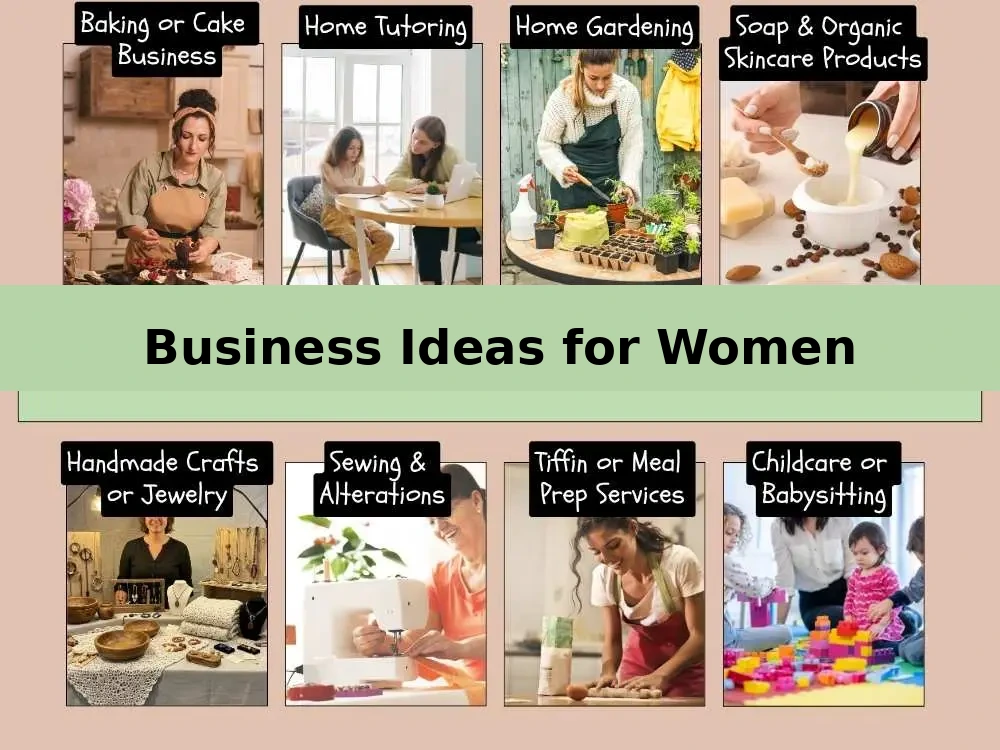
Women entrepreneurs in India face unique challenges — social expectations, limited mobility, and sometimes lack of family support. However, many businesses are perfectly suited to be run from home or within local communities, offering flexibility without compromising income potential.
1. Home Bakery Business
The home bakery business has exploded in India over the past five years, largely driven by Instagram. Beautiful cakes, cupcakes, and baked goods photograph extremely well, making social media the perfect free marketing channel.
You don’t need a commercial kitchen or formal training to start. Many successful home bakers are self-taught. Begin with simple items and gradually expand your menu as you build confidence and equipment.
High-demand products:
- Custom theme cakes for birthdays and baby showers
- Wedding and anniversary cakes
- Cupcakes, brownies, and cookies
- Festive items Diwali boxes, Christmas cakes, Eid sweets
- Healthy and sugar-free options for health-conscious customers
2. Boutique & Fashion Business
Fashion is a passion for many women, and turning that passion into a business is entirely achievable. You can start with stitching and tailoring services from home, requiring only a sewing machine and basic skills. As your reputation grows, you can expand into designing original pieces, curating fashion collections, or working with fabric suppliers for resale.
Business models to explore:
- Home-based tailoring and alteration services
- Designer kurta and ethnic wear business
- Custom embroidery and blouse designing
- Online boutique selling via Instagram DMs and WhatsApp catalogues
- Fabric and dress material reselling
3. Beauty Parlour & Home Salon Services
Beauty services are non-negotiable expenses for most Indian women, making this a highly recession-resistant business. A home salon eliminates the overhead of renting commercial space while offering a personalized, comfortable experience that many clients prefer.
Services with highest demand and margins:
- Bridal makeup and mehendi single booking can fetch ₹10,000–₹50,000
- Party makeup and hairstyling
- Regular grooming services facial, waxing, threading
- Nail art a fast-growing niche requiring low investment
- Hair care coloring, smoothening, hair treatments
4. Social Media Influencer & Content Creator
Content creation has become a legitimate and highly scalable business. Women across India have built large followings in niches like cooking, parenting, fashion, finance, education, and travel — and are earning lakhs monthly through brand collaborations, affiliate marketing, and selling their own products or courses.
The key is consistency and authenticity. You don’t need a professional camera or studio smartphone content performs excellently on short-form platforms like Instagram Reels and YouTube Shorts.
Income streams for content creators:
- Brand partnerships and sponsored posts
- Affiliate commissions from product recommendations
- YouTube ad revenue once channel reaches monetization threshold
- Selling digital products ebooks, templates, recipe collections
- Running paid membership communities or online courses
5. Daycare & Babysitting
With dual-income households becoming the norm in Indian cities, reliable and safe childcare is in enormous demand. A home-based daycare can serve 5–10 children with minimal investment. Parents are willing to pay premium rates ₹5,000–₹15,000 per child per month to people they trust with their children’s safety and development.
Key success factors include maintaining safety standards, following a structured daily routine with learning activities, maintaining transparent communication with parents, and obtaining necessary local certifications or registrations.
Best Small Business Ideas in Bangalore
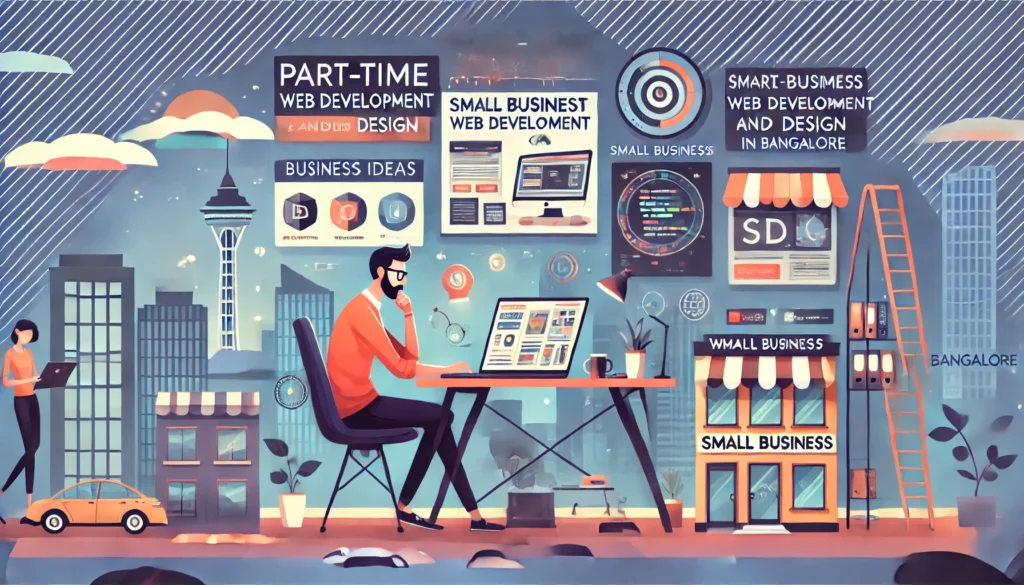
Bangalore’s unique combination of a large tech workforce, high disposable incomes, startup culture, and cosmopolitan population creates specific business opportunities not found in other cities.
1. Healthy Food & Diet Meal Service
Bangalore has one of the highest concentrations of gym-goers, marathon runners, and health-conscious professionals in India. The demand for clean, calorie-counted, protein-rich meals is extremely high and underserved by mainstream food delivery platforms. Meal prep services, detox meal plans, and diabetic-friendly meal subscriptions command premium pricing.
2. Freelance IT & Website Development
Bangalore’s startup and tech ecosystem creates constant demand for developers, UI/UX designers, QA testers, DevOps engineers, and data analysts on freelance/contract basis. Many startups prefer freelancers over full-time hires for cost efficiency. Platforms like Toptal, Upwork, and local networks are effective channels.
3. Pet Care & Grooming Services
Pet ownership has grown dramatically in Bangalore particularly dogs and cats among young professionals and families. Pet boarding, grooming, vet consultation coordination, dog walking, and premium pet food retail are all highly lucrative niches in pet-friendly neighborhoods like Indiranagar, Koramangala, and HSR Layout.
4. EV Scooter Rental & Charging
Bangalore’s notoriously terrible traffic and rising fuel costs have created strong demand for electric two-wheeler rentals. Businesses offering hourly or daily EV rentals near tech parks, metro stations, and college campuses are seeing rapid growth. Adding a small EV charging point for the public adds a passive revenue stream.
5. Co-working & Study Spaces
Premium quiet study and work spaces are in short supply. Students preparing for competitive exams and remote workers both need distraction-free environments with high-speed internet, comfortable seating, and power backups. A small rented space of 500–800 sq ft can accommodate 20–30 desks at ₹2,000–₹5,000/seat/month, generating solid returns.
Best Small Business Ideas in Villages
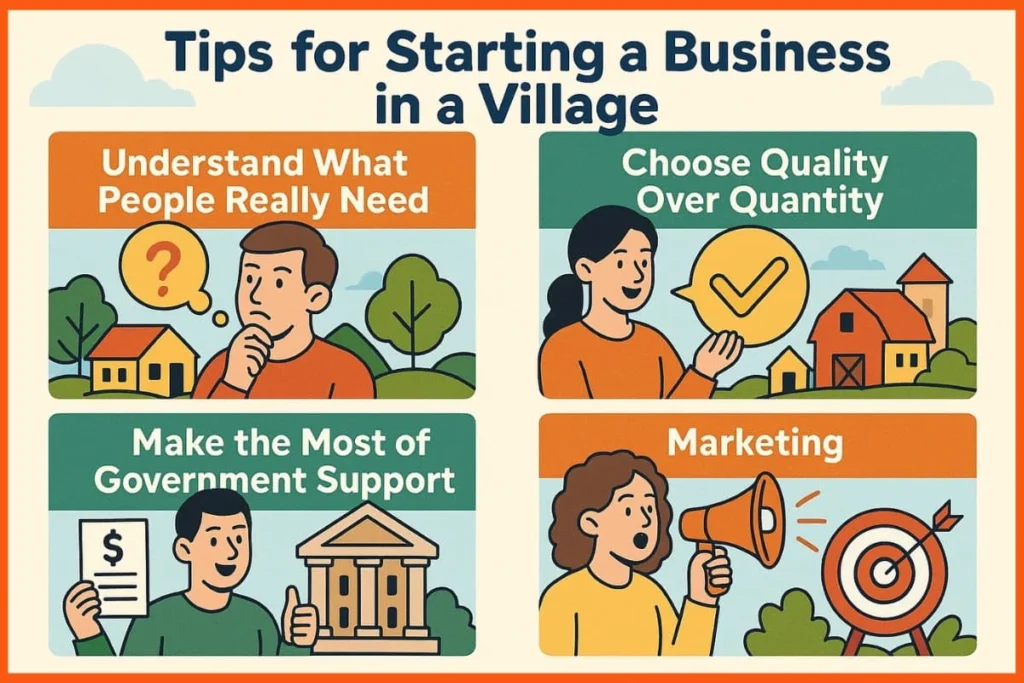
Rural India accounts for nearly 65% of the country’s population and presents massive business opportunities that are often overlooked. Agriculture, allied activities, and essential services form the backbone of village economies, but technology is now enabling entirely new rural business models.
1. Dairy Farming
Dairy farming provides daily income literally every day of the year. Milk is one of the most consistently demanded commodities in India, and organized dairy cooperatives (like Amul, KMF, Mother Dairy) provide guaranteed purchase at stable prices, eliminating market risk.
Beyond raw milk, value-added products like ghee, paneer, butter, and curd significantly improve margins. Starting with 5–10 animals requires ₹3–₹8 lakh investment but can generate ₹20,000–₹60,000/month in gross revenue.
2. Organic Farming & Direct-to-Consumer Sales
Urban consumers are paying significant premiums for certified organic produce fruits, vegetables, pulses, and grains. Rural farmers with access to farmland can shift to organic farming methods and market directly to urban consumers through WhatsApp groups, organic marketplaces, and subscription box services.
Eliminating middlemen dramatically improves profitability. A direct relationship with 50–100 urban families paying ₹1,000–₹2,000/month for a weekly vegetable box can generate ₹50,000–₹2,00,000/month in revenue from even a small farm.
3. Poultry Farming
Poultry farming both broiler (meat) and layer (eggs) offers quick returns with manageable investment. Eggs provide daily income, and broiler cycles complete in 40–45 days. Contract farming arrangements with large companies like Suguna and Venky’s reduce market risk for new entrants, as they provide chicks, feed, and buyback guarantees.
4. Flour Mill (Atta Chakki)
Every household in rural India needs flour for daily roti. A small mechanical flour mill placed in a central village location sees constant daily footfall. Beyond wheat flour, mills can process pulses, spices, and coarse grains. Investment of ₹50,000–₹2,00,000 for equipment can generate ₹10,000–₹30,000/month in stable income.
5. Common Service Center (CSC)
Government-authorized Common Service Centers are franchised digital service points that provide rural residents access to over 300 government and private sector services. Services include:
- Aadhar enrollment and updates
- PAN card, passport, and driving license applications
- Utility bill payments (electricity, water, telephone)
- Banking and insurance services (business correspondent model)
- IRCTC ticket booking, document printing, and scanning
CSC operators earn commissions on each transaction, and in areas with limited connectivity, a CSC operator can easily earn ₹15,000–₹40,000/month.
Best Small Business Ideas from Home

1. Freelancing
Freelancing is the most flexible home-based business model, allowing you to work with clients globally from your home. India has the second-largest freelance workforce in the world, with high demand for writing, graphic design, video editing, web development, voice-over work, data entry, translation, and virtual assistance.
Top platforms to find work:
- Upwork and Fiverr for global clients
- Freelancer.in and WorknHire for Indian clients
- LinkedIn for high-value B2B contracts
- Direct outreach to agencies and content studios
2. Blogging & YouTube
Blogging and YouTube are long-game businesses it typically takes 6–18 months to build an audience and start monetizing. However, once established, they generate passive income 24/7 without requiring active daily work. The key is choosing a niche with adequate search demand, creating consistently high-quality content, and building trust with your audience.
Monetization options:
- Google AdSense (ads displayed on blog/YouTube channel)
- Affiliate marketing recommending products for commission
- Sponsored content from brands in your niche
- Selling your own digital products or courses
- Consulting and coaching services
3. Affiliate Marketing
Affiliate marketing is the practice of promoting other companies’ products and earning a commission for each sale you drive. It requires no product creation, inventory, or customer service you simply drive traffic to the seller’s page through your content, social media, or email list.
Top affiliate programs in India:
- Amazon Associates commission on millions of products
- Flipkart Affiliate Program
- HostGator and Bluehost high commissions for web hosting referrals
- Udemy and Coursera education affiliate programs
- Insurance and financial product affiliate programs very high commissions
4. Online Skill Courses
If you have expertise in any area cooking, photography, coding, yoga, art, finance, language learning, or productivity you can package that knowledge into an online course and sell it repeatedly with no inventory or shipping. The economics are exceptional: you create the course once, and it generates revenue indefinitely.
Platforms for hosting and selling courses:
- Teachable and Thinkific professional course creation platforms
- Udemy large existing student marketplace
- YouTube + WhatsApp Community low-tech alternative
- Instamojo Indian platform with easy payment integration
Investment vs. Profit Comparison Table
| Business | Startup Cost | Monthly Revenue | Profit Margin | Difficulty |
| Tiffin / Cloud Kitchen | ₹10K–₹50K | ₹20K–₹1.5L | 40–60% | Medium |
| Digital Marketing Services | ₹0–₹10K | ₹20K–₹1L+ | 60–80% | Easy–Medium |
| Tuition / Coaching | ₹0–₹5K | ₹15K–₹90K | 70–90% | Easy |
| Home Bakery | ₹5K–₹30K | ₹20K–₹80K | 50–70% | Easy–Medium |
| Dairy Farming | ₹3L–₹8L | ₹20K–₹60K | 30–50% | Medium |
| Freelancing | ₹0–₹5K | ₹20K–₹2L+ | 80–95% | Easy |
| Online Courses | ₹5K–₹20K | ₹10K–₹5L+ | 85–99% | Medium |
| Customized Gifts | ₹15K–₹60K | ₹20K–₹1L | 50–80% | Easy |
| Beauty Parlour (Home) | ₹20K–₹80K | ₹25K–₹1.5L | 55–75% | Medium |
| CSC Center | ₹1L–₹2L | ₹15K–₹40K | 40–60% | Easy |
How to Choose the Right Business Idea

With so many options, choosing where to start is often the hardest part. Use this framework:
Step 1: Audit Your Assets
List your existing skills, knowledge, tools, and network. The best business for you builds on what you already have. A teacher should consider coaching; a homemaker with cooking skills should explore food; someone tech-savvy should explore digital services.
Step 2: Validate Market Demand
Before investing time and money, confirm that people want what you plan to sell. Talk to 10–20 potential customers. Search Google Trends, Facebook Groups, and Quora to understand demand and pain points in your niche.
Step 3: Analyze the Competition
Competition is actually a good sign it confirms there is demand. Study your competitors. What are they doing well? What do customers complain about? Your differentiation lies in solving the problems your competitors have ignored.
Step 4: Calculate Unit Economics
Before starting, know your numbers. What does it cost to produce/deliver one unit? What will you charge? How many units do you need to sell to cover costs and generate profit? Businesses that make money from the first sale are far more sustainable.
Step 5: Prioritize Recurring Revenue
A customer who pays once is a sale. A customer who pays monthly is a business. Subscription models, membership programs, regular service contracts, and daily-need products all create predictable, recurring income that compounds over time.
Common Mistakes to Avoid
Starting Without Research
Many entrepreneurs build something they wish existed rather than something people actually want and will pay for. Do market research before spending money. Talk to potential customers, not just friends and family who will always say ‘great idea!’
Overspending on Setup
New entrepreneurs often overspend on office space, equipment, branding, and inventory before making a single sale. Start lean. Use minimum viable versions of everything. Reinvest profit into growth rather than funding upfront with debt.
Ignoring Digital Marketing
In 2026, a business without a digital presence is invisible to the largest pool of potential customers. At minimum, set up a Google Business profile, a WhatsApp Business account, and an Instagram or Facebook page. Post consistently.
Poor Financial Management
Mixing personal and business finances is the fastest way to lose track of profitability. Open a separate bank account for your business from day one. Track every rupee in and out. Use a simple app like Vyapar, Khatabook, or even a basic Excel sheet.
Neglecting Customer Service
In the age of social media, one bad review can undo months of marketing. Conversely, a delighted customer can bring in 5 more through word of mouth. Treat every customer interaction as an opportunity to build loyalty and earn referrals.
Practical Tips to Grow Your Small Business
- Build a WhatsApp Business account with a product catalogue and automated responses
- Use Instagram Reels and YouTube Shorts for free organic reach short video content is algorithmically amplified
- Ask every happy customer for a Google review reviews dramatically improve local business discovery
- Offer a referral discount reward existing customers for bringing new ones
- Build a Google Business Profile immediately it’s free and critical for local search visibility
- Register your MSME (Udyam) it’s free, takes 10 minutes, and unlocks government schemes
- Maintain a consistent posting schedule businesses that post 3–5 times per week on Instagram grow 3x faster
- Reinvest 30–40% of profits back into marketing, equipment, and skills upgrades
- Track your monthly P&L profit and loss statements don’t need to be complex, but must exist
- Join industry-specific communities Facebook Groups, WhatsApp groups, and local business associations provide free mentorship, referrals, and support
Frequently Asked Questions
Which small business gives daily income?
Food businesses (tiffin services, bakery), dairy farming, mobile repair shops, tutoring, and CSC centers all generate near-daily income. Service businesses tend to have the most consistent cash flow.
Which business is best with investment under ₹10,000?
Freelancing (writing, design, video editing), online tuition, content creation, reselling on Meesho/GlowRoad, and affiliate marketing can all be started with minimal to zero investment. Your laptop and phone are your business.
Can students start a small business while studying?
Absolutely. Digital services, tuition for junior students, content creation, reselling, and blogging are all flexible enough to run alongside full-time studies. Time management and focus are the only real requirements.
Which home business is most profitable for women?
Home bakery (high margins, low investment, strong social media growth), boutique/fashion, beauty services (especially bridal), and content creation consistently rank as the highest-earning home businesses for women in India.
Is a village business profitable?
Yes. Dairy farming, poultry, organic farming, flour mills, and CSC centers provide stable, recurring income with strong local demand and far less competition than urban markets. Additionally, input costs (rent, labour) are significantly lower in villages.
How long does it take to make profit?
Service businesses (tuition, freelancing, beauty) can be profitable from month one. Product businesses (bakery, gifting) typically hit profitability within 2–4 months. Agricultural businesses (dairy, farming) may take 6–12 months but provide very stable long-term income.
Conclusion
Small businesses are one of the most reliable paths to financial independence in India, regardless of where you live or what your background is. The combination of technology, government support, rising consumer demand, and free digital marketing channels has fundamentally lowered the barriers to entrepreneurship.
The journey from idea to income can happen faster than most people expect if you start. The biggest risk is not failure; it is never beginning at all. The most successful entrepreneurs didn’t start with perfect plans they started with action, learned from experience, adapted quickly, and kept going.
Whether you’re making customized cakes from a small kitchen in Rajasthan, managing social media for a startup in Bangalore, or running a dairy farm in rural Maharashtra — the fundamentals of business remain the same: solve a real problem, deliver genuine value, take care of your customers, manage your money carefully, and stay consistent.