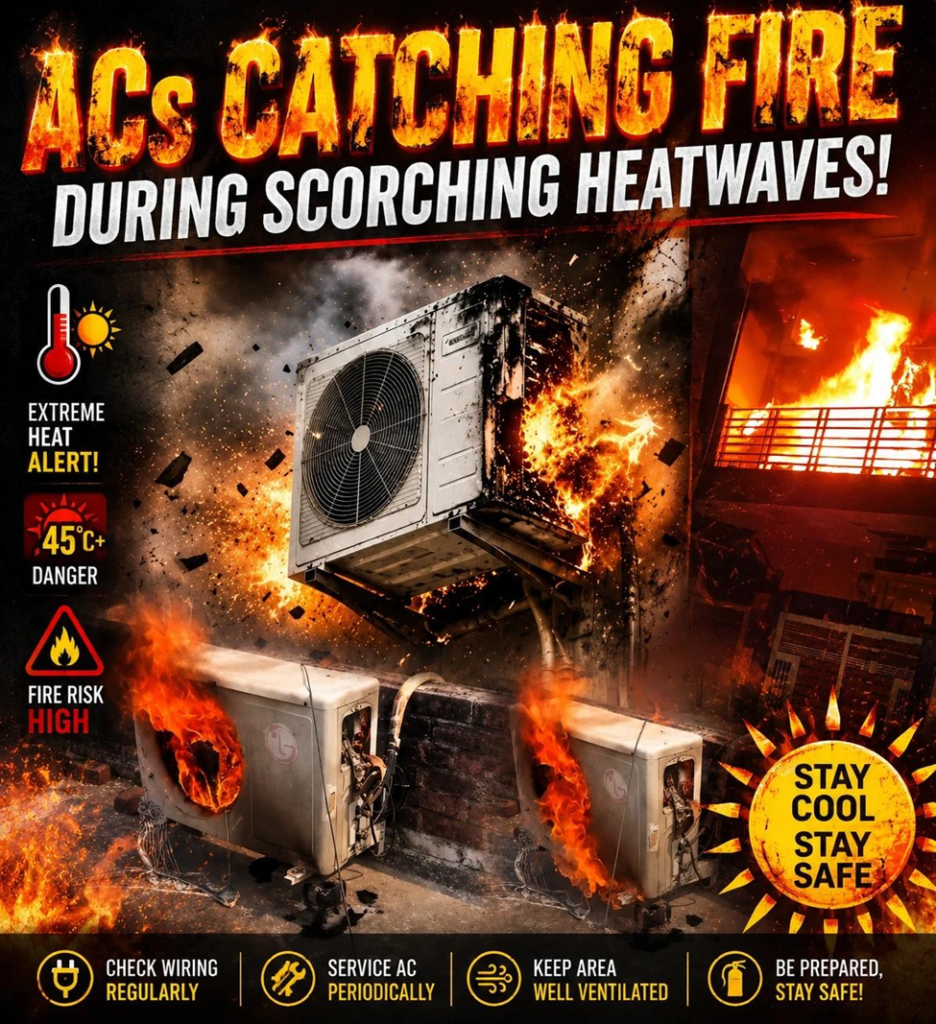
As a brutal heatwave grips North India with temperatures regularly crossing the 45-degree Celsius mark, the very machines designed to provide relief are becoming dangerous fire hazards. A disturbing pattern has emerged across Delhi-NCR, where air conditioners (ACs) catching fire, exploding, or triggering massive short circuits have become alarmingly common.
In just three weeks, three deadly AC-related fires have rocked the capital, claiming multiple lives and leaving residents in a state of panic. It raises an urgent question: why have our cooling appliances become a summer hazard, and how can we protect our homes?
The Tragic Toll: 3 Deadly Fires in 3 Weeks
Recent events paint a terrifying picture of how quickly a household appliance can turn into a lethal threat:
- Hauz Khas Tragedy: A devastating fire broke out late at night at the South Delhi residence of Dhanendra Kumar, a retired IAS officer and the first Chairman of the Competition Commission of India. A suspected blast in the indoor AC unit filled the home with toxic fumes. While his son survived, Kumar tragically passed away due to severe smoke inhalation.
- Indirapuram High-Rise Scare: Just days prior, an AC unit reportedly exploded inside a 15th-floor apartment in Ghaziabad’s Indirapuram, leading to a massive blaze that caused widespread panic in the residential complex.
- Vivek Vihar Horror: Earlier in the month, a horrific fire in a four-storey residential building in Vivek Vihar killed nine people, including a toddler. Initial investigations pointed to an AC short circuit and subsequent blast on the second floor as the primary cause.
The Silent Killer
Fire safety experts note that in many of these tragedies, the victims do not die from physical burns, but from inhaling toxic smoke. When an AC catches fire, burning plastic and wires release dark fumes. In an air-tight, air-conditioned room—especially at night while families are sleeping—these toxic fumes can cause suffocation within minutes.
What is Causing These AC Fires?
Experts and electrical engineers suggest that a combination of extreme weather, electrical neglect, and overloaded systems is to blame.
- Scorching Heatwaves and Continuous Usage:-Indian summers are becoming hotter and longer. To combat the severe heat, many households are running their ACs continuously for 12 to 18 hours a day. This non-stop usage without a break places immense, relentless stress on the compressor, capacitors, and internal circuits, leading to severe overheating.
- Lack of Routine Maintenance:-Many people skip the crucial annual servicing of their cooling units. When an AC is not serviced, thick dust accumulates on the condenser coils, completely choking the airflow. This forces the machine to work twice as hard to cool the room, which ultimately causes the compressor to overheat and fail.
- Faulty Wiring and Electrical Overload:-Modern air conditioners draw a massive amount of electrical power. However, many homes, especially older buildings, were not designed to handle this sheer electrical load. Plugging an AC into cheap extension boards, using thin or ageing wiring, or relying on incorrect MCB (Miniature Circuit Breaker) capacities leads to sparks, melting wires, and catastrophic short circuits.
- Gas Leaks and Substandard Parts:-The modern refrigerant gases used in ACs are highly flammable. A minor gas leak, when combined with a tiny electrical spark inside the machine, can instantly cause a blast. Furthermore, using cheap, unverified spare parts during repairs drastically increases the risk of an electrical fault.
Preventive Measures: How to Protect Your Family
Most AC fires are entirely preventable if basic safety and maintenance guidelines are followed. Here is what you must do to keep your home safe during the peak summer heat:
- Give the Machine a Break: Never run your AC continuously for 24 hours. Turn it off for an hour or two during the day to let the compressor cool down.
- Set a Safe Temperature: Run your AC between 24°C and 26°C. This provides comfortable cooling while significantly reducing the heavy strain on the compressor.
- Do Not Ignore Warning Signs: If you notice a burning plastic smell, sparking, unusual rattling noises, frequent power tripping, or if the AC suddenly stops cooling, switch it off from the main board immediately and call a professional.
Maintenance of the AC and Outdoor Unit
- Mandatory Professional Servicing: Always get your AC serviced by an authorized technician before the peak summer season begins. Ensure they check the gas pressure, clean the coils, and thoroughly inspect the electrical components.
- Clean the Filters: Clean the indoor unit’s air filters every 15 days. A clean filter allows for smooth airflow, preventing the machine from suffocating and overheating.
- Smart Outdoor Unit Placement: The outdoor unit (compressor) should ideally be placed in a well-ventilated or shaded area. If it is trapped in a tight space or exposed to direct, blistering sunlight all day, its chances of overheating skyrocket.
Electrical Safety and Emergency Preparedness
- Dedicated Power Lines: Your AC must have a dedicated power line with high-quality copper wiring and its own exclusive MCB. Never plug an AC into a standard multi-plug extension cord or share its socket with other heavy appliances.
- Install a Voltage Stabilizer: Frequent power fluctuations and voltage spikes can instantly fry an AC’s internal circuits. A reliable voltage stabilizer protects the unit from sudden power surges.
- Keep Safety Gear Ready: A simple, battery-operated smoke detector can wake your family up before the smoke turns fatal. Additionally, keep a small ABC-type fire extinguisher in your home. If a fire does break out, never throw water on an electrical appliance; turn off the main power supply immediately and evacuate.
Air conditioners have shifted from being luxury items to absolute necessities in the extreme Indian heat. However, they remain high-load electrical systems operating inside tightly packed buildings. By investing in regular maintenance, upgrading old wiring, and adopting safe usage habits, you can keep your home cool and entirely safe this summer.