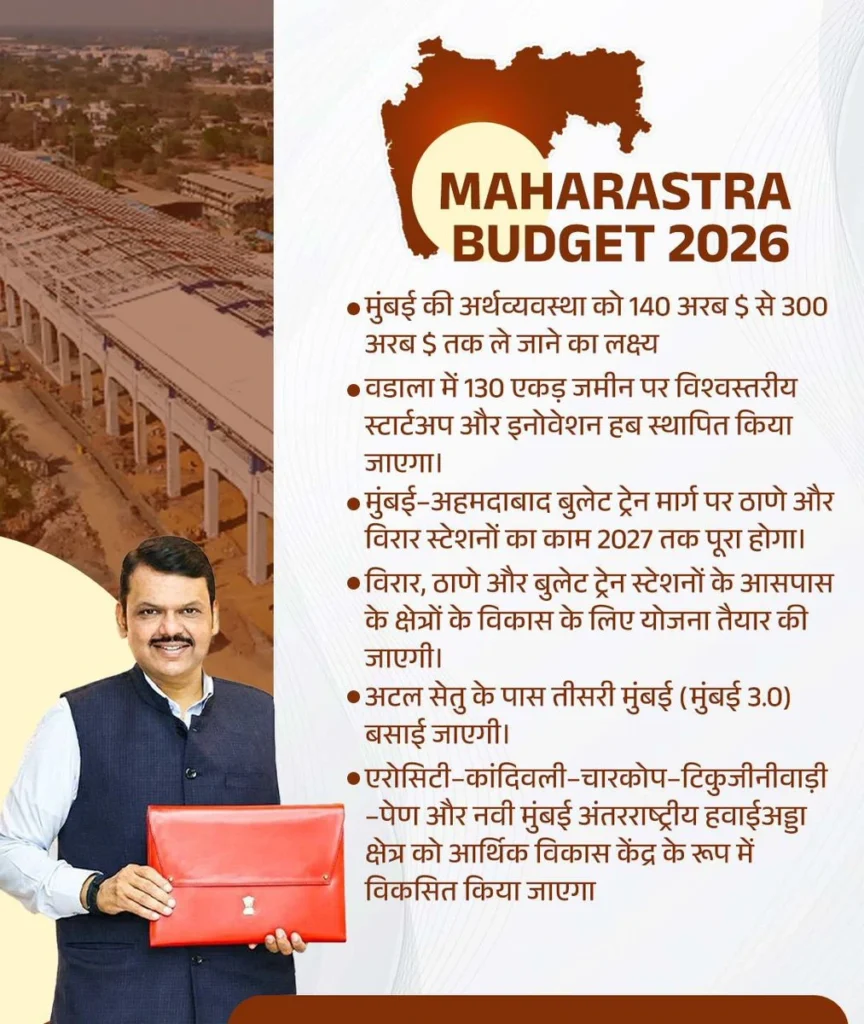
The Maharashtra Budget 2026–2027 is one of the most significant financial documents in India’s state-level governance calendar. As the economic engine of India contributing nearly 15% of the country’s GDP and home to over 125 million people Maharashtra’s annual budget sends ripple effects across industries, financial markets, and communities.
This year’s budget strikes an ambitious balance: fiscal discipline on one hand, and bold investment in long-term sectoral growth on the other. It reflects the Mahayuti government’s vision of a self-reliant, inclusive, and globally competitive Maharashtra by 2030.
The budget allocates funds across five strategic pillars: infrastructure modernisation, agricultural transformation, industrial and employment growth, education and skill development, and universal healthcare access. Below is an in-depth look at each.
Budget Overview & Core Objectives
The Maharashtra Budget 2026–27 frames its priorities around three macro goals:
- Accelerating economic growth while keeping fiscal deficit under control
- Ensuring inclusive development bridging the rural–urban divide
- Building human capital through education, health, and skill infrastructure
The budget continues the state’s tradition of large capital expenditure while introducing targeted schemes for social welfare, especially benefiting women, youth, and farming communities. Below is a summary of the key sectoral focus areas:
| Key Area | Budget Initiative |
| Infrastructure | Roads, Metro, Smart Cities, Rural Connectivity |
| Agriculture & Farmers | Irrigation, Subsidies, Crop Insurance |
| Industry & Employment | MSMEs, SEZs, Industrial Corridors |
| Education & Skills | Digital Schools, Scholarships, Vocational Training |
| Healthcare | Hospital Expansion, Rural Health, Affordable Treatment |
1. Infrastructure Development
Infrastructure lies at the core of Maharashtra’s growth story. For 2026–27, the government has significantly ramped up capital expenditure on physical infrastructure, reflecting an understanding that connectivity is the foundation of economic competitiveness.
Roads & Highways
Thousands of kilometres of new roads and highway upgrades have been sanctioned. Key projects include the Mumbai Nagpur Samruddhi Mahamarg expansions, the Pune Ring Road, and the coastal road extension in Mumbai. Improved road infrastructure is expected to reduce logistics costs by up to 12–15%, according to state transport economists.
Metro Rail Expansion
Urban mobility gets a transformational boost. Metro rail networks are being expanded in Pune, Nashik, Nagpur, and Mumbai. The Mumbai Metro Lines 2A, 7, and 9 are in advanced stages, while Pune’s Metro Phase 2 has received fresh funding. These projects collectively aim to reduce private vehicle congestion and carbon emissions in major cities.
Smart City Initiatives
Under the Smart Cities Mission and the state’s own urban development programmes, 11 cities across Maharashtra are receiving funding for digital governance platforms, sensor-based traffic management, e-waste systems, and integrated command and control centres. Nashik and Aurangabad (Chhatrapati Sambhajinagar) are flagged as model smart city projects.
Rural Road Connectivity
Nearly 4,000 villages still lack all weather road connections. This budget allocates dedicated funds under the Pradhan Mantri Gram Sadak Yojana (PMGSY) co-funding mechanism to close these gaps, with a focus on tribal and drought-affected districts like Nandurbar, Yavatmal, and Osmanabad.
2. Agriculture & Farmer Welfare

Agriculture supports the livelihoods of over 55% of Maharashtra’s workforce, yet the sector faces persistent challenges: drought-prone geography, fragmented landholdings, price volatility, and growing climate risks. The 2026–27 budget takes a multi-pronged approach to address these structural issues.
Irrigation Expansion
Maharashtra has one of the lowest irrigation coverage ratios among large states roughly 18% of cultivable land. The budget allocates increased funds to complete long-pending projects under the Vidarbha Irrigation Development Corporation (VIDC) and Marathwada irrigation schemes. Micro-irrigation (drip and sprinkler) subsidies have also been increased, targeting 2 lakh hectares of new coverage.
Modern Agricultural Equipment Subsidies
To modernise farming practices, the state is offering enhanced subsidies on machinery such as precision seeders, GPS-guided tractors, soil testing kits, and post-harvest processing equipment. Small and marginal farmers (those with below 2 acres) receive priority access under this scheme.
Crop Insurance Enhancement
Building on the Pradhan Mantri Fasal Bima Yojana (PMFBY), the state government is contributing additional premium support so that more farmers, particularly in Vidarbha and Marathwada, can enroll without financial burden. The claim settlement process has also been digitised for faster disbursement.
Financial Assistance & Debt Relief
Targeted financial aid programmes have been announced for farmers affected by unseasonal rains and hailstorms. The government has also pledged to expand the Magel Tyala Shetatale (irrigation access) and Namo Shetkari Mahasanman Nidhi programmes, ensuring direct income transfers to eligible farmer families.
- Estimated 1.5 crore farmer families to benefit from combined welfare schemes
- Soybean and cotton MSP support reinforced for Vidarbha districts
- Agri-tech startup incubators announced in Pune and Nashik
3. Industry, MSMEs & Employment
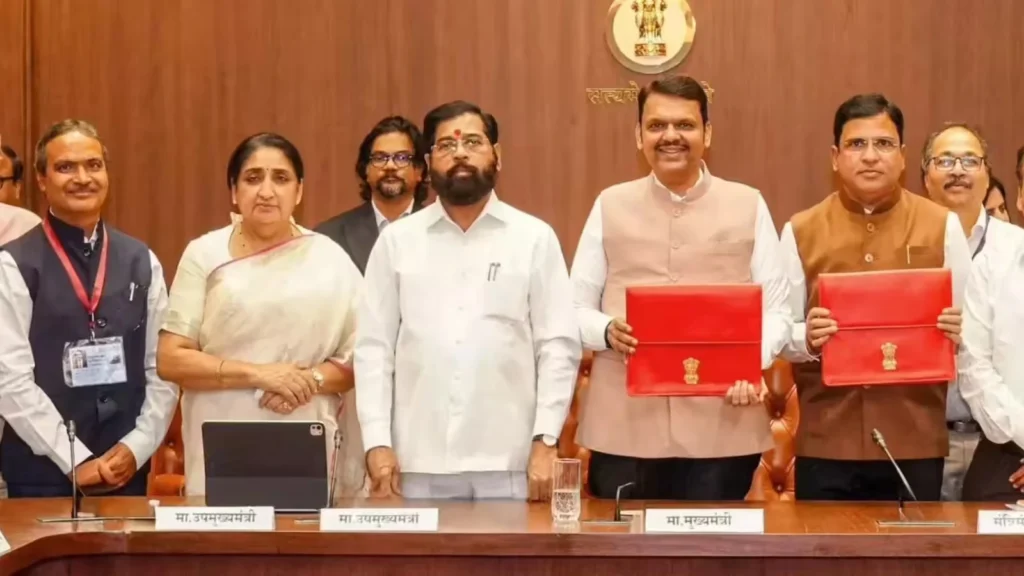
Maharashtra is home to some of India’s most dynamic industrial clusters from the financial services hub of Mumbai to the automotive corridors of Pune and Aurangabad, and the textile centres of Ichalkaranji and Solapur. This budget doubles down on strengthening that foundation while broadening job creation.
Manufacturing Incentives
The state has rolled out a new Maharashtra Industrial Policy 2026, which offers a tiered incentive structure for manufacturing investors: capital subsidies of 15–25% for new greenfield projects, electricity duty exemptions for the first 10 years, and streamlined single window clearance through the Aaple Sarkar portal. Semiconductor, defence manufacturing, and EV component sectors receive the highest tier of incentives.
MSME & Startup Support
MSMEs, which employ over 2.5 crore people in Maharashtra, receive expanded credit guarantee support, interest subvention on working capital loans, and technology upgradation grants. A new Maharashtra Startup Fund worth ₹500 crore has been earmarked to co-invest in early-stage ventures in deep tech, agritech, and clean energy.
Skill Development for Youth
The Skill, Employment, Entrepreneurship & Innovation (SEEI) Department has been allocated a significant increase in funds. New ITIs, polytechnics, and PM Kaushal Vikas Kendra (PMKVK) centres will be set up across backward districts. Apprenticeship programmes in partnership with over 200 companies are being scaled up.
Industrial Corridors & SEZs
The Pune–Nashik Industrial Corridor and the Delhi Mumbai Industrial Corridor’s Maharashtra stretch are key focuses. New logistics parks, warehousing hubs, and plug-and-play industrial parks are being built in Aurangabad, Nagpur, and Raigad. These are expected to attract over ₹25,000 crore in fresh investment over the next 3 years.
4. Education & Skill Development
Maharashtra has one of India’s largest school systems, with over 1.1 lakh government schools. While enrolment rates are high, learning outcomes and dropout rates remain areas of concern. This budget prioritises quality, digital inclusion, and post-secondary skill linkages.
Modernisation of Government Schools
Under the Samagra Shiksha Abhiyan and state funded initiatives, government schools will receive infrastructure upgrades including smart classrooms, digital learning boards, and computer labs. A particular focus is on Zilla Parishad schools in rural and tribal areas, where 10,000 schools will be equipped with digital tools by 2027.
Digital Education & e-Learning
The state is expanding its e-Shala platform and partnering with DIKSHA (the national digital learning platform) to provide curriculum-aligned video lessons, practice tests, and teacher training modules. Free tablets are being distributed to Class 9–12 students from BPL families under the Swami Vivekanand Digital Yojana.
Scholarships & Financial Aid
Scholarship budgets have been enhanced for SC, ST, OBC, and EWS students pursuing higher education. A new merit-cum-means scholarship for girls from rural areas has also been introduced, targeting students pursuing STEM and medical courses.
Vocational & Technical Training
The budget recognises that India needs 40 crore skilled workers by 2030. Maharashtra’s contribution to that goal includes new diploma programmes in EV technology, AI & data analytics, drone operation, and healthcare support services. ITIs are being upgraded to Industry 4.0-ready facilities in collaboration with the private sector.
5. Healthcare Sector Improvements

The COVID-19 pandemic exposed the fragility of public health infrastructure in India. Maharashtra’s 2026–27 budget reflects a renewed commitment to building a robust, accessible, and affordable healthcare system.
Hospital & Medical Facility Expansion
New government hospitals and district level medical colleges are being established in underserved districts. The Haffkine Institute in Mumbai receives fresh funding for vaccine research and public health labs. Urban health centres in slum-dense areas of Mumbai and Pune are being upgraded to handle secondary care services.
Public Health Programme Funding
Programmes targeting maternal and child health, tuberculosis elimination, diabetes and hypertension screening, and mental health services receive enhanced allocations. The state is also scaling up its Aarogya Maharashtra campaign, which runs health camps in villages and urban slums.
Rural Healthcare
Primary Health Centres (PHCs) and Community Health Centres (CHCs) in rural Maharashtra especially in Vidarbha, Marathwada, and Konkan will see new doctor appointments, diagnostic equipment, and telemedicine infrastructure. The state’s mobile medical unit programme will be expanded to cover 500 new villages.
Affordable Treatment for the Vulnerable
The Mahatma Jyotirao Phule Jan Arogya Yojana (MJPJAY) coverage has been enhanced. It now covers over 1,100 medical procedures and surgeries at empanelled hospitals, completely free of cost for eligible families. The annual coverage ceiling has been increased to ₹5 lakh per family.
Economic Impact & Outlook
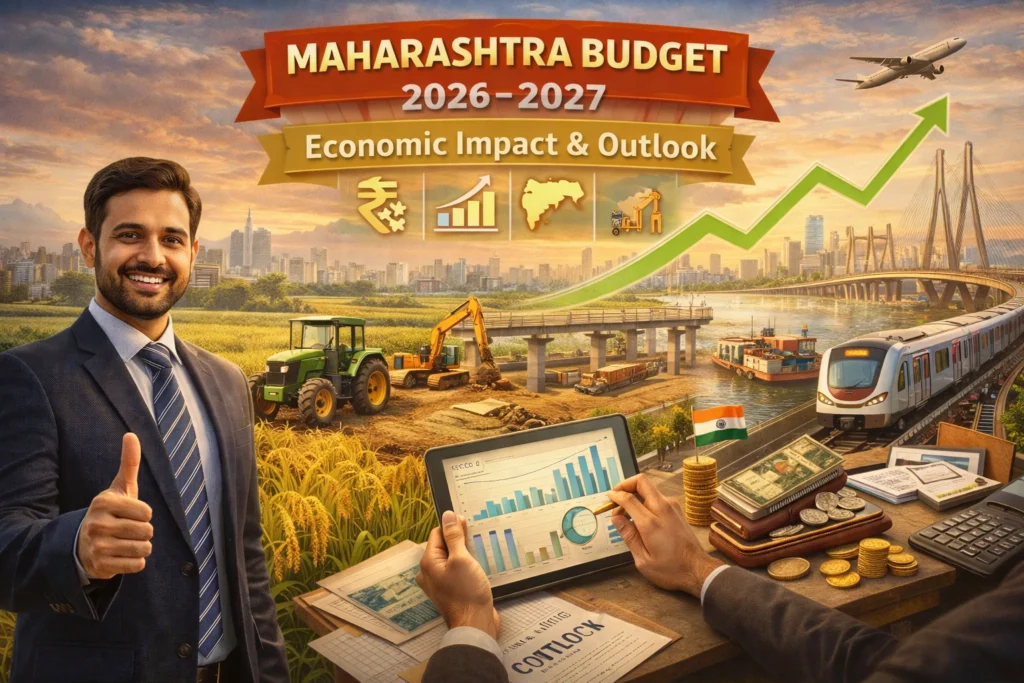
The cumulative effect of Maharashtra’s budget initiatives is expected to be substantial. Economists project that sustained capital expenditure in infrastructure and industry, combined with rural welfare programmes, could push Maharashtra’s GSDP growth to 8.5–9% in FY2026–27, outpacing the national average.
Investment Attraction
Maharashtra consistently leads national FDI rankings. With new industrial policies, streamlined approvals, and global investor summits like the Magnetic Maharashtra Investor Conclave, the state expects to attract ₹5 lakh crore in new investment commitments over the next 3 years.
Employment Generation
Projects across infrastructure, manufacturing, agriculture, and services are expected to generate over 15 lakh direct jobs and an estimated 30 lakh indirect jobs during the fiscal year. Youth employment is a stated priority, with 60% of skill development slots reserved for those under 30.
Challenges & Concerns
Despite the optimism, analysts have flagged several risks that could undermine the budget’s ambitions:
- Fiscal Deficit Management: With large expenditure commitments, maintaining the fiscal deficit below the FRBM threshold of 3% of GSDP will require disciplined revenue collection and subsidy rationalisation.
- Implementation Gaps: Maharashtra has historically faced delays in executing infrastructure projects. Strengthening project management capacity and accountability frameworks is critical.
- Regional Imbalances: Districts in Vidarbha and Marathwada lag significantly behind the Mumbai Metropolitan Region on most development indicators. The budget must ensure equitable resource distribution.
- Climate Vulnerability: Agriculture and infrastructure must be climate-proofed. Increasing extreme weather events demand investment in climate-resilient design.
- Debt Levels: The state’s total outstanding debt has risen over the past 5 years. New borrowings must be carefully calibrated against long-term debt sustainability.
Conclusion
The Maharashtra Budget 2026–2027 is a bold, comprehensive blueprint for a state at the crossroads of opportunity and challenge. By investing in the five key pillars of infrastructure, agriculture, industry, education, and healthcare, the government is laying the groundwork for a more equitable and dynamic Maharashtra.
The test, as always, will be in implementation. If the schemes are delivered with transparency, speed, and accountability, this budget has the potential to significantly improve the lives of millions from the farmer in Yavatmal to the startup founder in Pune, from the child in a tribal school in Nandurbar to the factory worker in Aurangabad.
Maharashtra’s economic journey is one of India’s most watched stories. The 2026–27 budget could be a turning point.