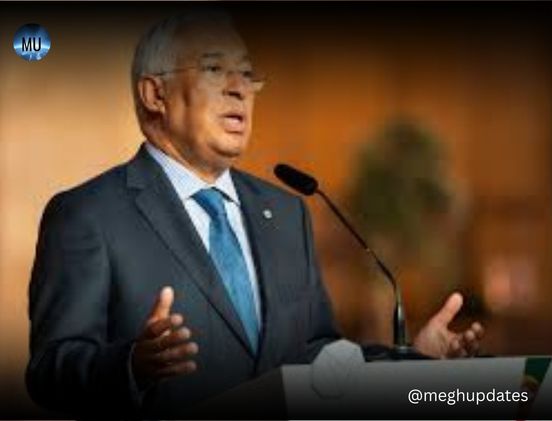
A remarkable India-EU Summit contains a memorable moment when European Council President António Costa showed with pride his Overseas Citizen of India (OCI) card
As a gesture that crossed cultures and continents ,António Costa was able to add a personal touch to the historic negotiations of the India-EU Free Trade Agreement by displaying, during the summit, his OCI card and making a comment about his dual citizenship.
“I am President of the European Council, but I am also an Overseas Citizen of India, and I am very proud of my roots in Goa,” Costa’s statement was both diplomatically and personally affirming his pride.
A Symbol of Two Worlds “António Costa”
The moment of Costa embracing his Indian roots in the context of such high-stakes diplomacy, was aimed at demonstrating the close people-to-people relations that underpin the India-EU ties. With a Goan father and a Portuguese mother, Costa’s ancestry is emblematic of the historically close relations between India and Europe, which have often been overlooked in today’s trade-based relations.
The OCI card is a notable document that strengthens ties with people of Indian origin living abroad. It signifies India’s acknowledgment of its international diaspora. For Costa to exhibit this card at the summit added a rather surprising sense of intimacy and warmth to what is usually a rather stiff and formal diplomatic exercise.
Historic FTA Gains Personal Touch
The India-EU Free Trade Agreement is arguably the most important economic partnership deal in its current stage of negotiation and in terms of the potential impact it could have on billions of people in the two regions. Given Costa’s close ties with India, it reinforces the idea that such agreements are meant to impact people and communities, not just socioeconomic variables.
Commentators remarked that the moment encapsulated the intersection of personal ancestry and professional diplomacy, which could, in some way, strengthen ties of empathy and goodwill on the negotiating table.
Goan Roots, Global Leadership
Costa’s pride in his Goan ancestry is a reminder of the state’s rich and diverse history. Goan history and legacy as a Portuguese colony until 1961 fostered many cross-continental familial ties, especially with the European continental community.
By celebrating these roots while holding one of the top positions in European leadership, Costa illustrates that multiculturalism should not be a stumbling block in the exercise of international leadership.
Costa’s moment has been shared widely on social media, and brings a touch of realness and a personal feel to a top tier diplomacy, especially when it reminds us that, as important as the negotiations are, they are done by real people with real lives and personal ties.