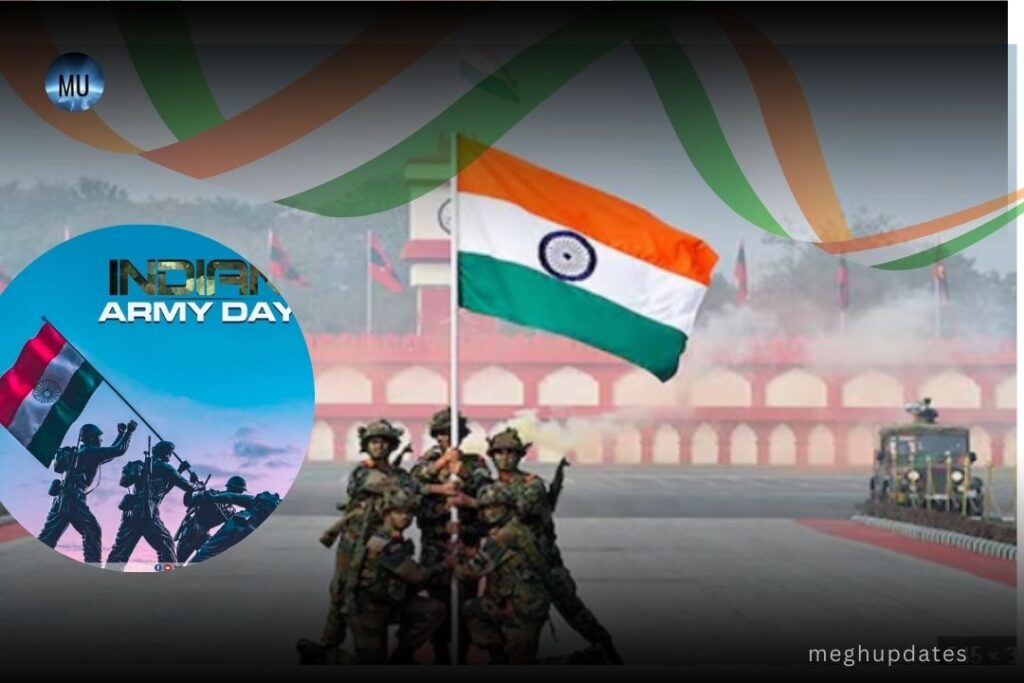
Every year on January 15, India celebrates Army Day—a date etched in the annals of our nation’s military history. This day commemorates not just a ceremonial change of guard, but the birth of a truly independent Indian Army and its remarkable evolution into one of the world’s most respected military forces.
Basic Information
| Aspect | Details |
|---|---|
| Date Celebrated | January 15 (Every Year) |
| First Celebrated | January 15, 1949 |
| Army Day 2026 | 77th Army Day |
| Significance | First Indian Commander-in-Chief assumed command |
| Main Venue | Cariappa Parade Ground, Delhi Cantonment |
The Genesis: From Colonial Forces to National Army
Indian Army at a Glance
| Category | Statistics |
|---|---|
| Active Personnel | Over 1.4 million |
| Reserve Forces | Approximately 1.2 million |
| World Ranking | 2nd largest standing army |
| Commands | 7 operational commands |
| Border Length | Approximately 15,000 km |
| Highest Post | Siachen Glacier (20,000+ feet) |
The Pre-Independence Era
The story of the Indian Army begins long before 1949. During British colonial rule, the Indian Army was one of the largest volunteer forces in the world, but it remained firmly under British control. Indian soldiers, despite their bravery and sacrifice in both World Wars, were largely relegated to lower ranks, with senior command positions reserved exclusively for British officers.
The seeds of change were sown during World War II when Indian officers began receiving King’s Commissions, allowing them to hold higher positions. However, true command remained elusive, and the Indian Army was essentially an instrument of colonial power.
The Dawn of Independence: 1947-1949
When India gained independence on August 15, 1947, the nation inherited a military force that was battle-hardened but still British-led. General Sir Roy Bucher became the Commander-in-Chief of the Indian Army after independence, continuing the colonial tradition of British leadership.
However, the young Indian government under Prime Minister Jawaharlal Nehru and Sardar Vallabhbhai Patel understood that true sovereignty required complete control over the armed forces. The transition needed to be carefully managed, as the country faced immediate security challenges, including the first Indo-Pak war in Kashmir and the integration of princely states.
The Historic Moment: January 15, 1949
On this momentous day, Lieutenant General (later Field Marshal) Kodandera Madappa Cariappa took over as the first Indian Commander-in-Chief of the Indian Army from General Sir Francis Butcher. This wasn’t merely a change of personnel—it was a symbolic and practical assertion of India’s complete sovereignty.
Historical Milestones
| Year | Event |
|---|---|
| 1947 | India gains independence; British officers still lead Army |
| 1949 | Field Marshal K.M. Cariappa becomes first Indian Commander-in-Chief (Jan 15) |
| 1954 | National Defence Academy established |
| 1962 | Sino-Indian War |
| 1965 | Indo-Pak War |
| 1971 | Bangladesh Liberation War – Major victory |
| 1984 | Operation Meghdoot – Siachen Glacier secured |
| 1999 | Kargil War |
| Present | One of the world’s largest and most capable armies |
Field Marshal K.M. Cariappa: The Pioneer
Born on January 28, 1899, in Shanivarsanthe, Karnataka, K.M. Cariappa was among the first batch of Indians to receive a King’s Commission in 1919. He was one of only six Indian cadets selected for the Royal Military College, Sandhurst, alongside another future legend, General (later Field Marshal) S.H.F.J. Manekshaw.
Cariappa’s military career spanned three decades under British rule, during which he demonstrated exceptional leadership and strategic acumen. He commanded the 7th Light Cavalry and later played a crucial role during the 1947-48 Kashmir conflict, where his tactical brilliance in the Western Sector earned him widespread recognition.
When he assumed command on January 15, 1949, Cariappa became not just a military leader but a national symbol of India’s self-reliance and capability. His famous words, “We are proud to have under our command such a magnificent body of men who have shown the world that they are second to none,” reflected the pride and responsibility of leading a truly national army.
The Evolution: Building a National Defense Force
Key Personalities
| Name | Role | Notable Achievement |
|---|---|---|
| Field Marshal K.M. Cariappa | First Indian Commander-in-Chief | Took command on Jan 15, 1949 |
| Field Marshal S.H.F.J. Manekshaw | Chief during 1971 War | Led India to victory in Bangladesh Liberation War |
| General Roy Bucher | Last British Commander-in-Chief | Handed over command to Cariappa |
The 1950s: Foundation Years
After independence, the Indian Army faced enormous challenges. The partition had divided military resources, personnel, and infrastructure. The new Indian Army had to reorganize regiments, establish training institutions, and develop indigenous military doctrine.
During this decade, India established key military academies including the National Defence Academy in Khadakwasla (1954) and strengthened the Indian Military Academy in Dehradun. The focus was on creating a professional, non-political, and secular military force that would serve as the backbone of national security.
The 1960s: Tests of Fire
The Indian Army faced its first major post-independence test during the 1962 Sino-Indian War. Though the outcome was unfavorable, it led to significant military reforms, increased defense spending, and modernization initiatives. The lessons learned reshaped India’s defense strategy and military preparedness.
The 1965 Indo-Pak War demonstrated the Indian Army’s resilience and capability. Battles like the defense of Akhnoor and the battle of Asal Uttar became legendary, with Indian forces successfully defending against Pakistani aggression.
The 1970s: Coming of Age
The 1971 Bangladesh Liberation War marked a defining moment for the Indian Army. Under the leadership of Field Marshal Sam Manekshaw, the Indian Army conducted one of the most successful military campaigns in modern history, liberating Bangladesh in just 13 days. The Pakistani military’s surrender in Dhaka, with over 93,000 prisoners of war, established India as a major regional power.
The 1980s-1990s: New Challenges
The Indian Army adapted to counter-insurgency operations in Punjab and Jammu & Kashmir, developed high-altitude warfare capabilities in Siachen Glacier (since 1984), and participated in international peacekeeping missions. Operation Pawan in Sri Lanka (1987-1990) and humanitarian operations during natural disasters showcased the Army’s versatility.
The 21st Century: Modernization and New Frontiers
The Kargil War (1999) led to major reforms in intelligence gathering, mountain warfare, and strategic planning. The Indian Army has since modernized with advanced weaponry, improved surveillance systems, and enhanced technological capabilities.
Today’s Indian Army is involved in counter-terrorism operations, border management along the Line of Control and Line of Actual Control, disaster relief operations, and United Nations peacekeeping missions worldwide.
Army Day Celebrations: A Tradition of Honor
Army Day Celebrations
| Event | Description |
|---|---|
| Military Parade | Showcase of tanks, artillery, missiles, and military capabilities |
| Gallantry Awards | Param Vir Chakra, Maha Vir Chakra, Kirti Chakra presented |
| Wreath-Laying | Tribute to martyrs at National War Memorial |
| Cultural Programs | Events at military stations nationwide |
| Open Houses | Civilians visit cantonment areas, interact with soldiers |
Major Wars & Operations
| Conflict/Operation | Year | Outcome |
|---|---|---|
| Kashmir War | 1947-48 | Ceasefire; territory divided |
| Sino-Indian War | 1962 | Defeat; led to military reforms |
| Indo-Pak War | 1965 | Stalemate; successful defense |
| Bangladesh Liberation | 1971 | Decisive victory; Bangladesh created |
| Operation Meghdoot | 1984 | Siachen secured |
| Kargil War | 1999 | Victory; reclaimed peaks |
Gallantry Awards (Wartime)
| Award | Rank | Criteria |
|---|---|---|
| Param Vir Chakra | Highest | Conspicuous gallantry in presence of enemy |
| Maha Vir Chakra | Second highest | Distinguished acts of gallantry |
| Vir Chakra | Third highest | Acts of bravery in face of enemy |
Gallantry Awards (Peacetime)
| Award | Rank | Criteria |
|---|---|---|
| Ashok Chakra | Highest | Valor, courageous action, self-sacrifice |
| Kirti Chakra | Second highest | Conspicuous gallantry |
| Shaurya Chakra | Third highest | Gallantry not in face of enemy |
Army Commands
| Command | Headquarters | Area of Responsibility |
|---|---|---|
| Northern Command | Udhampur | J&K, Ladakh |
| Western Command | Chandimandir | Punjab, Rajasthan |
| South Western Command | Jaipur | Rajasthan, Gujarat |
| Southern Command | Pune | Maharashtra, Karnataka, Goa |
| Eastern Command | Kolkata | Eastern states |
| Central Command | Lucknow | Central India |
| Army Training Command | Shimla | Training establishments |
Quick Facts
| Fact | Detail |
|---|---|
| Motto | “Service Before Self” |
| Flag Day | December 7 (Supports welfare of armed forces) |
| Veterans Day | January 14 |
| UN Peacekeeping | India is one of largest contributors |
| Indigenous Production | Focus on “Atmanirbhar Bharat” for defense |
| Recruitment | Through various exams, NDA, CDS, and Agnipath scheme |
The Main Parade
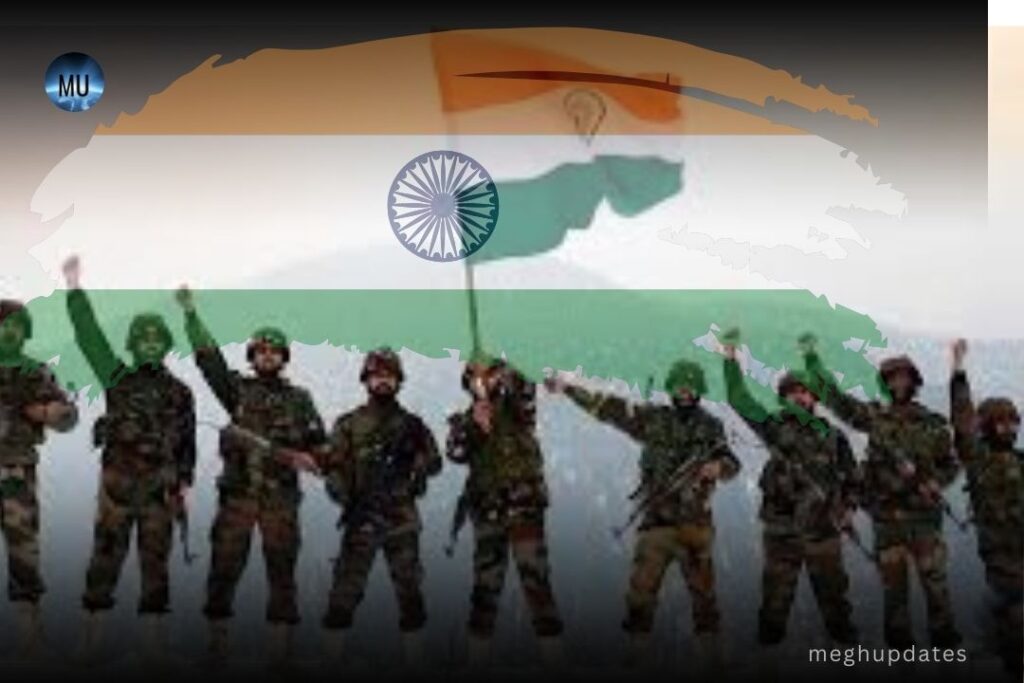
The centerpiece of Army Day celebrations is the spectacular parade held at the Cariappa Parade Ground in Delhi Cantonment. This grand event showcases India’s military might through displays of tanks, artillery, missiles, and advanced defense systems. Elite units including the Para Commandos, the Army Service Corps, and various infantry regiments march in precision, demonstrating the discipline and professionalism of the force.
Gallantry Awards Ceremony
Army Day is also the occasion when the nation honors its bravest soldiers. Gallantry awards such as the Param Vir Chakra, Maha Vir Chakra, Kirti Chakra, and various Sena Medals are presented to soldiers who have displayed exceptional courage and devotion to duty. These ceremonies remind us of the countless acts of heroism, both known and unknown, that protect our nation.
Wreath-Laying at Amar Jawan Jyoti
Senior military officials and government leaders pay homage to fallen soldiers at the National War Memorial (formerly Amar Jawan Jyoti at India Gate), honoring those who made the ultimate sacrifice for the nation. This solemn ceremony connects present generations with the legacy of valor inherited from the past.
Nationwide Celebrations
Army Day celebrations extend beyond Delhi, with events organized at military stations across the country. Open houses at cantonment areas allow civilians to witness military equipment, interact with soldiers, and understand the Army’s role better. Cultural programs, exhibitions, and seminars celebrate military heritage and promote awareness about the armed forces.
The Indian Army Today: Strength and Statistics
The Indian Army today comprises over 1.4 million active personnel and nearly 1.2 million reserve troops, making it the second-largest standing army in the world. It operates across seven commands (Northern, Southern, Eastern, Western, Central, South Western, and Army Training Command), each responsible for specific geographic areas and strategic objectives.
The Army maintains vigil over approximately 15,000 kilometers of borders, including the challenging terrains of the Himalayas, deserts, and dense forests. From the world’s highest battlefield at Siachen Glacier (over 20,000 feet) to the tropical regions of the Andaman and Nicobar Islands, Indian soldiers serve in some of the most extreme conditions on Earth.
Beyond Combat: The Army’s Humanitarian Role
The Indian Army’s contribution extends far beyond traditional warfare. During natural disasters—earthquakes, floods, cyclones, or landslides—the Army is often the first responder, conducting rescue operations, providing medical aid, and distributing relief materials. Operations like those during the Uttarakhand floods (2013), Kerala floods (2018), and countless other disasters have saved thousands of lives.
The Army also conducts civic action programs in remote areas, building infrastructure, running medical camps, and supporting education initiatives. In regions affected by insurgency, the Army’s efforts in winning hearts and minds through development work have been instrumental in restoring normalcy.
A Message for Army Day 2026
As we commemorate the 77th Army Day in 2026, we stand at a unique juncture in history. The Indian Army has evolved from a colonial force into a modern, self-reliant, and technologically advanced military that not only defends our borders but also contributes to nation-building and humanitarian efforts globally.
The journey that began on January 15, 1949, when Field Marshal Cariappa took command, has been one of continuous growth, adaptation, and unwavering commitment to the nation. From the battlefields of 1947 to the counter-terrorism operations of today, from the snowy peaks of Siachen to the jungles of the Northeast, the Indian Army has written countless stories of courage, sacrifice, and devotion.
Our Tribute, Our Responsibility
On this Army Day, let us remember that supporting our armed forces is not just about social media tributes or Independence Day speeches. It means:
- Respecting and supporting military families who endure long separations and constant anxiety
- Contributing to welfare funds for veterans and war widows
- Creating employment opportunities for retired soldiers
- Teaching our children about the values of courage, discipline, and selfless service
- Being informed and responsible citizens who strengthen the nation our soldiers defend
The Indian Army represents the finest ideals of service before self. Every soldier who guards our frontiers, every officer who leads with courage, every family that sends their loved ones to serve—they are the reason we sleep peacefully, work freely, and dream ambitiously.
Looking Ahead: The Future of the Indian Army
As India aspires to become a global power, the Indian Army continues to modernize and adapt. With initiatives like the Agnipath recruitment scheme, indigenization of defense equipment under “Atmanirbhar Bharat,” integration of artificial intelligence and drone technology, and enhanced tri-service cooperation, the Army is preparing for the challenges of 21st-century warfare.
Yet, amid all the technological advancement and strategic evolution, the core remains unchanged—the indomitable spirit of the Indian soldier, who stands ready to defend the nation with life itself.
In Closing: A Nation’s Gratitude
Seventy-seven years after Field Marshal Cariappa assumed command, the Indian Army continues to embody the highest traditions of military excellence and service to the nation. On this Army Day 2026, we bow our heads in respect, we stand tall in pride, and we pledge our support to those who wear the uniform.
To every soldier at Siachen and Arunachal Pradesh, to every officer planning our nation’s defense, to every veteran who served with honor, and to every military family that shares the burden of service—this day is your day. Your courage is our shield, your sacrifice is our security, and your dedication is our inspiration.
Jai Hind! Jai Jawan! 🇮🇳
#IndianArmyDay #ArmyDay2026 #FieldMarshalCariappa #JaiHind #77thArmyDay #IndianArmy #ProudIndian #NationFirst #SaluteToSoldiers #IndianMilitary #ArmyHeroes #IndianDefence