
Introduction: The AI Productivity Revolution Is Here
The landscape of workplace productivity has fundamentally transformed. As we navigate through 2026, artificial intelligence has evolved from a novelty into an essential component of how we work, create, and solve problems. The question is no longer whether to adopt AI productivity tools, but rather how to use AI tools for productivity effectively to maximize your output while maintaining quality and creativity.
After extensively testing and implementing dozens of best AI productivity tools 2026, I’ve discovered that the right combination of AI productivity tools for business can reduce routine task time by up to 60%, allowing professionals to focus on high-value strategic work. This guide will walk you through everything you need to know about using AI productivity tools apps 2026, from understanding the latest trends to implementing practical workflows that deliver measurable results.
Understanding the 2026 AI Productivity Landscape

The Shift to Agentic AI
The most significant development in AI productivity tools for teams for 2026 is the emergence of agentic AI workflows. Unlike the AI assistants of 2023 and 2024 that required constant human prompting, today’s AI agents for productivity can work autonomously, understand complex goals, and execute multi-step workflows without continuous supervision.
Autonomous AI agents represent a paradigm shift in how we approach productivity. These systems don’t just respond to commands; they proactively identify tasks, coordinate with other AI systems through protocols like A2A (Agent-to-Agent), and deliver completed work products rather than just suggestions. The multi-agent systems productivity approach allows different specialized AI agents to collaborate on complex projects, much like a human team would.
The Model Context Protocol Revolution
Another game-changing development is the MCP (Model Context Protocol) integration. This standardized framework allows AI tools to seamlessly connect with your existing software ecosystem, accessing files, databases, and applications with unprecedented efficiency. For businesses implementing enterprise AI productivity tools software, MCP integration means AI agents can pull data from CRM systems, update project management tools, and synchronize across platforms without manual intervention.
The Top AI Productivity Tools for 2026
Best AI Writing and Communication Tools
ChatGPT for productivity remains a dominant force, but 2026 has seen the rise of specialized alternatives. Claude AI productivity tools excel at long-form content creation, complex analysis, and maintaining consistent tone across extensive documents. For research-intensive work, Perplexity AI research capabilities have become indispensable, offering real-time web search integration that keeps information current.
Notion AI workspace has evolved into a comprehensive knowledge management system that combines note-taking, database management, and AI-powered content generation. Teams using Notion AI report significant improvements in documentation quality and knowledge sharing across departments.
AI writing tools productivity now extends beyond simple text generation. Tools like Jasper and Copy.ai specialize in marketing content, while Grammarly’s AI enhancements focus on tone, clarity, and professional communication. For AI email management, tools like Superhuman and Spark have integrated AI features that draft responses, summarize threads, and prioritize messages based on importance.
AI Tools for Time Management and Scheduling
AI calendar scheduling has become remarkably sophisticated. Motion AI calendar uses machine learning to automatically schedule your tasks around meetings, considering your energy levels, deadlines, and work patterns. Reclaim AI focuses on habit-building and protecting time for focused work, while Clockwise optimizes team schedules to maximize collaborative time.
AI productivity tools for time management now include predictive analytics that forecast how long tasks will actually take based on your historical performance. This addresses one of the biggest productivity challenges: unrealistic time estimates.
AI Project Management and Workflow Tools
AI project management tools have transformed how teams coordinate complex initiatives. Asana’s AI features now predict project bottlenecks before they occur, while Monday.com’s AI assistant helps create project templates and assigns resources intelligently based on team capacity and skill sets.
AI workflow orchestration platforms like Zapier AI automation and Make (formerly Integromat) have become essential for AI business workflow tools. These no-code automation platforms now incorporate AI decision-making, allowing workflows to adapt based on content analysis, sentiment detection, and pattern recognition.
AI Coding and Development Tools
For developers, AI coding productivity tools have reached new heights. GitHub Copilot continues to evolve with better context understanding and project-wide awareness. Cursor IDE has emerged as a favorite among developers for its ability to understand entire codebases and suggest architectural improvements, not just individual functions.
These AI tools for developers now handle entire feature implementations, write comprehensive test suites, and even debug complex issues by analyzing logs and error patterns. The productivity gains in software development have been among the most dramatic of any industry.
AI Tools for Content Creation
AI video creation tools like Synthesia and HeyGen have democratized video production. Marketing teams can now create professional video content without studios, cameras, or extensive editing knowledge. AI voice tools like ElevenLabs provide realistic voice synthesis for podcasts, audiobooks, and voiceovers in multiple languages.
NotebookLM for research has become the go-to tool for academics, journalists, and researchers who need to synthesize information from multiple sources. Its ability to create audio overviews and interactive Q&A sessions with uploaded documents has revolutionized how professionals consume and understand complex material.
AI Search and Research Tools
Traditional search engines are being complemented (and in some cases replaced) by AI search tools. Perplexity provides sourced, conversational answers with citations, making research faster and more reliable. Gemini productivity tools from Google integrate seamlessly with Workspace applications, offering contextual assistance across Gmail, Docs, and Sheets.
How to Increase Productivity with AI: Practical Implementation Strategies
Starting Your AI Productivity Journey
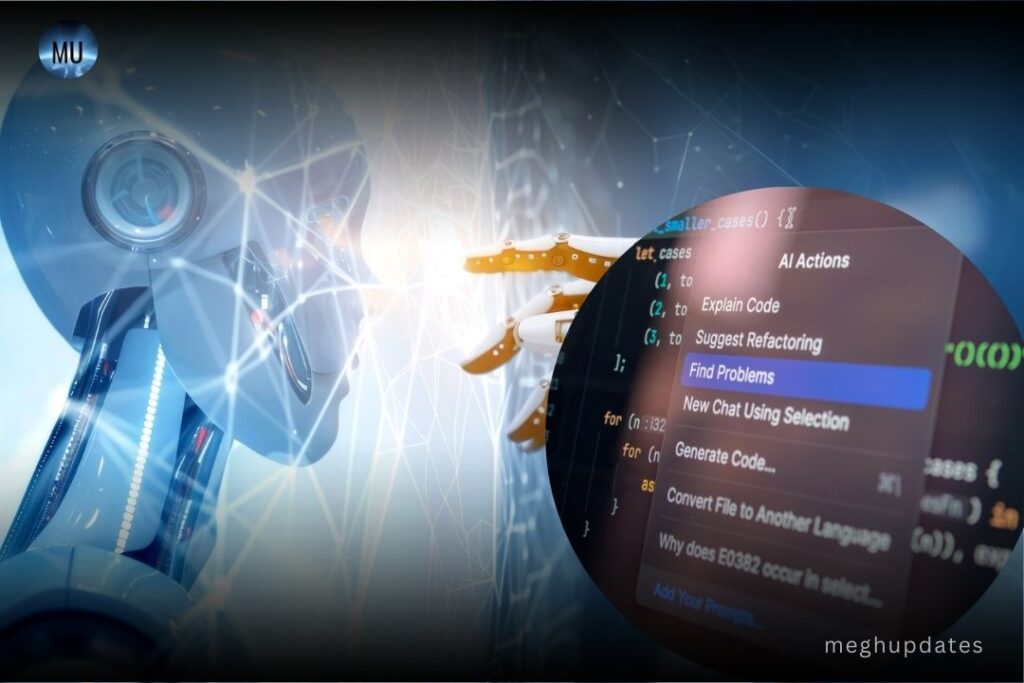
For those new to AI productivity tools apps, the key is to start small and scale gradually. Begin by identifying your three most time-consuming repetitive tasks. These are ideal candidates for AI automation because they offer immediate, measurable returns on your investment.
Many professionals wonder about best free AI productivity tools to start with. ChatGPT offers a capable free tier, as does Claude and Perplexity. Google’s Gemini is free for personal use and integrates with existing Google Workspace accounts. These platforms allow you to experiment with AI assistant productivity features before committing to paid solutions.
Building Your AI Productivity Stack
Creating an effective AI-powered productivity software ecosystem requires thoughtful integration. Here’s a framework for building your stack:
Foundation Layer: Choose a primary AI assistant (ChatGPT, Claude, or Gemini) as your go-to for general queries, brainstorming, and quick tasks.
Specialization Layer: Add domain-specific tools for your core work functions. Writers might add Grammarly and Jasper, while developers would prioritize GitHub Copilot and Cursor.
Automation Layer: Implement AI automation tools for work like Zapier or Make to connect your applications and eliminate manual data transfer.
Organization Layer: Deploy AI project management tools or a comprehensive workspace like Notion AI to centralize information and workflows.
Creating Effective AI Workflows
The most successful implementations of AI business automation follow these principles:
Clear Input/Output Definition: AI works best when you clearly define what information goes in and what results you expect. Create templates and standard operating procedures that specify these parameters.
Iterative Refinement: Your first AI workflow won’t be perfect. Monitor results, gather feedback, and continuously refine your prompts and processes. The most effective users treat AI tool implementation as an ongoing optimization project.
Human-AI Collaboration: The best results come from treating AI as a collaborator rather than a replacement. Use AI productivity tools to save time at work on routine tasks, freeing humans to focus on strategy, creativity, and relationship-building.
AI Productivity Hacks for 2026
Here are proven AI productivity tools hacks 2026 that deliver immediate results:
Batch Processing with AI: Instead of processing emails or documents one at a time, feed multiple items to AI tools simultaneously for summarization, categorization, or response drafting.
Custom GPTs and Agents: Create specialized AI assistants trained on your specific work style, company terminology, and common tasks. This personalization dramatically improves output quality.
AI Meeting Assistants: Use tools like Otter.ai, Fireflies, or Fathom to handle AI for meeting notes and summaries. These tools not only transcribe but also identify action items, decisions, and key insights.
Prompt Libraries: Build a collection of effective prompts for your common tasks. This eliminates the need to reinvent the wheel each time and ensures consistent output quality.
AI Content Repurposing: Create content once and use AI to adapt it for multiple channels. A single blog post can become social media threads, email newsletters, video scripts, and presentation slides with minimal additional effort.
Measuring ROI from AI Productivity Tools
Tracking AI Productivity ROI 2026
Business leaders increasingly demand evidence that AI productivity tools for business deliver tangible returns. The most successful implementations track these metrics:
Time Savings: Measure hours saved on specific tasks before and after AI implementation. Even conservative estimates often show 40-60% time reduction on routine tasks.
Quality Improvements: Track error rates, revision cycles, and customer satisfaction scores. Many AI writing tools productivity implementations see fewer grammar errors and more consistent brand voice.
Employee Satisfaction: Monitor engagement and burnout indicators. Employees freed from tedious tasks typically report higher job satisfaction and focus on more meaningful work.
Revenue Impact: Calculate the financial value of time saved and quality improvements. The “show me the money AI productivity” mindset requires connecting AI efficiency gains to bottom-line business results.
Calculating Your AI Productivity ROI
To determine if specific AI productivity tools for business automation justify their cost, use this framework:
- Calculate current cost of manual process (hours × hourly rate)
- Measure time saved after AI implementation
- Subtract AI tool subscription costs
- Factor in implementation and training time
- Calculate payback period and ongoing annual savings
Most organizations find that quality AI productivity tools for teams pay for themselves within 2-3 months, then deliver ongoing returns.
AI Tools Comparison: Making the Right Choices
ChatGPT vs Claude Productivity
The ChatGPT vs Claude productivity debate depends on your specific use case. ChatGPT excels at creative brainstorming, coding assistance, and has a vast plugin ecosystem. Claude offers superior performance on long documents, complex analysis, and maintains better context over extended conversations.
For most users, the answer isn’t choosing one or the other but understanding when to use each. ChatGPT might be your first stop for quick questions and diverse plugin access, while Claude handles your detailed research, document analysis, and content creation needs.
Motion vs Reclaim AI
When comparing Motion vs Reclaim AI for calendar and task management, both offer sophisticated AI scheduling, but with different philosophies. Motion takes a more prescriptive approach, automatically scheduling every task and meeting with minimal user input. Reclaim AI focuses on habit protection and flexible scheduling that adapts to changing priorities.
Teams preferring structured, automated scheduling tend toward Motion, while those wanting more control and flexibility choose Reclaim.
Best AI Writing Assistant 2026
Determining the best AI writing assistant 2026 depends on your writing needs. For long-form content requiring research and citations, Claude and Perplexity lead. For marketing copy and social media, tools like Jasper and Copy.ai specialize in conversion-focused writing. For academic and technical writing, the combination of NotebookLM for research and Grammarly for editing remains unbeatable.
AI Upskilling for Productivity
Essential AI Skills for 2026
AI upskilling for productivity has become as fundamental as computer literacy was in the 1990s. The most valuable skills include:
Prompt Engineering: Crafting effective instructions that generate desired outputs consistently. This skill applies across all AI tools and dramatically impacts result quality.
AI Tool Selection: Understanding which tools excel at specific tasks and how to combine them effectively. This requires staying current with new releases and capability updates.
Workflow Design: Creating processes that optimize human-AI productivity tools collaboration. This involves identifying which tasks benefit most from AI assistance and designing handoff points.
Critical Evaluation: Developing judgment to assess AI output quality, identify hallucinations or errors, and know when human expertise is required.
Training Your Team on AI Tools
Successful enterprise AI productivity software implementations require comprehensive training. The most effective approaches include:
Role-Based Training: Customize training based on how different teams will use AI. Sales teams need different AI skills than engineering or marketing teams.
Hands-On Practice: Theoretical knowledge isn’t enough. Provide sandbox environments where employees can experiment with AI tools without risk.
Champions Program: Identify enthusiastic early adopters who can become AI advocates and peer trainers within their departments.
Continuous Learning: AI capabilities evolve rapidly. Establish regular training updates and encourage experimentation with new features and tools.
Advanced AI Productivity Strategies
Concierge-Style AI Agents
The emergence of concierge-style AI productivity tools agents represents the cutting edge of productivity enhancement. These agents don’t wait for instructions; they proactively monitor your calendar, communications, and projects, then take action or provide recommendations before you ask.
Imagine an AI agent that notices you have a meeting scheduled about a topic you discussed three months ago, automatically retrieves and summarizes that earlier conversation, identifies relevant documents, and prepares a brief—all without being asked. This level of proactive assistance is becoming reality in 2026.
Multi-Agent Collaboration
Multi-agent systems productivity allows multiple specialized AI agents to work together on complex projects. One agent might handle research, another writing, a third editing, and a fourth project management. These agents communicate through protocols like A2A, coordinating their efforts to deliver comprehensive results.
This approach mirrors how human teams work, with each member contributing their expertise. The productivity gains compound as agents handle not just individual tasks but entire workflows.
AI Workflow Orchestration at Scale
For organizations implementing AI business workflow tools across departments, AI workflow orchestration becomes critical. This involves creating interconnected systems where AI handles routine decisions, routes information intelligently, and escalates only when human judgment is truly needed.
Manufacturing companies use this approach to optimize supply chains, customer service departments to handle routine inquiries, and HR teams to streamline onboarding and benefits administration.
Overcoming Common AI Productivity Challenges
Data Privacy and Security
When implementing AI productivity tools for business automation, data security concerns top the list of obstacles. Choose enterprise AI productivity software that offers:
- On-premise or private cloud deployment options
- Clear data handling and retention policies
- Compliance with relevant regulations (GDPR, HIPAA, SOC 2)
- Transparent AI training practices that don’t use your data
Integration Complexity
Many organizations struggle with connecting AI-powered productivity software to existing systems. The MCP integration standard has simplified this considerably, but successful implementation still requires:
- Clear API documentation and support
- IT team involvement from the planning stage
- Phased rollout that tests integrations before full deployment
- Backup procedures when AI systems fail or require maintenance
Adoption Resistance
Even the best AI productivity tools 2026 fail if employees don’t use them. Address resistance by:
- Demonstrating clear time savings and quality improvements
- Addressing fears about job security transparently
- Involving employees in tool selection and implementation
- Celebrating early wins and sharing success stories
Maintaining Quality Standards
As teams adopt AI productivity tools and other creative AI applications, maintaining quality consistency becomes crucial. Establish:
- Clear quality guidelines for AI-generated content
- Review processes before publication or client delivery
- Regular audits of AI output accuracy
- Continuous refinement of prompts and instructions
The Future of AI Productivity: What’s Next
Emerging Trends Beyond 2026
While this guide focuses on AI productivity tools 2026, several emerging trends will shape the next wave of productivity innovation:
Ambient AI: Systems that work invisibly in the background, learning your patterns and preferences without explicit programming or configuration.
Emotional Intelligence: AI that understands not just what you say but how you feel, adapting communication style and recommendations accordingly.
Physical-Digital Integration: AI agents that control smart office equipment, robotics, and IoT devices, extending productivity gains into the physical workspace.
Personalized AI Models: Rather than using general-purpose AI, professionals will have custom models trained specifically on their work style, industry knowledge, and communication preferences.
Preparing for Continuous Evolution
The pace of AI development shows no signs of slowing. To maintain productivity gains:
Stay Informed: Follow AI news, attend webinars, and participate in user communities for your chosen tools.
Experiment Continuously: Allocate time monthly to test new tools and features. What seems unnecessary today might become essential tomorrow.
Build Flexible Systems: Design your AI productivity stack to accommodate new tools and capabilities without complete overhauls.
Focus on Principles: While specific tools change, fundamental productivity principles remain constant. Strong workflow design and clear objectives matter more than any individual tool.
Conclusion: Your AI Productivity Action Plan
The transformation of work through AI tools for productivity is not a future possibility—it’s happening now. The professionals and organizations thriving in 2026 are those who’ve moved beyond experimentation to systematic implementation of AI productivity tools apps across their workflows.
Your action plan should include:
- Assessment: Identify your three biggest productivity bottlenecks and time-consuming tasks.
- Tool Selection: Choose 2-3 AI productivity tools that address these specific challenges. Start with best free AI productivity tools if budget is a concern.
- Implementation: Deploy one tool at a time, measuring results before adding complexity.
- Training: Invest in AI upskilling for productivity for yourself and your team.
- Optimization: Continuously refine your prompts, workflows, and tool integration based on results.
- Measurement: Track AI productivity tools ROI 2026 metrics to justify continued investment and identify improvement opportunities.
- Expansion: Once initial tools deliver results, gradually expand your AI-powered productivity software ecosystem.
The AI assistant productivity revolution isn’t about replacing human intelligence—it’s about augmenting it. The most successful professionals in 2026 aren’t those who fear AI or those who blindly trust it, but those who’ve learned to collaborate with AI tools effectively, leveraging their strengths while applying human judgment, creativity, and empathy where they matter most.
Whether you’re exploring AI productivity tools for time management, AI project management tools, or comprehensive AI business workflow tools, the key is to start now. Every day you delay adopting these technologies is a day your competitors gain ground. The good news? The tools are more accessible, affordable, and powerful than ever before.
The future of productivity is here. The question is no longer whether to use AI productivity tools, but how quickly you can implement them to stay competitive in an increasingly AI-powered workplace. Start today, start small, but start. Your future self—and your bottom line—will thank you.
About the Author: This comprehensive guide draws on extensive hands-on experience testing and implementing AI productivity tools across diverse industries, combined with analysis of current trends and user feedback from thousands of professionals navigating the AI productivity transformation in 2026.