When a Government Fears Its Own People’s Voices
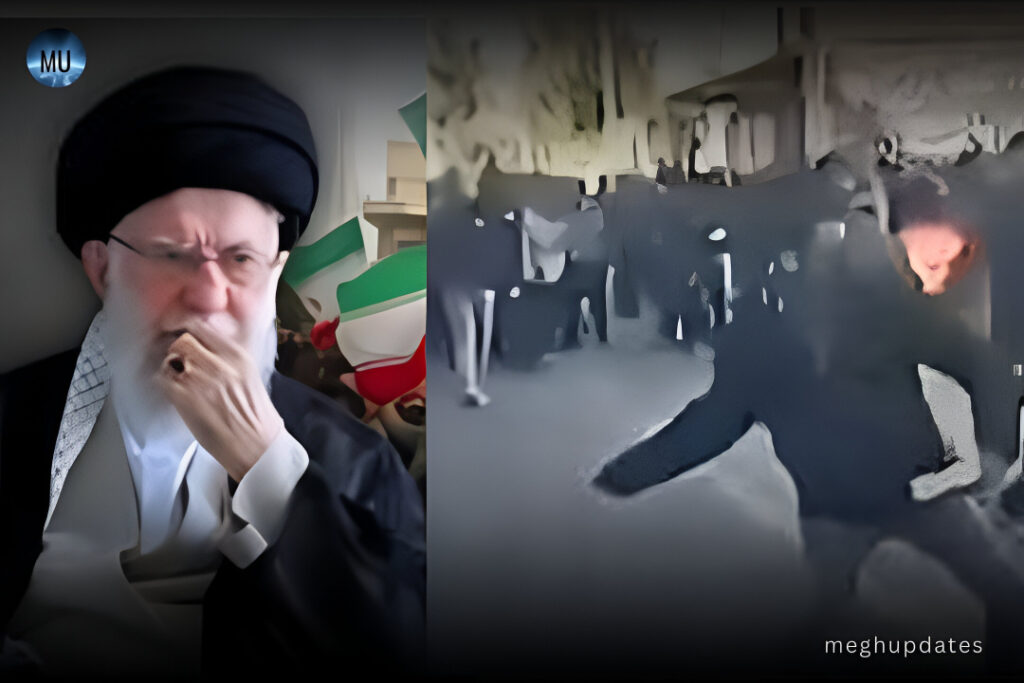
Thursday evening in Iran marked another chapter in the long, troubled relationship between the Islamic Republic and its citizens. As protests intensified across the country, authorities responded with a weapon that has become disturbingly familiar in the authoritarian toolkit: they simply turned off the internet. In an instant, millions of Iranians found themselves cut off from the world, isolated from each other, unable to coordinate, communicate, or bear witness to what was happening in their own streets.
This was not a technical failure. This was not an accident. This was a deliberate severing of the digital nervous system that connects modern society, executed with precision at exactly the moment when people needed connection most urgently. And in that calculated act of isolation, the Iranian government revealed far more about its own weakness than any protest ever could.
The Anatomy of Digital Repression
To understand what happened Thursday night, you must first understand that internet blackouts represent one of the most insidious forms of state violence. Unlike bullets or batons, they leave no visible wounds. Unlike mass arrests, they create no individual martyrs to rally around. Instead, they operate through absence, through silence, through the suffocating feeling of being alone even when surrounded by millions who share your grievances.
The Iranian regime has perfected this dark art. They have built infrastructure specifically designed to enable this kind of control—a national intranet system that can provide basic services while maintaining the ability to sever all connections to the outside world at a moment’s notice. This is not improvisation. This is not panic. This is systematic preparation for the suppression of dissent.
When the switch was flipped Thursday evening, nearly every connection point disappeared. Mobile networks went dark. Home internet connections failed. The few remaining links to the outside world slowed to a crawl. Iran essentially vanished from the global internet, transforming overnight into a digital North Korea.
But here is what the architects of this blackout perhaps did not fully consider: every time you cut the internet, you teach your population something profound about what you fear. You demonstrate that you consider their ability to communicate a greater threat than international condemnation, economic disruption, or diplomatic isolation. You announce to the world that you are so afraid of your own citizens speaking freely that you will pay almost any price to silence them.
Beyond Money: The Deeper Crisis
The immediate trigger for the current protests appears straightforward enough. Iran’s currency has collapsed. Inflation has spiraled out of control. Ordinary people cannot afford food, medicine, or basic necessities. These are real, tangible grievances rooted in material suffering that demands urgent attention.
But to view these protests as merely economic is to miss the deeper current running beneath the surface. Economic hardship is the spark, yes, but the kindling has been accumulating for forty-five years. What we are witnessing is not just anger about prices or currency exchange rates. We are witnessing a fundamental crisis of legitimacy, a breaking point in the relationship between a government and the people it claims to serve.
Consider what it means that protesters are now openly demanding not reform but replacement. That they tear down national flags in defiance. That they chant slogans that would have meant certain death just a few years ago. That they invoke memories of the monarchy overthrown in 1979, despite all the complications and contradictions that regime represented. This is not the language of people seeking adjustments to policy. This is the language of people who have concluded that the entire system is irredeemable.
The Islamic Republic came to power promising justice, dignity, and Islamic governance that would serve the dispossessed. Forty-five years later, those promises ring hollow to a generation that has known nothing but economic mismanagement, political repression, and international isolation. The ideology that once inspired revolution has curdled into a system that primarily serves its own perpetuation.
Geography as Destiny
The protests have been most intense in Iran’s western provinces—areas that are economically marginalized, ethnically diverse, and far from the centers of power in Tehran. This geographic pattern tells its own story about who has been failed most profoundly by the Islamic Republic’s grand promises.
These regions have watched as oil wealth flowed past them to fund ideological projects abroad. They have seen resources poured into Lebanese militias, Syrian interventions, and Yemeni rebellions while their own communities struggled with unemployment, underdevelopment, and neglect. The bitter irony of a government that positions itself as the champion of the oppressed globally while crushing dissent in its own periphery has not been lost on residents of these provinces.
When half the reported deaths occur in just a handful of western provinces, it reflects not just geography but the accumulated weight of decades of broken promises. These are communities that believed the revolution would bring them equity and justice. Instead, they received marginalization and, when they dared to protest that marginalization, bullets.
The Violence Beneath the Blackout
What makes the current internet shutdown particularly chilling is what it is designed to hide. Without connectivity, the world cannot see what happens in Iranian streets. Journalists cannot report. Videos cannot be uploaded. The international community cannot bear witness. And in that imposed darkness, security forces can operate with impunity.
The fragments of information that escaped before the blackout painted a disturbing picture. Security forces entering hospitals and attacking medical staff. Protesters shot in the streets. Government buildings set ablaze. At least forty-four confirmed deaths, a number that likely represents only a fraction of the actual toll.
The assault on hospitals deserves particular condemnation. Throughout history, even in the midst of the most brutal conflicts, hospitals have been recognized as spaces that should remain sacrosanct. When security forces violate that norm, firing tear gas in medical facilities and assaulting healthcare workers, they signal that no space is safe, that there are no limits to what the state will do to maintain control.
This is not policing. This is not crowd control. This is state terror, designed not just to suppress current protests but to instill fear so profound that future generations will think twice before raising their voices.
The Regime’s Internal Contradictions
Perhaps the most revealing aspect of the current crisis is the apparent split within Iran’s leadership. The Supreme Leader has taken a hardline position, essentially giving security forces carte blanche to crush the protests by any means necessary. The judiciary has promised no leniency for those who “create insecurity,” a euphemism that typically precedes mass arrests and harsh sentences.
But the President has called for restraint. He has urged security forces to show moderation. This is not merely a disagreement about tactics. This represents a fundamental split about how the regime should respond to its own citizens’ rage.
When an authoritarian system cannot present a unified front during an existential crisis, it reveals fractures that no amount of repression can permanently seal. It suggests that some within the system recognize that the current approach is unsustainable, even if they lack the power or courage to chart a different course.
This internal contradiction creates a strange dynamic where citizens face both brutal repression and hints of internal regime doubt. It is unclear which is more dangerous: a government united in its willingness to kill, or a government divided about whether killing is the answer but defaulting to violence nonetheless.
The Exiled Prince and the Ghost of History
The involvement of the exiled Crown Prince in calling for these protests adds a layer of complexity that is both fascinating and troubling. Here is the son of the Shah, overthrown in 1979, attempting to position himself as the leader of a new revolutionary movement against the revolution that displaced his family.
The question of whether he commands genuine support or is merely trying to ride a wave that exists independent of him remains genuinely unclear. What is clear is that the fact he can make such calls at all, and that some protesters respond with pro-monarchy chants, represents a remarkable shift in what is politically expressible in Iran.
Forty-five years after the Islamic Revolution, nostalgia for what came before has become a form of protest against what exists now. Whether this represents actual monarchist sentiment or simply a rejection of everything associated with the current system is almost beside the point. The significance lies in the fact that invoking the monarchy is no longer automatically suicidal, that the taboos of 1979 have lost their power over a generation that knows the Shah only through stories and the Islamic Republic through lived experience.
Yet there is danger here too. The regime has always found it useful to portray domestic dissent as foreign manipulation. An exiled prince calling for protests from outside Iran’s borders provides exactly the kind of ammunition the government needs to frame these demonstrations as orchestrated rather than organic. This risks delegitimizing genuine grievances and providing justification for even harsher crackdowns.
The International Dilemma
The international community’s response to Iran’s crisis reveals the limitations of external influence on internal upheaval. Western governments express concern, threaten consequences, and issue warnings about killing protesters. But these statements often do more to satisfy domestic audiences than to change behavior in Tehran.
The fundamental challenge is this: How do you support democratic aspirations without appearing to validate claims of foreign interference? How do you impose consequences for human rights abuses without harming the very population you claim to want to help? How do you strike a balance between speaking out and avoiding rhetoric that allows the regime to wrap itself in nationalist legitimacy?
These are questions without satisfactory answers. Saying too much risks playing into the regime’s hands. Saying too little abandons Iranian civil society to its fate. The uncomfortable truth is that external actors have limited ability to shape outcomes in crises like this one, yet they also have moral obligations not to remain silent in the face of atrocity.
Reports of foreign powers potentially providing weapons or support to either side further complicate matters, suggesting that Iran’s internal crisis may become a proxy for broader geopolitical competitions. This would be a tragedy, transforming what should be a question of Iranian self-determination into another front in international power struggles.
What Cannot Be Hidden
Despite the blackout, despite the censorship, despite the government’s best efforts to control the narrative, certain truths persist. People are dying in Iranian streets. Government buildings are burning. Hospitals are being violated. The currency continues its freefall. Families cannot afford food. And no amount of internet censorship can make these realities disappear.
The regime faces an impossible equation. Restore connectivity, and you enable protesters to coordinate and the world to watch. Maintain the blackout, and you deepen the economic crisis while advertising your fear and weakness to both domestic and international audiences.
Each day the internet remains dark is another day the government tells its citizens: We are afraid of you. We fear your voices, your organization, your ability to show the world what we do. This is not the posture of strength. This is the posture of a regime that knows it has lost the argument and can maintain power only through force and isolation. meghupdates
The Unwinnable War Against Reality
Here is what I believe with deep conviction: You cannot govern indefinitely against the will of your people, no matter how sophisticated your repression apparatus. History is littered with regimes that thought they could maintain control through fear, surveillance, and violence, only to discover that such control is always temporary, always fragile, always one spark away from conflagration.
The Islamic Republic has survived previous challenges through brutal repression combined with economic adjustment and exploitation of opposition divisions. It may survive this challenge too. Authoritarian regimes are often more resilient than they appear, and predictions of their imminent collapse have a way of proving premature.
But survival is not the same as legitimacy. Every crisis erodes the regime’s moral foundation further. Every martyred protester creates permanent resentment. Every internet blackout educates a new generation about what their government truly thinks of them. Even if the current protests are suppressed, the underlying conditions that produced them—economic failure, political repression, ideological exhaustion—remain unaddressed.
The regime’s strategy appears to be surviving from crisis to crisis, using violence to suppress each outbreak of dissent while making minimal adjustments to address root causes. This is not governance. This is crisis management masquerading as statecraft. And it is ultimately unsustainable.
The Danger of What Comes Next
Yet even as I write these words, I am haunted by a troubling question: What happens if the Islamic Republic does fall? Revolutions fueled by rage and economic desperation, lacking clear organizational structures and unified vision for what comes after, often produce outcomes that disappoint the hopes of those who made them.
The history of the past two decades is filled with cautionary tales. Popular uprisings that toppled dictators but led to civil war, foreign intervention, or new forms of authoritarianism. The intoxicating moment of revolution giving way to the brutal complexities of state-building. The discovery that destroying a system is far easier than constructing a better one.
Iran’s protesters deserve better than the current regime. They also deserve better than a chaotic collapse that could unleash sectarian violence, military dictatorship, or external intervention. The tragedy is that the government’s refusal to permit peaceful evolutionary change makes violent revolutionary change increasingly likely, with all the unpredictability and danger that entails.
The Islamic Republic has created conditions where the only alternatives seem to be continued repression or potentially catastrophic upheaval. This is the final failure of a system that has exhausted its legitimacy, its ideas, and its ability to adapt: it has made reform impossible and revolution inevitable, while offering no guarantee that what follows will be better.
A Question of Witness
As someone who can write and publish these thoughts freely, from a position of safety thousands of miles from Iranian streets, I am acutely aware of the privilege that distance provides. Someone in Tehran trying to express similar ideas tonight faces not just internet censorship but potential arrest, torture, or execution.
This disparity creates an obligation. Those of us with platforms must use them to amplify voices that have been deliberately silenced, to document abuses that governments hope will occur in darkness, to insist that the world not look away simply because looking is uncomfortable.
The internet blackout is designed to create a world where what happens in Iran stays in Iran, where repression occurs without witnesses, where the state can do what it wishes without accountability. Our responsibility is to refuse that design, to find ways to see what they want hidden, to remember what they hope will be forgotten.
This is not about choosing sides in geopolitical competitions or advancing particular ideological agendas. This is about the basic human right to be heard, to be seen, to have your suffering acknowledged. It is about refusing to accept that governments can commit atrocities simply by ensuring no one is watching.
The Darkness That Reveals
In the end, the internet blackout in Iran is a confession dressed as a strategy. It is a government admitting that it cannot win in the marketplace of ideas, cannot persuade through argument, cannot govern through consent. It is choosing imposed silence over genuine dialogue, isolation over engagement, darkness over light.
But darkness has a way of revealing truth even as it obscures facts. The truth revealed by this blackout is simple and damning: The Islamic Republic is so afraid of its own people speaking freely that it will burn down the bridges of communication to prevent it. That fear is the most honest thing the regime has expressed in years.
A government confident in its legitimacy does not fear its citizens’ voices. A government secure in its support does not need to silence dissent. A government with genuine answers to public grievances engages with those grievances rather than shutting down the platforms where they are expressed.
The blackout tells us that the Islamic Republic is none of these things. It is a regime that maintains power through force and fear, that views public communication as an existential threat, that would rather rule in imposed silence than govern with consent.
And that, ultimately, is an admission that no amount of censorship can erase. The darkness itself has become the message, and the message is one of weakness masquerading as strength, fear disguised as power, and a system that has run out of legitimacy trying to run out the clock through repression.
How long can such a system endure? History suggests longer than we might hope but not as long as its architects believe. The darkness will eventually lift—whether through government choice or government collapse remains to be seen. But when it does, the world will see what was done in the shadows, and Iranians will remember who chose to lead them through darkness rather than toward light.
The internet blackout in Iran is not just a policy choice or a security measure. It is a moral failure, a political confession, and ultimately, a sign of a regime in its death spiral, fighting desperately to maintain control even as it loses any remaining justification for holding it.
And somewhere in Iran tonight, in the enforced silence of the blackout, millions of people sit in darkness knowing that their government fears them more than it values them. That knowledge, once gained, can never be forgotten. And it is that knowledge, not any particular protest or policy, that will ultimately determine Iran’s future.
The views expressed in this analysis represent the author’s personal perspective based on decades of covering political upheaval and authoritarian responses worldwide.