A 24-year-old MBA student’s final words expose the deadly reality of racism in India
The Last Question
On a night that would change everything, 24-year-old Angel Chakma asked a simple question. Walking with his younger brother, confronted by men hurling racial slurs at them, he stood his ground. “We are not Chinese,” he said. “We are Indians. What certificate should I show to prove that?”
Those were his last words.
Minutes later, Angel Chakma was dead—stabbed by the very people who had denied his belonging in his own country.
Who Was Angel Chakma?
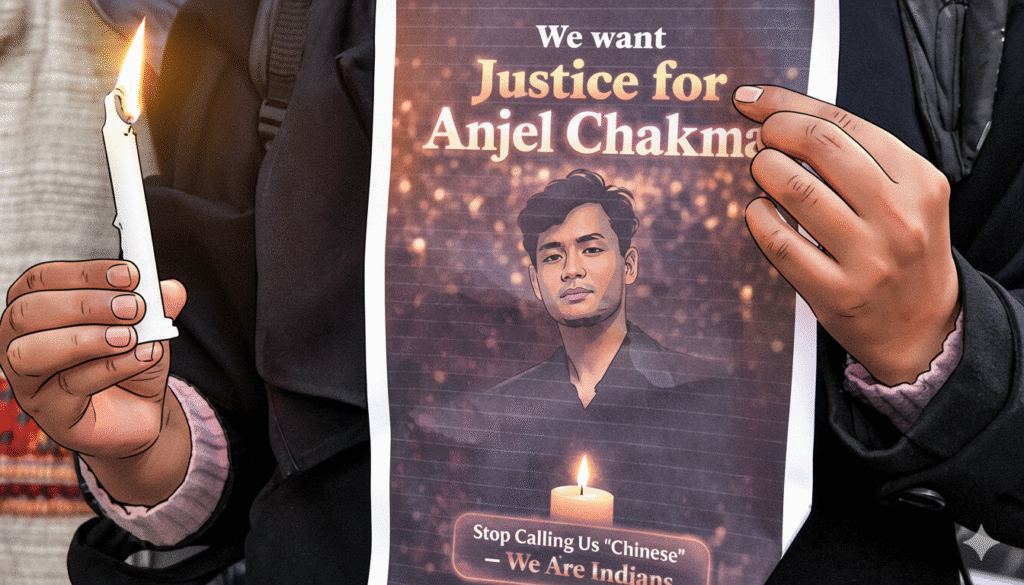
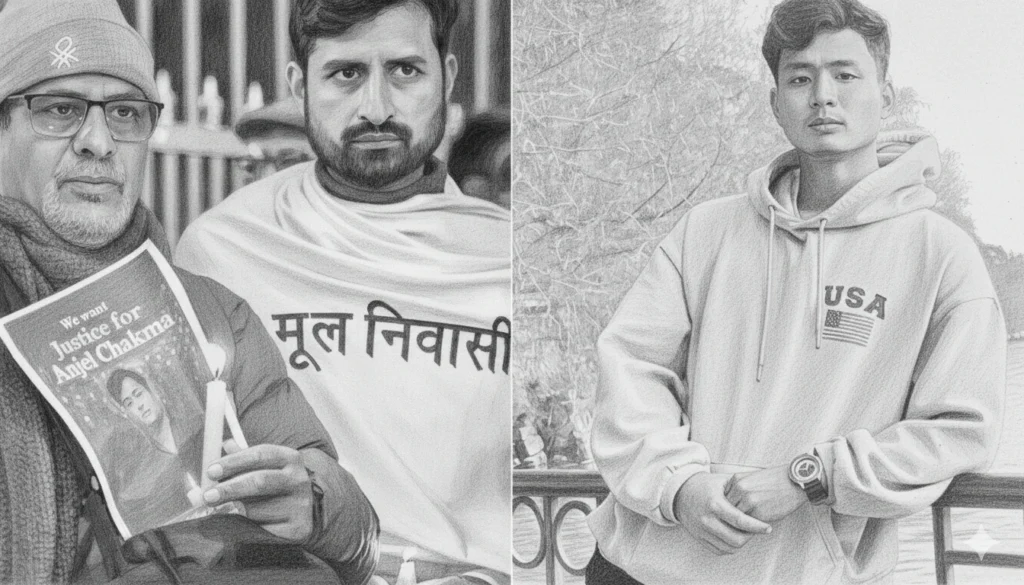
Angel Chakma was an MBA student from Tripura, pursuing his dreams like millions of young Indians. He had ambitions, a family, a future. But on that fateful night, none of that mattered to his attackers. What mattered was that he looked different. His ethnicity became his death sentence.
The Chakma community, an ethnic minority in Northeast India, has long faced discrimination and prejudice. Yet Angel’s death represents something more than individual tragedy—it’s a stark indictment of a systemic failure to protect all Indians equally.
The Incident: Racism Turned Deadly
The incident wasn’t a random act of violence. It was discrimination with a knife. Angel and his brother were targeted because of how they looked, where they came from. The racial slurs were the prelude. The violence was the conclusion.
What makes this case haunting is Angel’s response. He didn’t back down. He didn’t accept the premise that he was somehow “not Indian enough.” In his final moment, he demanded recognition of his basic right to exist in his own country without being othered, without being marked as foreign.
His question—”What certificate should I show to prove that?”—cuts to the heart of a larger crisis. In a nation of 1.4 billion people, how many others are asked the same question daily? How many are made to feel like perpetual outsiders in their own homeland?
Why This Matters Now
Angel Chakma’s death isn’t an isolated tragedy. It’s part of a troubling pattern of violence and discrimination against minorities in India:
The Bigger Picture:
- Northeast India, where Angel was from, has long been a flashpoint for communal tensions
- Young people from minority communities face social ostracism, workplace discrimination, and physical violence
- Racial profiling remains widespread, with people from the Northeast regularly questioned about their “origins”
- Many perpetrators of such violence face minimal consequences, emboldening future attackers
The Human Cost: Every incident like Angel’s represents a failure—of the system, of society, of our collective humanity. A young man with potential, with dreams, with a right to live safely in his own country, was robbed of his future.
The Deeper Question
Angel’s final words pose a challenge to all of us: What does it mean to be Indian? Is it defined by skin color? By regional origin? By ethnicity?
The Indian Constitution guarantees equality before law and protection from discrimination. Yet incidents like Angel’s reveal the chasm between constitutional ideals and lived reality.
This raises critical questions:
- How do we ensure equal protection for all citizens regardless of appearance or ethnicity?
- Why are minorities from the Northeast routinely treated as foreigners?
- How do we transform attitudes that view “Indianness” through such narrow lenses?
- What systemic changes are needed to prevent more tragedies?
What Happened After?
Angel Chakma’s death sparked outrage. It exposed raw wounds in Indian society. His story has become a symbol of the urgent need for change—in law enforcement, in education, in how we teach our children about belonging and dignity.
But outrage alone isn’t enough. Real change requires:
Legal Justice: Swift investigation and prosecution of those responsible, with exemplary punishment that sends a message that such violence will not be tolerated.
Systemic Reform: Training for police and public officials to recognize and combat discrimination. Hate crime legislation with teeth. Education campaigns to counter stereotypes about people from the Northeast.
Cultural Shift: A genuine conversation about what it means to be Indian and who belongs in India. Celebrating diversity rather than penalizing it.
Community Support: Resources for the Chakma community and other minorities facing similar discrimination.
Angel’s Legacy
Angel Chakma wanted to live. He wanted to complete his MBA. He wanted a future. He was denied all of that because someone decided his face didn’t match their vision of India.
But his question—”What certificate should I show to prove that I’m Indian?”—continues to echo. It’s a question that demands an answer, not just from the courts, but from all of us.
His death must not be forgotten. His memory must fuel change.
How You Can Help
Spread awareness: Share Angel’s story. Ensure his death wasn’t in vain.
Support justice: Demand investigation and prosecution of those responsible.
Advocate for change: Push for hate crime legislation and anti-discrimination protections.
Challenge discrimination: When you witness prejudice against minorities, speak up.
Support affected communities: Organizations working with the Chakma community and other Northeast minorities need resources and solidarity.
The Unfinished Conversation
Angel Chakma’s question remains unanswered by those who killed him. But it’s a question for all of us to grapple with.
In a diverse, pluralistic democracy, can we finally answer it in a way that affirms every Indian’s right to belong, regardless of how they look or where they come from?
Until we can answer that question with a resounding “yes,” there will be more Angel Chakmas. More young lives cut short. More families destroyed.
Angel deserved better. India deserves better.
And so do we all.