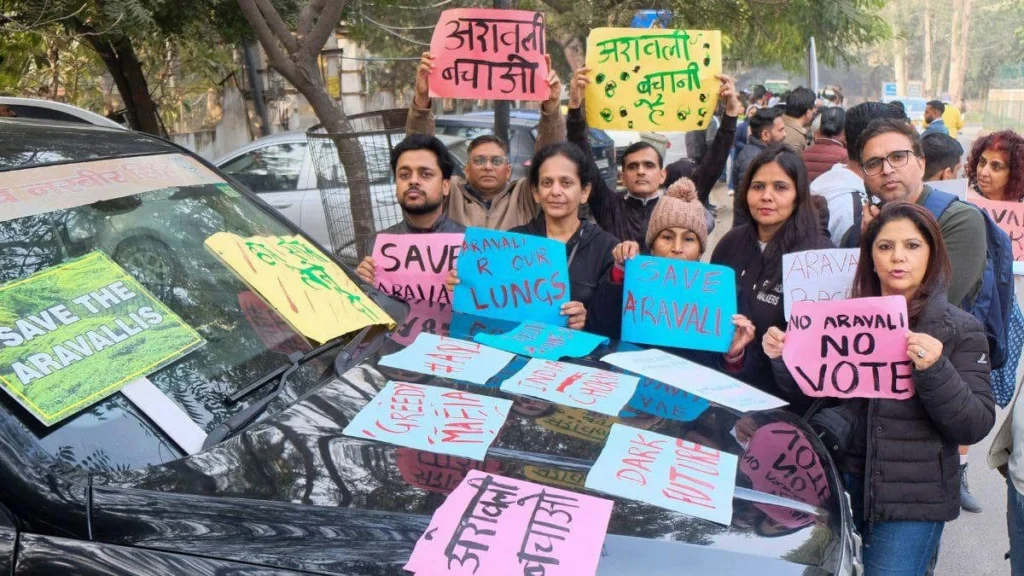
The Aravalli hills and ranges stand as a critical ecological barrier in northern India, playing an indispensable role in preventing the desertification of the fertile Indo-Gangetic plain. As environmental concerns mount and mining pressures intensify, these ancient mountains have become the center of a crucial conservation debate involving the Supreme Court, the Central Empowered Committee, and various stakeholders.
The Ecological Significance of the Aravalli Ranges
Stretching across Rajasthan, Haryana, and Delhi, the Aravalli ranges serve as nature’s defense mechanism against the encroaching Thar Desert. These hills act as a natural barrier that prevents desert winds from sweeping eastward into the Indo-Gangetic plain, one of the world’s most densely populated and agriculturally productive regions.
The Aravallis perform multiple environmental functions. They capture moisture-laden monsoon winds, facilitate groundwater recharge, and maintain regional climate stability. Without this protective shield, experts warn that desertification could advance significantly, threatening agricultural productivity and the livelihoods of millions who depend on the Indo-Gangetic plain’s fertile lands.
Central Empowered Committee’s Recommendations
Recognizing the ecological crisis posed by unchecked exploitation, the Central Empowered Committee stepped in with comprehensive recommendations to protect the Aravalli ecosystem. The committee, which assists the Supreme Court on environmental matters, conducted extensive studies on the degradation of these ranges.
The recommendations emphasized the need for stringent protection measures, including restrictions on mining activities, prevention of unauthorized construction, and restoration of degraded areas. The committee highlighted how decades of mining had already caused irreversible damage to significant portions of the ranges, compromising their ability to serve as an ecological barrier.
The Quest for a Uniform Definition
One of the major challenges in protecting the Aravallis has been the absence of a uniform definition of what constitutes the Aravalli hills. Different states had varying interpretations, leading to confusion in implementation and enforcement of protective measures.
Arriving at a uniform definition became necessary to ensure consistent protection across state boundaries. Without clear demarcation, areas deserving protection were being excluded from conservation efforts, while mining and construction activities continued unchecked in ecologically sensitive zones. A standardized definition would enable authorities to apply protective regulations uniformly and prevent jurisdictional disputes that had previously allowed environmental degradation to continue.
Supreme Court’s Stance on Mining
The Supreme Court has taken a firm position on mining in the Aravalli ranges, implementing stringent restrictions to safeguard this critical ecosystem. While the extent of the ban has evolved through various judgments, the court has made clear that mining activities in ecologically sensitive zones of the Aravallis face severe limitations.
The judicial interventions reflect growing recognition that unregulated mining poses an existential threat to the ranges. Illegal mining had not only scarred the landscape but also weakened the hills’ capacity to prevent desertification. The Supreme Court’s actions represent an attempt to balance developmental needs with environmental imperatives, prioritizing long-term ecological security over short-term economic gains.
The Path Forward
The protection of the Aravalli hills and ranges remains a work in progress. Effective implementation of the Supreme Court’s directives, adherence to the Central Empowered Committee’s recommendations, and enforcement of the uniform definition are crucial for preserving this ecological lifeline.
As climate change intensifies and desertification threats grow, the Aravallis’ role becomes even more critical. Their preservation is not merely about protecting a mountain range but about securing the environmental future of the Indo-Gangetic plain and the millions who call it home. The ongoing legal and administrative efforts represent a crucial test of India’s commitment to balancing development with environmental sustainability.