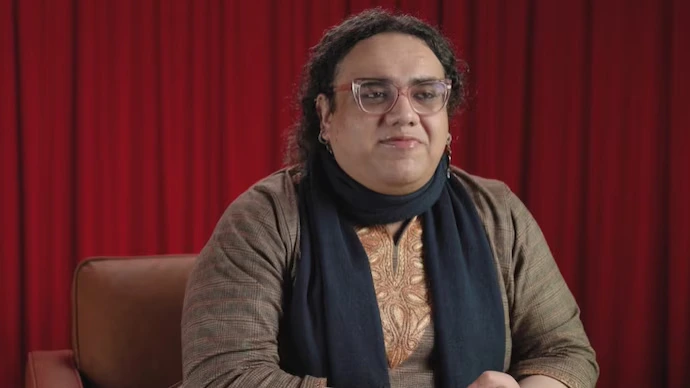
A 37-minute podcast clip featuring Pakistani Khawaja Sira activist and Chevening scholar Hina Baloch has set off a fierce debate across social media, raising questions about hidden realities, misinformation, and the cost of speaking out in Pakistan.
What Happened?
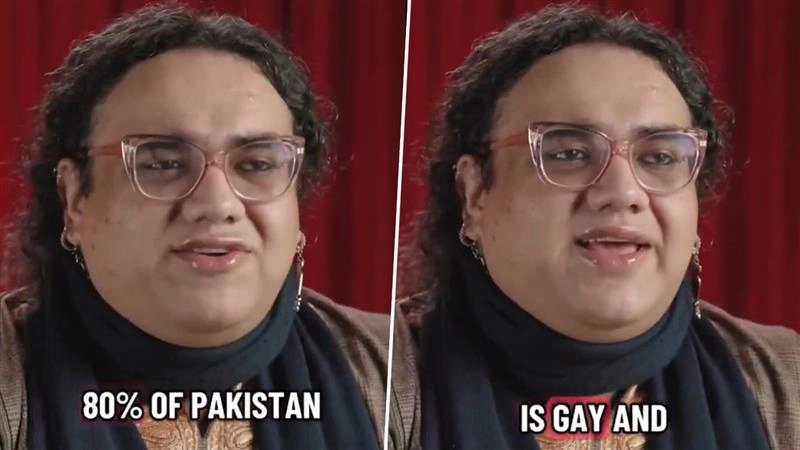
A video clip from a podcast published on the YouTube channel @Queer Global went massively viral in late March and early April 2026. In it, Pakistani transgender activist Hina Baloch made a bold and controversial claim about the sexual orientation of Pakistan’s population. The clip spread rapidly on Instagram, X (formerly Twitter), and YouTube, accumulating millions of views within days and triggering heated reactions worldwide.
“80% of people in Pakistan are gay and the remaining 20% are bisexual. It’s kind of an open secret. They won’t say it. They will deny it. They will bring religion and culture into it.”
The statement essentially claims that no one in Pakistan is heterosexual a sweeping assertion that contradicts all known global demographic research and immediately sparked both outrage and intense discussion.
Fact Check: Is the Claim True?
The short answer is no not as a statistical fact. Global research consistently finds that between 3% and 10% of populations identify as LGBTQ+, even in highly accepting societies. Pakistan has no official data on sexual orientation due to stigma and legal constraints, but experts agree the 80% figure is statistically implausible as a demographic claim.
What the evidence says
Global LGBTQ+ identification estimates: 3–10% across studied populationsPakistan has no official sexual orientation data stigma prevents accurate reportingAcademic studies do document a pattern of private same-sex behaviour beneath public denial in conservative societiesHina’s broader observation about hidden realities has sociological precedent but the numbers are unsupported
Verdict: Not credible as data. Likely a deliberate provocation to highlight suppressed realities
Who Is Hina Baloch
Hina Baloch is not simply a social media personality. Born and raised in Karachi as a member of Pakistan’s Khawaja Sira (third gender) community, she co-founded the Sindh Moorat March Pakistan’s first-ever transgender pride march, held in Karachi in November 2022. She is also a Chevening Scholar who completed a Master’s in Gender Studies with Distinction at SOAS University of London, writing a high-distinction dissertation on love, identity, and the Khawaja Sira community.
She currently lives in East London and is preparing for a PhD. Her activism has come at a severe personal cost: death threats, abduction, forced relocation across cities in Pakistan, alleged state surveillance, and eventual exile to the UK.
Profile at a Glance
Full identity: Khawaja Sira (third gender), also known as Surkh Hina
Origin: Karachi, Pakistan | Now based: East London, UK
Education: MA Gender Studies (Distinction), SOAS University of London Chevening Scholar
Role: Co-Founder of Sindh Moorat March, activist, writer, researcher
Known for: Trans rights, HIV awareness, hospital rights litigation, Aurat March participation
Her Full Story: Activism, Threats & Exile
Growing up as Khawaja Sira in Karachi
From an early age, society had already decided Hina’s options: begging or dancing at celebrations, the traditional roles forced upon the Khawaja Sira community. She refused. Instead she turned her identity into a platform for advocacy. “I was more worried about how to wear lipstick without getting beaten,” she recalled in the podcast.
Founding Sindh Moorat March (2022)
In November 2022, Hina co-founded Pakistan’s first transgender pride march at Frere Hall, Karachi. Hundreds of trans activists from across the country gathered. The march was praised by Dawn newspaper as a landmark event simultaneously a raucous celebration of Khawaja Sira identity and a public mourning of community members killed by transphobia.
Abduction, acid threats, and hiding
During an Aurat March protest, Hina raised a Pride flag on stage a rare and dangerous act in Pakistan. What followed was immediate: acid attack warnings, videos targeting her circulating online, strangers appearing outside her home. She was forced to move cities and go into hiding for months. She later revealed she was abducted while organising a march, held, and assaulted.
Death threats even extended to her family. A hand-delivered letter left at her home read: “If we can’t find you, we will kill your brother.” Two dozen hardliners once showed up at her mother’s door, demanding she be handed over to be “fixed.”
Exile, scholarship, and surveillance
With threats multiplying, Hina left Pakistan after winning a Chevening Scholarship. Even after leaving, she describes being detained on a return visit taken from a cab, held for hours, and warned not to leave the country without informing Pakistani authorities.
Why Did It Go So Viral?
The clip’s rapid spread can be traced to five key factors:
1. Extreme shock value
The claim runs directly against Pakistan’s public image as a deeply conservative, religiously observant society. Statements that contradict dominant narratives generate compulsive engagement online.
2. The “open secret” framing
Hina’s framing resonated with many who have private knowledge of such realities but have never heard them stated publicly. It gave the video an unusual feeling of authenticity, even as the numbers were contested.
3. Algorithmic amplification
Platforms like YouTube, Instagram, and X prioritise content that generates strong emotional reactions outrage and curiosity both drive the algorithm. The clip was pushed to wider audiences precisely because it provoked.
4. Influencer and meme ecosystem
Once the clip gained traction, meme pages, commentary channels, and influencers across South Asia and the diaspora began sharing it with their own spins each iteration extending its reach.
5. Hina’s credibility
Unlike an anonymous post, this came from a documented activist with a Chevening scholarship and a degree from a leading London university giving the statement credibility that encouraged genuine debate rather than immediate dismissal.
Public Reactions
Supportive voices
Many users especially in LGBTQ+ communities and diaspora circles viewed the statement as a necessary articulation of hidden truths. They argued Hina was simply naming what many already knew anecdotally.
Critical voices
A large number of users rejected the claim as absurd, unscientific, and misleading. Religious commentators called it an attempt to normalise impermissible behaviour by overstating its prevalence.
Analytical voices
Some commentators took a balanced position: acknowledging that while the numbers were not scientifically grounded, the underlying phenomenon private same-sex activity coexisting with public denial is documented in academic literature and not unique to Pakistan.
Pakistani media
Mainstream Pakistani media largely remained silent or offered only brief, cautious coverage. No official government or religious body issued a formal response as of April 4, 2026.
LGBTQ+ Reality in Pakistan
Legal framework
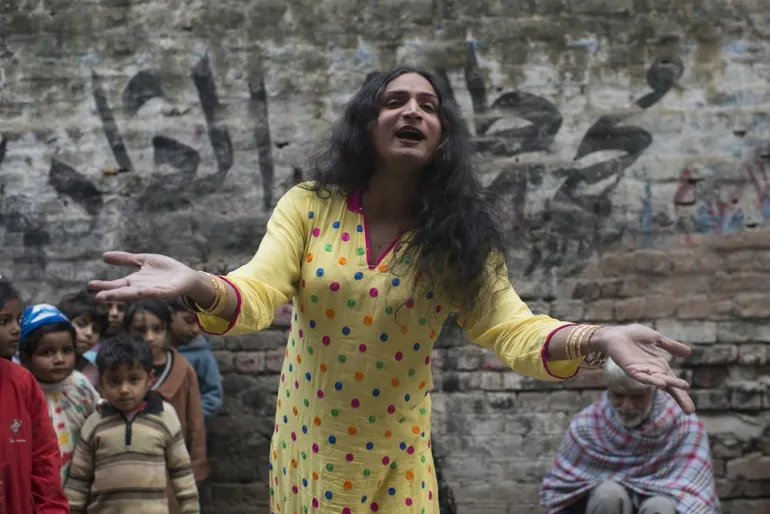
Same-sex activity in Pakistan is criminalised under Section 377 of the Pakistan Penal Code a colonial-era law carrying penalties up to life imprisonment. Transgender identity, however, is legally recognised under the Transgender Persons (Protection of Rights) Act, 2018, which allows a third gender marker on national ID cards.
Ground realities
A November 2025 UK government country policy report confirmed that LGBT+ people in Pakistan face likely persecution from non-state actors, that legal protections for gay and bisexual individuals are largely ineffective, and that internal relocation within Pakistan is not a viable safety option for LGB people.
Despite this, grassroots organising continues. The Sindh Moorat March was held again in 2023 and 2024. A second Hijra Festival was held in Karachi in November 2024.